
Did you know a cat’s purr is more than just happiness? It’s also a way for them to calm themselves or talk to us. Cats use purring to show different feelings and needs.
Purring is a special sound cats make by vibrating their vocal cords. This sound is often linked to happiness. But it can also mean they’re stressed or trying to talk to their human friends.
Learning about purring helps us understand our cats better. We’ll dive into how cats communicate and feel. This will open up a new world of understanding cat purring.
Key Takeaways
- Cats purr to show a variety of emotions, like happiness and stress.
- Purring is a unique way for cats to communicate.
- Cats purr to calm themselves and to talk to humans.
- Knowing when a cat purrs helps us meet their needs better.
- Feline communication is complex and full of different meanings.
What Is Purring?
Purring is a special trait of cats. It shows a mix of emotions and needs. This sound is key to how cats talk to each other and us.
Definition of Purring
A purr is a low humming sound cats make. They do this by moving muscles in their voice box fast. This makes a sound when they breathe in and out.
This sound is not just for domestic cats. But, we know the most about domestic cats’ purrs. It shows how a cat feels and what they need.
How Cats Produce the Sound
Cats make purring through muscles, bones, and a special voice box. Here’s how it works:
- The cat’s brain tells the voice box muscles to move.
- This movement opens and closes the space between the vocal cords fast. This builds and releases air quickly.
- The fast vibration makes the purring sound.
Knowing how cats purr helps us understand them better. It shows how cats feel and how they talk to us and other animals.
By understanding purring, we can connect better with our cats. It shows how cats’ behavior and feelings are linked to their purring.
Reasons Cats Purr
Cats show many behaviors that are both interesting and confusing to their owners. One of these is purring, a special sound they make by vibrating their vocal cords. This sound is often linked to happiness, but it has more uses. Learning why cats purr can help us understand their feelings and health better.
Contentment and Relaxation
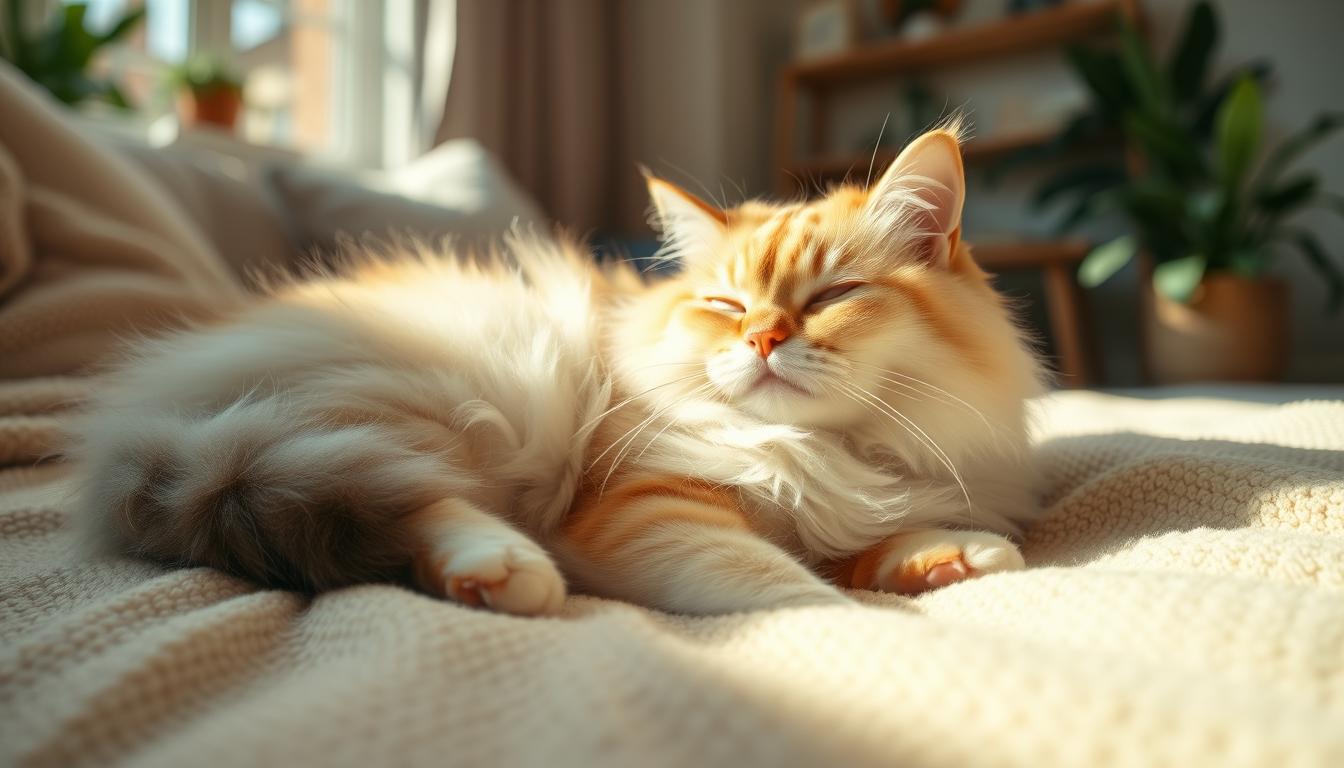
Cats purr to show they are happy and relaxed. They do this when they feel safe and comfortable. This is often seen when they are being petted or in a cozy spot. The purring of a cat can also calm people, creating a peaceful atmosphere for both.
Communication with Owners
Cats purr to talk to their owners too. They purr to show they need something, like food or attention. Purring can be a way for cats to start a conversation or ask for food. Knowing when a cat purrs can help us meet their needs better.
Healing Mechanism
Studies suggest purring might help cats heal. The sound of a cat’s purr, between 20-140 Hz, can help fix tissues, reduce swelling, and ease pain. This special ability might help cats get better from injuries or manage long-term health issues.
Looking into why cats purr helps us understand them better. Whether it’s showing happiness, a way to communicate, or a healing tool, purring is key to a cat’s behavior. It’s something we should pay attention to.
Cat Purring and Emotions
Cat purring is often linked to happiness, but it can also show other feelings. Cats are complex, and their purring tells us a lot about their mood. Knowing what a cat’s purr means helps us care for them better.
Understanding Feline Emotions
Cats show their feelings in many ways, and purring is key. They purr when they’re happy, worried, or upset. Watching how a cat acts is important to figure out why they’re purring.
For example, a cat that purrs and comes to you might want attention. Research on cat purring behavior shows they purr to calm themselves or talk to us. Paying attention to these signs helps us comfort them better.
Purring When in Distress
Cats purr when they’re anxious or in pain too. It’s a way for them to relax. It’s important to notice other signs of distress, like not eating or hiding, along with purring.
By noticing these signs, we can help make them feel better. A cozy home and positive time together can lower their stress.
The Comfort of a Purring Cat
A purring cat is very comforting, for both the cat and the owner. The purring sound is soothing, showing a strong bond between them. This bond is a beautiful thing.
In short, knowing what a cat’s purr means is key to caring for them. By understanding purring, we can build a stronger connection with our cats and make sure they’re happy and healthy.
The Science Behind Purring
Cats can purr thanks to a special biological process. This process involves many parts working together.
The Mechanisms of Purring
The purring process is amazing. It uses the cat’s laryngeal muscles, diaphragm, and brain. When a cat breathes in and out, the glottis opens and closes.
This creates a series of air bursts. These bursts make the purring sound. The continuous vibration during breathing is key to this sound.
Frequency and Its Effects
Studies show purring’s frequency has therapeutic effects. The purr’s sound, between 20-140 Hz, helps in many ways. It can heal tissues, reduce swelling, and ease pain.
- Purr frequencies between 25-50 Hz may enhance bone density.
- Frequencies around 100 Hz can promote the healing of tendons and muscles.
- The vibrational frequency may also help reduce swelling and alleviate pain.
Purring and the Nervous System
The nervous system controls purring. The brain sends signals to the laryngeal muscles. This makes the purr happen.
This complex brain-muscle interaction is still being studied. It shows how purring is special and has benefits for both cats and humans.
Purring in Different Cat Breeds
Purring is not just a trait of domestic cats. It’s also found in wild felines like cheetahs and bobcats. But, big cats like lions and tigers don’t purr the same way. This shows how purring varies among different cat breeds and wild species.
Common Breeds and Their Purring
Each cat breed purrs differently. For example, British Shorthairs purr loudly and often, showing they’re happy. Siamese cats purr less but make up for it with their loud meows. Knowing how different breeds purr helps owners understand their pets better.
Variations in Purring Frequency
Cats purr at different frequencies, from 20 to 140 Hz. Some breeds, like the Maine Coon, purr at lower frequencies. This low-frequency purr is believed to have healing properties.
| Breed | Purring Frequency | Purring Characteristics |
|---|---|---|
| British Shorthair | 20-50 Hz | Loud and frequent purring |
| Siamese | 50-100 Hz | Less frequent purring, more vocal |
| Maine Coon | 20-30 Hz | Low-frequency purring, associated with healing |
Breeds Known for Their Unique Sounds
Some cat breeds have purrs that stand out. The Ragdoll has a soft, loving purr. The Sphynx, despite being hairless, has a deep, unique purr. These purrs are key to how cats communicate and bond with their owners.
The Social Aspect of Purring
Cats use purring in many ways to talk to humans and other pets. It shows they are happy and also shares their feelings and needs. This special way of speaking is key to their social lives.
Purring as a Form of Communication
Purring is how cats talk to their people. It tells them how the cat feels, from calm to upset. This helps cats and their owners understand each other better, making their bond stronger.
Key aspects of purring as communication include:
- Signaling contentment and relaxation
- Expressing distress or anxiety
- Initiating interaction or seeking attention
Interactions with Other Pets
In homes with more than one pet, cats purr to show they mean no harm. This sound helps calm other animals, making the home more peaceful. It’s a way for cats to keep the peace.
| Pet Interaction | Purring Behavior | Outcome |
|---|---|---|
| Cat to Cat | Purring during interaction | Reduced aggression, increased bonding |
| Cat to Dog | Purring in presence of dog | Calming effect on dog, reduced tension |
Purring and Kittens
Kittens start purring soon after they’re born. It’s their way of telling their mom they’re okay and happy. This early talking is vital for the kitten’s growth and survival.
The role of purring in kitten development highlights its importance in feline social behavior.

Understanding purring helps us see how complex cat communication is. It shows how cats connect with their world and the creatures in it.
When Cats Don’t Purr
When a cat doesn’t purr, it can mean just as much as when they do. Many cats purr, but some stay quiet, leaving owners curious.
Reasons for Silence
Some cats just don’t purr as much or at all. It’s like how humans have different voices. Genetics are a big part of why some cats purr more than others.
Other things can stop a cat from purring too. For example, some cats might not feel safe enough to purr. Stress and anxiety can also make a cat less likely to purr.
Health Issues that Affect Purring
Health problems can stop a cat from purring. Cats with breathing issues like asthma can’t purr well. Heart problems can also make purring hard.
- Respiratory issues
- Cardiovascular diseases
- Laryngeal or tracheal problems
Behavioral Changes
Changes in a cat’s behavior can show health issues. If a cat stops purring or never purrs, it might be stressed or uncomfortable. Watching for these changes is key to spotting health problems early.
If your cat’s behavior or purring changes, see a vet. They can find out why and suggest what to do next.
How to Encourage Purring
To connect better with your cat, learning how to encourage purring is key. Purring is a special way cats communicate and find comfort. By making the right environment, you can help them purr more.
Creating a Comfortable Environment
A cozy environment is vital for your cat to purr. It should be quiet and stress-free, making your cat feel safe and calm. Make sure your cat has a warm, comfy spot to rest, as they often purr when happy and relaxed.
Tips for a Comfortable Environment:
- Give your cat a quiet, dedicated spot to rest.
- Keep the room at a comfortable temperature.
- Use soft, comfy bedding.
Positive Interactions with Your Cat
Positive interactions can really help your cat purr. Gentle stroking, soft words, and affection can all make your cat purr. Remember, every cat is unique, so adjust your interactions to what your cat likes best.
Gently stroking your cat is often very effective. Many cats find this touch comforting and relaxing.

Understanding Your Cat’s Preferences
Knowing what your cat likes is crucial for encouraging purring. Watch how your cat reacts to different touches and interactions. Some cats like their backs stroked, while others enjoy head or cheek rubs.
| Interaction Type | Cat’s Reaction |
|---|---|
| Gentle Stroking | Purrs and relaxes |
| Head Scratching | Closes eyes, purrs |
| Soft Spoken Words | Becomes calm, may purr |
By noticing and adapting to your cat’s preferences, you can strengthen your bond. This can lead to more purring from your cat.
Observing Purring in the Wild
Purring is not just for domestic cats. Many wild felines also purr. Watching wild cats purr can teach us a lot about their behavior and history.
Purring among Wild Cats
Cheetahs and bobcats are wild cats that purr. But their purring is a bit different from domestic cats. Studying these differences helps us see how purring has evolved in different felines.
Differences Between Domestic and Wild Cat Purring
Domestic cats purr in a way that’s well understood. But big cats like lions and tigers purr differently. This is because their anatomy is different.
Let’s look at the purring differences between domestic and wild cats:
| Feline Category | Purring Mechanism | Frequency of Purring |
|---|---|---|
| Domestic Cats | Laryngeal muscles and diaphragm | Continuous purring |
| Wild Cats (Cheetahs, Bobcats) | Variations in laryngeal morphology | Intermittent purring |
| Big Cats (Lions, Tigers) | Different laryngeal anatomy | No purring or rare purring |
Learning about these differences helps us understand how purring evolved. By studying wild cats, we can better understand the feline purring explanation and its role in their lives.
Conclusion: Understanding Your Cat’s Needs
Learning why cats purr helps us be better pet parents. When we notice their purring, we can give them comfort and care. This strengthens our bond with them.
Paying Attention to Purring
Cat purring is a special way they talk to us. It shows their feelings and needs. By studying cat purring behavior research, we can understand them better.
Building a Strong Bond
Knowing how cats purr helps us connect with them more. We can meet their needs and make their lives better. This way, we create a loving home for them.
Purring as a Language of Love
Purring is a key part of cat language. It means love, comfort, and happiness. By understanding and responding to purring, we can make our cats feel loved and happy.