
Did you know that nearly 90% of cats experience hairballs at some point in their lives? Hairballs can be a big problem for our feline friends. They cause discomfort and can lead to serious health issues.
We know how important a healthy coat is to prevent these problems. Our solution helps get rid of hairballs and keeps the coat shiny. By tackling the cause of hairballs, we help our cats live healthier, happier lives.
Natural hairball remedies have many benefits. They help reduce shedding and improve digestive health. We’ll look at the different types of remedies available. This will help you choose the best for your cat’s health.
Key Takeaways
- Nearly 90% of cats experience hairballs in their lifetime.
- Hairballs can lead to discomfort and serious health issues.
- Maintaining a healthy coat is crucial for preventing hairballs.
- Natural remedies can reduce shedding and promote digestive health.
- Our cat hairball remedy is designed to eliminate hairballs and promote a lustrous coat.
Understanding Cat Hairballs and Their Causes
As cat owners, we’ve likely seen hairballs before. But knowing what they are and why they happen is key. Hairballs are common in cats, and knowing why they occur is important for managing them.
What Are Hairballs?
Hairballs, or trichobezoars, are clumps of hair that cats can’t digest. Cats groom by licking, catching hair with their tongue. Most of this hair is swallowed.
While some hair passes through easily, the rest can build up in the stomach. When there’s too much, it comes out as vomit or, less often, in the feces.
Common Causes of Hairballs
The main reason for hairballs is grooming. Cats groom a lot, swallowing a lot of hair. Several things can make hairballs more likely, including:
- Shedding Season: More hair is lost during shedding season, leading to more hairballs.
- Long-Haired Breeds: Long-haired cats swallow more hair, making them more likely to get hairballs.
- Grooming Habits: Cats that groom a lot are at higher risk for hairballs.
When to Be Concerned
While hairballs are normal sometimes, too many can be a problem. If your cat is coughing or vomiting a lot, or if their appetite, behavior, or stool changes, see a vet. These could be signs of a serious issue.
Knowing why hairballs happen and when they’re a problem helps cat owners take care of their pets. Recognizing when hairballs are a concern lets owners work with vets to find solutions. This could include diet changes, grooming, or other treatments.
Signs Your Cat Has Hairballs
Knowing the signs of hairballs in cats is crucial. Cats groom themselves a lot, swallowing a lot of hair. Some of this hair can form hairballs, or trichobezoars, in their stomachs.
Symptoms to Watch For
Look out for these symptoms if your cat has hairballs:
- Vomiting or gagging, which are common signs.
- Retching or coughing, as the cat tries to get rid of the hairball.
- A lack of appetite, showing your cat is not feeling well.
- Lethargy or depression, meaning your cat is not its usual self.
Watch your cat closely and see a vet if these symptoms last. For more on hairballs, check WebMD’s guide on hairballs in cats.
Differences Between Hairballs and Other Issues
Telling hairballs apart from other health problems can be hard. Hairballs usually have hair in the vomit or stool. If your cat’s symptoms don’t go away or get worse, get vet help to check for other problems.
Knowing the signs of hairballs helps you help your cat. Regular grooming, a good diet, and enough water are important for managing hairballs.
Home Remedies for Hairball Relief
Cat hairballs are a common problem. But, with the right home remedies, you can help your cat feel better. Hairballs happen when cats groom and swallow loose hair. This hair can build up in their stomach and sometimes come out.
Natural Solutions to Try
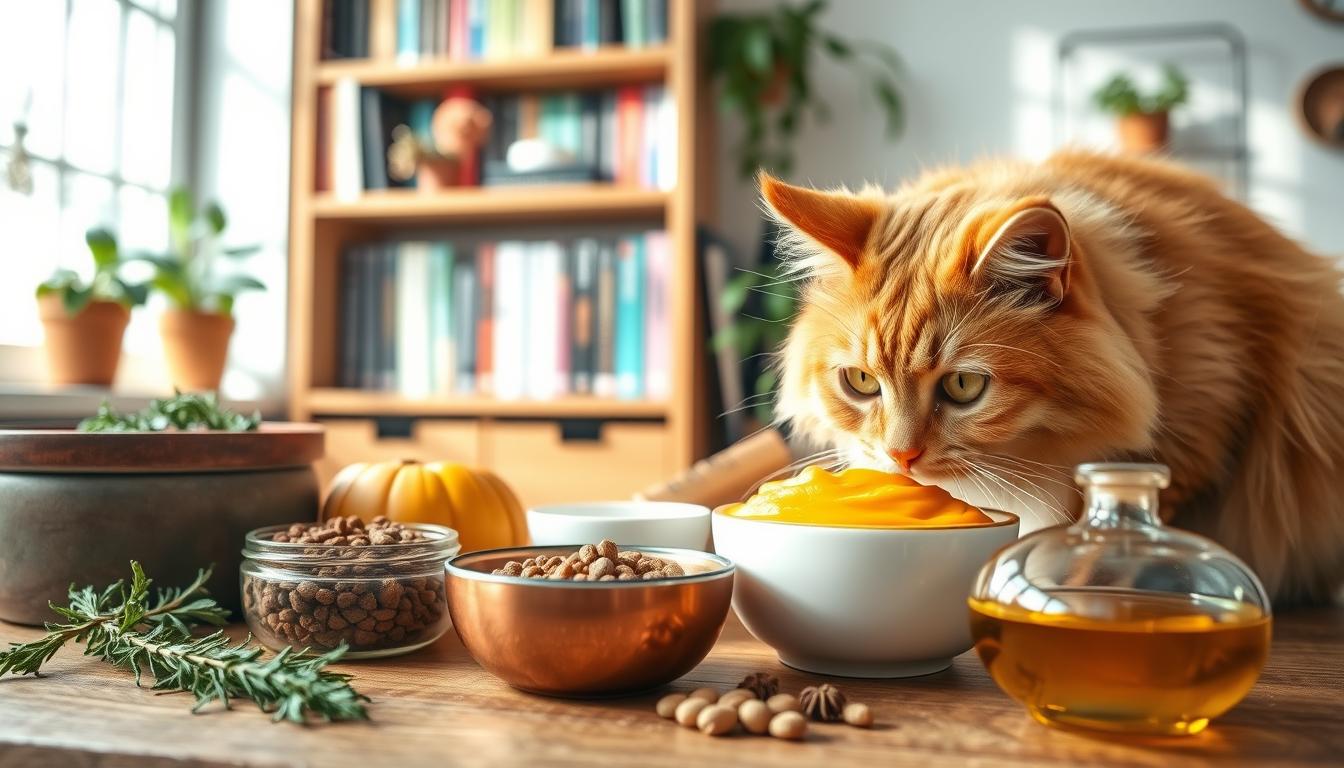
There are natural ways to help with hairballs. Mineral oils or petroleum jelly can lubricate your cat’s digestive tract. This makes it easier for hair to pass through. But, always talk to a vet before giving your cat new substances.
Products with psyllium or fiber can also help. These are often in supplements or special cat foods. They help move hair through your cat’s system.
Dietary Adjustments
Changing your cat’s diet can help with hairballs. Foods rich in omega-3 fatty acids make their coat healthier. This means less shedding and fewer hairballs.
Also, adding fiber to their diet helps hair pass through. Look for cat foods made for hairball control. These have special fibers and nutrients.
Importance of Hydration
Keeping your cat hydrated is key to preventing hairballs. Water helps their digestive system work well. This makes it easier for hair to move through.
Make sure your cat drinks enough water. Use water fountains to make it more appealing. This helps keep their digestive system healthy.
By trying these home remedies, you can help your cat feel better. Always talk to a vet before changing your cat’s diet or adding new supplements. This ensures you’re doing what’s best for your cat.
Commercial Hairball Remedies
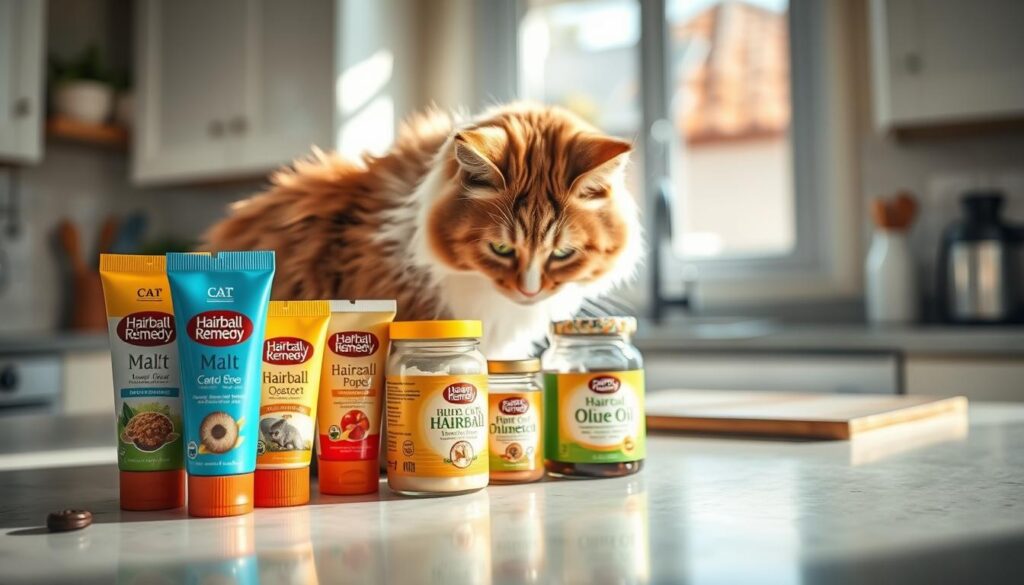
Commercial hairball remedies are available for cat owners. They help prevent or pass hairballs. This makes cats more comfortable.
Overview of Popular Products
There are many commercial hairball remedies. These include special diets, treats, and supplements. They help with digestion and passing hair.
Ingredients to Look For
When picking a hairball remedy, look at the ingredients. Good ones include:
- Psyllium or other fiber sources that help move hair through the digestive system
- Lubricants like petroleum jelly or other oils that help hairballs pass more easily
- Vitamins and minerals that support overall digestive health
Avoid products with harmful ingredients or allergens. They can harm your cat.
How to Choose the Right Product
Choosing the right hairball remedy depends on your cat’s needs. Consider their age, health, and individual needs. Here are some tips:
| Product Type | Key Benefits | Considerations |
|---|---|---|
| Hairball Diets | Formulated to reduce hairball formation, often with added fiber | May require a gradual transition to prevent digestive upset |
| Hairball Treats | Can be used as needed or as a regular supplement | Some cats may find them palatable, while others may not |
| Hairball Supplements | Can be added to food to support digestive health | Quality can vary between brands, so choose a reputable manufacturer |
By considering these factors and talking to your vet, you can find the best remedy for your cat.
Grooming Tips to Prevent Hairballs
Consistent grooming is key to preventing hairballs. Regular grooming cuts down on loose fur your cat swallows. This reduces the chance of hairballs forming.
Brushing Techniques
Brushing your cat does more than just remove loose hair. It also spreads skin oils for a healthy coat. Start with gentle strokes to avoid stressing your cat. Brush long hair in the direction of growth to prevent mats.
Choosing the right brush is crucial. A slicker brush or pin brush works well for tangles and loose hair.
Recommended Grooming Tools
The right tools make grooming easier. Here are some top picks:
- Slicker brush: Great for tangles and mats.
- Pin brush: Gentle and good for daily use.
- Grooming rake: Good for shedding season.
- Deshedding tool: Reduces loose hair.
Frequency of Grooming
Grooming frequency varies by coat type. Short-haired cats need weekly brushing. Long-haired cats should brush daily to avoid mats.
| Coat Type | Recommended Grooming Frequency |
|---|---|
| Short-Haired | Weekly brushing |
| Long-Haired | Daily brushing |
Adding these grooming tips to your routine can lower hairball risks. Regular grooming also strengthens your bond with your pet.
The Role of Diet in Hairball Management
To manage hairballs, knowing how diet affects a cat’s health is key. A cat’s diet can greatly impact hairball formation. So, changing their diet is a big part of managing hairballs.
Key Nutrients for Healthy Fur
A diet full of important nutrients is essential for healthy fur and less shedding. Omega-3 fatty acids are important for skin and coat health. Also, Vitamin E helps keep your cat’s fur healthy, lowering hair ingestion risk.
Foods Formulated for Hairball Control
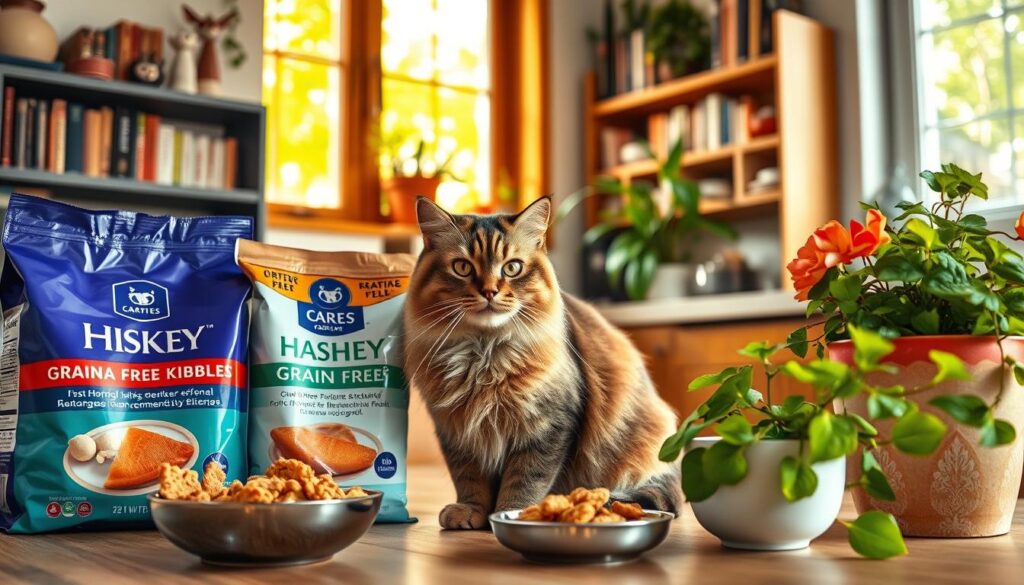
Many cat foods are made to control hairballs. These foods have fibers that help move hair through the digestive system. Psyllium, a key ingredient, acts as a gentle laxative, helping hair pass through.
Importance of Fiber
A diet high in fiber can lower hairball risk by moving hair through the digestive system. Fiber adds bulk to stool and helps move hair, reducing hairball formation. Adding foods with adequate fiber content can help manage hairballs.
By choosing the right diet, cat owners can help reduce hairball problems. It’s about finding the right mix of nutrients and fiber for your cat’s health.
Regular Vet Visits
Regular vet visits are key to keeping your cat healthy, including managing hairballs. These visits do more than just check for hairballs. They ensure your cat’s overall health.
When to Schedule Check-ups
It’s wise to take your cat to the vet at least once a year for a check-up. If your cat often gets hairballs, you might need to go more often. Your vet can give advice based on your cat’s health history.
At these visits, your vet will check your cat’s health and ask about their diet and grooming. They’ll also ask about any symptoms you’ve noticed. This helps find any health problems that might be causing hairballs.
Health Issues Linked to Hairballs
Hairballs can sometimes show a bigger health problem. For example, stomach issues or allergies can make cats groom more, leading to hairballs. Your vet can spot these problems.
Some common health issues linked to hairballs include stomach blockages, inflammatory bowel disease, and problems with how the stomach moves. Regular vet visits can catch these early.
The Vet’s Advice on Hairball Remedies
Your vet is a great help in finding the right hairball remedy for your cat. They can suggest veterinary recommended hairball remedies for cats based on your cat’s needs.
Some vets might suggest changing your cat’s food to help with hairballs. Others might recommend products to help hair move through your cat’s stomach.
By teaming up with your vet, you can create a plan to manage your cat’s hairballs and boost their health.
Lifestyle Changes for Hairball Prevention
Making lifestyle changes can help prevent hairballs in cats. Focus on a few key areas to keep your cat healthy and hairball-free.
Keeping Cats Active
Regular activity is key for a healthy coat and less hairballs. Play with toys or laser pointers to keep your cat active. Interactive toys are great for this.
Change your cat’s environment or add new places to explore. This keeps them active and mentally sharp, reducing hairball risk.
Environmental Considerations
Your cat’s living environment affects their health and hairball prevention. Keep their space clean and stress-free. Clean food and water bowls, litter boxes, and living areas often.
A well-ventilated home with fresh air helps a healthier coat and less shedding. This lowers hairball risk. Also, give your cat scratching posts to manage shedding.
Reducing Stress Factors
Stress can lead to hairballs in cats. Changes in environment, new pets or people, or schedule changes can stress them out. Minimizing these stressors is key.
Use pheromone diffusers or calming music for your cat. Provide a quiet, safe spot for them to relax when stressed.
By making these lifestyle changes, you can greatly reduce hairballs and improve your cat’s health and happiness.
Special Considerations for Long-Haired Cats
Grooming is key for long-haired cats. It keeps them looking good and healthy. These cats are more likely to get matted and tangled fur. This can cause hairballs if not handled right.
Grooming Needs for Long-Haired Breeds
Long-haired cats need regular grooming to avoid mats and tangles. Daily brushing is a must to keep their fur in shape and lower hairball risks. The right grooming tools, like slicker brushes or combs for long-haired cats, are very helpful.
How often to groom depends on the cat’s breed and fur type. Usually, long-haired cats do well with daily grooming sessions. Adjust this based on the cat’s comfort and needs.
Common Hairball Challenges
Long-haired cats face more hairball issues because of their grooming and fur length. They swallow a lot of hair while grooming, which can build up in their stomach and form hairballs. Watching their grooming habits and making sure they don’t swallow too much hair is important.
Dealing with matted fur, reducing shedding, and stopping hair ingestion are common problems. Using hairball remedies or special hairball control foods can help solve these issues.
Maintaining a Healthy Coat
Regular grooming is key to a healthy cat coat and less shedding. A clean coat makes your cat look great and keeps them healthy. It also helps prevent hairballs.
Importance of Regular Bathing
Bathing your cat often helps remove loose hair and cuts down on shedding. Cats are clean animals, but baths are sometimes needed. Use a mild cat shampoo to avoid skin irritation.
For cats that don’t like water or have special grooming needs, dry shampoo or wipes are good alternatives. But, many cats benefit from a bath every few months.
Use of Conditioners and Grooming Sprays
Using conditioner after a bath makes grooming easier and prevents mats. It also moisturizes the skin and coat, improving health.
Grooming sprays can be used between baths to keep the coat clean and fresh. They help reduce shedding and prevent hairballs by cutting down on loose hair ingested during grooming.
For more tips on managing hairballs and keeping a healthy coat, check out Sploot Vets for expert advice.
| Grooming Practice | Benefits | Frequency |
|---|---|---|
| Regular Bathing | Removes loose hair, reduces shedding | Every few months |
| Using Conditioners | Detangles fur, moisturizes skin and coat | After each bath |
| Grooming Sprays | Keeps coat clean and fresh, reduces shedding | As needed between baths |
Final Thoughts on Cat Hairball Remedies
Managing cat hairballs needs a mix of diet changes, grooming, and lifestyle tweaks. Knowing why hairballs happen and using good remedies can make our cats healthier and happier.
Effective Remedies Recap
We’ve looked at many ways to treat cat hairballs, from simple home fixes to store-bought solutions. Making sure our cats eat enough fiber and grooming them often helps a lot. Also, keeping them active and stress-free is key to a well-rounded hairball management plan.
A Holistic Approach to Hairball Management
Our last thoughts on cat hairball remedies stress the need for a complete care plan. The right diet, regular grooming, and a healthy lifestyle can really cut down on hairballs. This not only boosts our cats’ health but also deepens our connection with them.