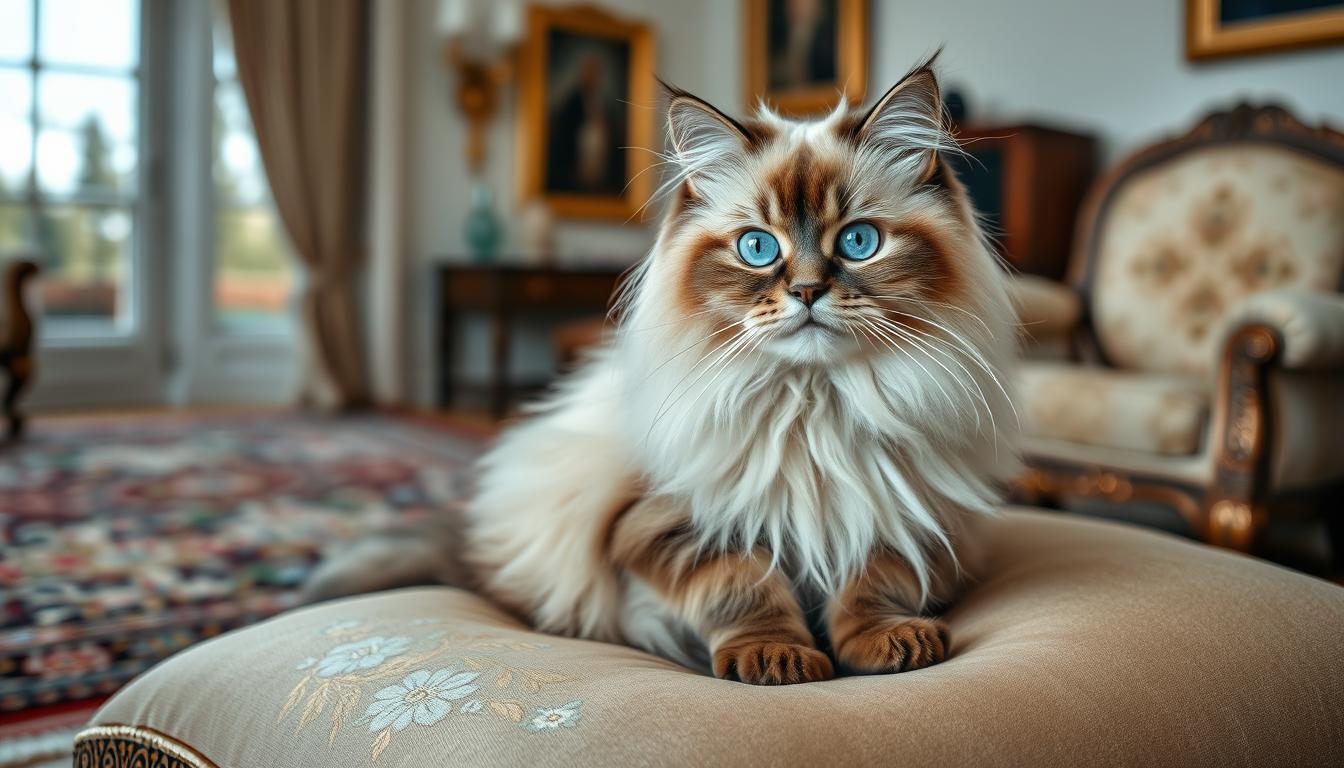

Did you know the Russian Blue Cat is one of the oldest cat breeds? It has a history over a century long. This breed has won hearts around the world with its beautiful looks and kind nature. We’ll dive into the Blue Russian Cat breed, covering their history, looks, and personality.
If you’re thinking of getting a Blue Russian Cat, knowing about their grooming and health is key. By learning about this breed, we can truly appreciate their special traits. For more info, check out our detailed guide on the Russian Blue breed.
Key Takeaways
- The Russian Blue Cat is known for its calm and reserved yet affectionate nature.
- They are best suited for peaceful households and are sensitive to changes in routine.
- Regular grooming and health checks are essential for their well-being.
- This breed responds well to positive reinforcement training.
- Russian Blues are generally healthy, with a lifespan of 15 to 20 years.
Understanding the Blue Russian Cat’s Unique Characteristics
The Blue Russian Cat is loved by many for its special looks and personality. This breed stands out with its unique appearance and charming nature. It’s a favorite among cat lovers.
Physical Traits of the Blue Russian Cat
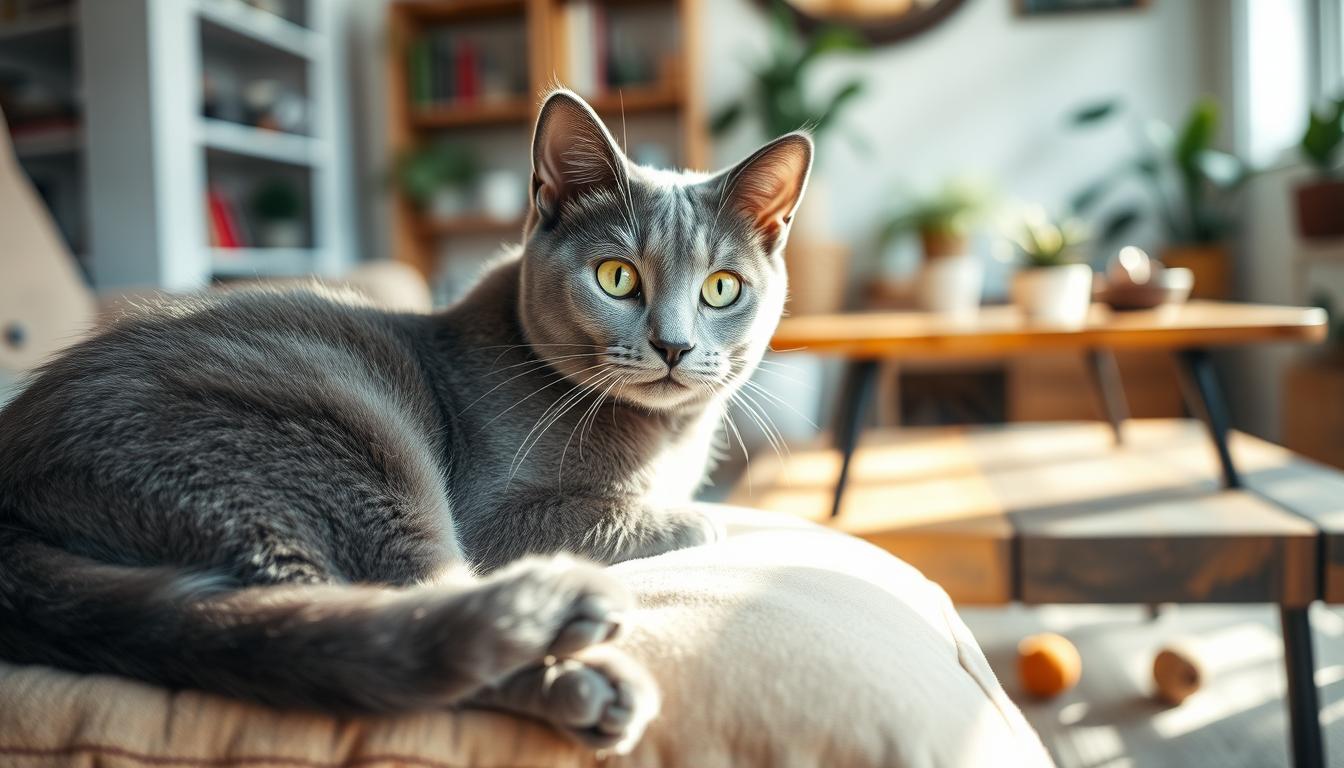
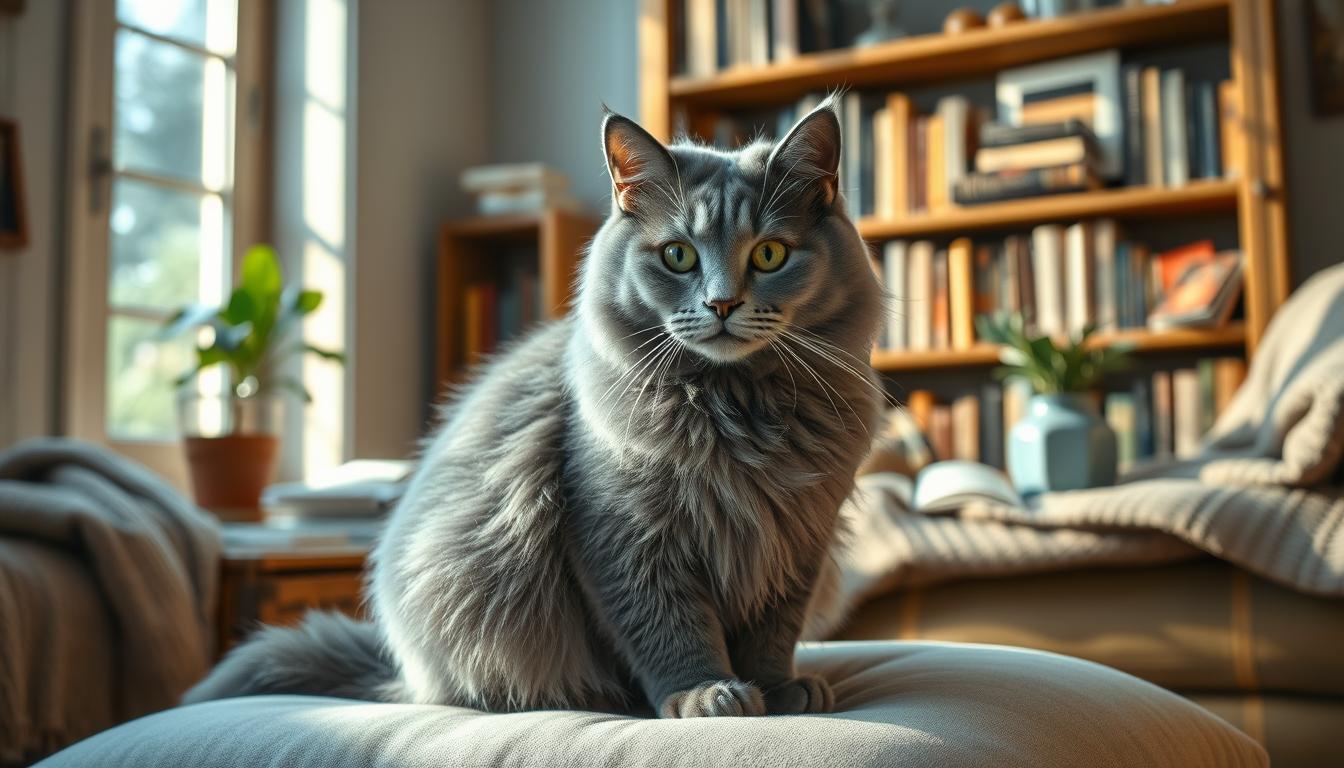
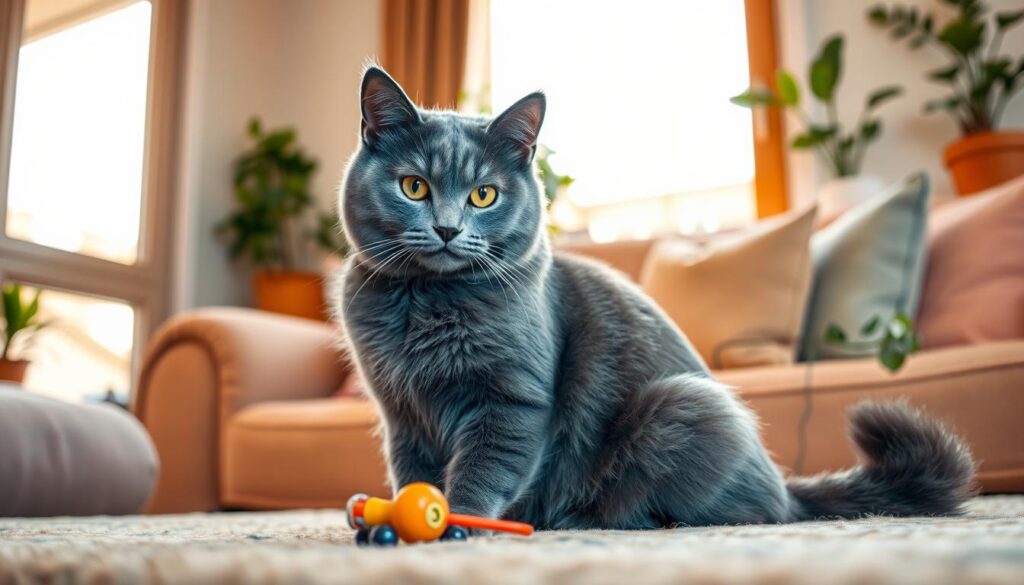
The Blue Russian Cat has a bluish-grey coat that makes them stand out. They look sophisticated and elegant. Their muscular yet graceful build is medium-sized, and their bright green eyes are striking.
Personality and Temperament
The Blue Russian Cat is known for being calm and gentle. They are affectionate and love being around people. They are quiet and reserved, perfect for a peaceful home.
Common Behavioral Traits
Despite being calm, Blue Russian Cats are playful. They love to play and explore. They show their playful side with toys or when checking out new places.
In short, the Blue Russian Cat is a favorite for many. Their calm nature and playful side bring joy and companionship to homes.
The History of the Blue Russian Cat
The origins of the Blue Russian Cat are a bit of a mystery. But most agree they come from northern Russia, where their thick coats were very valuable. This breed has a rich history, deeply connected to its cultural and geographical roots.
Origins of the Breed
The Blue Russian Cat likely came from northern Russia’s cold climates. Their thick double coat and striking blue color made them a favorite among Russian nobles.
As the breed evolved, it showed the beauty of Russia’s harsh landscapes. Their intelligence and affectionate nature won over the hearts of the aristocracy.
Historical Significance
The Blue Russian Cat’s history goes beyond their looks. They were highly valued for their companionship, often found in Russian nobles’ courts. Their presence in historical homes shows their importance as a breed.
- Their thick coat symbolized wealth and status.
- They were loved for their gentle and affectionate nature.
- Their intelligence made them engaging companions.
The Blue Russian in Popular Culture
The Blue Russian Cat has appeared in many forms of popular culture. Their distinctive appearance and captivating personality have made them a favorite among artists and writers.
In today’s world, the Blue Russian Cat is still celebrated for its unique traits and historical importance. Their presence in modern culture shows their lasting appeal.
How to Care for a Blue Russian Cat
To keep your Blue Russian Cat happy and healthy, you need to give them the right care. These cats have beautiful, thick coats and loving personalities. They need grooming, a good diet, and plenty of exercise.
Essential Grooming Tips
Blue Russian Cats have a coat that’s easy to care for. But, they still need regular brushing to avoid mats and tangles.
Grooming Tips:
- Brush your Blue Russian Cat’s coat at least once a week.
- Use a gentle brush to avoid damaging their fur.
- Check their coat regularly for any signs of matting or tangling.
Dietary Needs and Nutritional Requirements
Feeding your Blue Russian Cat the right food is key to their health. They need a mix of proteins, fats, and carbs. Plus, they need vitamins and minerals.
| Nutrient | Importance | Sources |
|---|---|---|
| Protein | Essential for muscle growth and maintenance | Chicken, Fish, Beef |
| Omega-3 Fatty Acids | Promotes healthy skin and coat | Fish Oil, Flaxseed |
| Vitamin A | Important for vision and immune function | Carrots, Sweet Potatoes |
Exercise and Playtime Recommendations
Exercise and playtime are crucial for your Blue Russian Cat’s happiness and health. They love to play and enjoy interactive toys and games.
Exercise Tips:
- Engage your cat in play with feather toys or laser pointers.
- Provide puzzle toys filled with treats to stimulate their mind.
- Aim for at least 30 minutes of playtime per day.
Creating the Ideal Environment for Our Blue Russian Cat
To make sure our Blue Russian Cat is happy, we need to create the perfect home. This means making a space that’s both comfy and fun. It should meet their physical and emotional needs.
Setting Up the Living Space
When setting up our Russian blue cat‘s home, we should think about their natural habits. Blue Russian Cats love quiet, calm places and like their own space.
We can make a cozy spot for them to rest and relax. Plush beds or soft blankets in quiet spots are great. Also, adding cat shelves or trees lets them climb, watch, and feel safe.
Cat experts say, “Cats like being alone and having their own spots to hide when they need to.”
“Giving them many perches and hiding spots makes them feel secure and happy.”
Safe Outdoor Access vs. Indoor Living
Choosing between safe outdoor access or indoor living for our Russian blue feline is a big decision. Both have good and bad points.
| Considerations | Indoor Living | Safe Outdoor Access |
|---|---|---|
| Safety | Protected from dangers outside | Could get hurt or sick |
| Stimulation | May lack stimulation without enrichment | Offers natural stimulation |
| Health | Less chance of getting sick | Could get parasites |
For more tips on caring for a Blue Russian Cat, check out this detailed guide.
The Importance of Scratching Posts
Scratching posts are key for our cat’s well-being. They keep nails healthy, provide exercise, and let them mark their territory.
Choosing the right scratching post is important. Look for sturdy, tall posts with sisal rope or carpet. This helps them scratch effectively.
By using scratching posts, we can stop our cat from scratching furniture. This keeps our home looking good and keeps everyone happy.
Health Considerations for Blue Russian Cats
Blue Russian Cats are usually healthy, but owners need to watch out for some health issues. We must take care of our Blue Russian Cat’s health to keep them happy and healthy for a long time.
Common Health Issues
Like many breeds, Blue Russian Cats can face specific health problems. Obesity and dental disease are two big concerns. Obesity can cause diabetes and heart disease, so it’s important to watch their diet and make sure they exercise.
Dental disease can be painful and lead to bigger health problems if not treated. Brushing their teeth and giving them dental chews can help prevent these issues.
Regular Veterinary Care
Regular vet visits are crucial for our Blue Russian Cat’s health. These visits help catch health problems early and keep them up-to-date on vaccinations and preventatives like flea and tick control.
Our vet can also give advice on diet, exercise, and other care aspects. This helps us make the best choices for our cat’s health.
Preventative Health Measures
Preventative care is key for our Russian Blue Kitty’s health. This includes regular vet visits, a balanced diet, fresh water, and a safe, stimulating environment. This encourages physical activity and keeps their mind sharp.
By taking these steps, we can lower the risk of our cat getting common health problems. This ensures they live a happy, healthy life.
Socializing Our Blue Russian Cat
Blue Russian cats are loving and loyal. They need proper socialization to grow into confident, friendly pets.
Introducing the Cat to New People
Introducing our Blue Russian cat to new people should be done slowly. This helps avoid stressing the cat. It’s important to make sure the cat feels safe and comfortable.
We can start by inviting friends who are familiar to the cat. Let them interact at their own pace. Positive reinforcement with treats and praise helps the cat feel more open to new people.
Interactions with Other Pets
Introducing our Blue Russian cat to other pets needs careful planning. Start with visual introductions, where pets can see but not touch. This helps reduce tension.
Gradually increase their interaction time while watching closely. Rewarding calm behavior with treats helps the introduction go smoothly.
| Pet Type | Introduction Tips | Expected Outcome |
|---|---|---|
| Dogs | Start with separate rooms, then use phased introductions under supervision. | Potential for friendship if both are calm and well-behaved. |
| Other Cats | Use scent swapping before visual introductions, followed by supervised meetings. | Can become companions if introduced slowly. |
| Small Pets (e.g., hamsters, rabbits) | Keep them separated, allow visual introductions, and ensure the cat’s hunting instinct is not triggered. | Coexistence is possible with careful management. |
Bonding Activities for Owners and Cats
There are many ways to bond with our Blue Russian cat. Playing with feather toys or laser pointers strengthens our bond and keeps them active.
Grooming is also a great way to bond. Blue Russian cats love being brushed. It reduces shedding and builds trust and closeness.
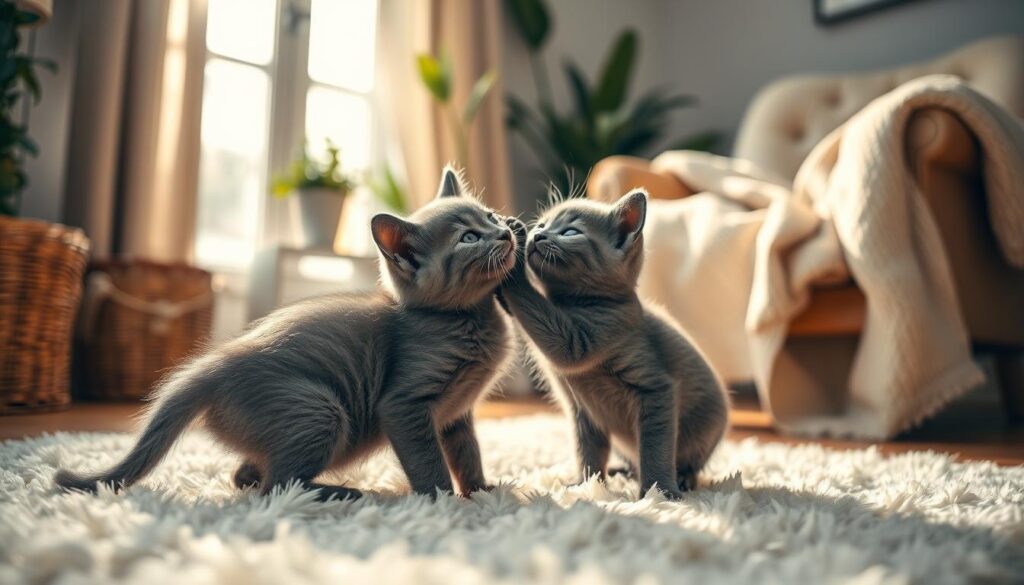
By spending time on these activities, we can make our relationship with our Blue Russian cat stronger. This ensures they stay happy and well-adjusted in our family.
Training Techniques for the Blue Russian Cat
Blue Russian Cats are smart and easy to train. We can teach them many useful tricks and behaviors with the right methods.
Basic Commands and Tricks
Training starts with simple commands like “sit,” “stay,” and “come.” These are the basics. We use treats and praise to encourage them.
To teach “sit,” hold a treat above their head and move it back. They’ll follow it with their nose, sitting down. Say “sit” and give them the treat. Then, stop using treats as they get better.
Litter Box Training
Keeping our home clean means teaching our cat to use the litter box. Most Russian Blue Cats learn quickly. Place them in the litter box after meals and naps.
Use praise and rewards for good behavior. If they struggle, try different litters or move the litter box. Keep it clean and easy to find.
Addressing Common Behavioral Problems
Our Blue Russian breed might scratch furniture or not use the litter box. Find out why. Scratching furniture could mean they need scratching posts.
Give them the right places to scratch and reward them for using them. For tough problems, see a behaviorist or vet. For more help, check out https://oboucing.com/services/.
Understanding Our Blue Russian Cat’s Communication
Our Blue Russian Cat talks to us in many ways. It’s important to understand these signals to strengthen our bond. By noticing their sounds, body language, and actions, we can figure out what they need and how they feel.
Vocalizations and Their Meanings
Blue Russian Cats make different sounds to tell us what they want or need. These sounds include:
- Meowing: They meow for attention or to start playing.
- Purring: Purring shows they’re happy or trying to calm down.
- Hissing or growling: These sounds mean they’re scared, upset, or defending their space.
Body Language Insights
Body language is key in how cats talk to us. Our Blue Russian Cat’s stance, face, and tail tell us a lot.
A calm cat looks relaxed, while a worried cat might seem tense. Knowing these signs helps us see how they’re feeling.
- Tail twitching: Shows they’re upset or annoyed.
- Ears forward: Means they’re curious or interested.
- Whisker position: Tells us about their mood or feelings.
Understanding Purring and Meowing
Purring and meowing are common ways Blue Russian Cats talk to us. Purring can mean they’re happy or trying to relax. Meowing is usually for talking to us or other animals.
By listening to when and how they purr or meow, we can understand them better.
The Role of the Blue Russian Cat in Families
The Blue Russian cat is perfect for any family. They are calm and loving. This makes them great friends for both kids and adults.
Blue Russian Cats and Children
Blue Russian cats are very patient and kind. These traits are key when they’re around kids. They’re also sturdy, which is good for families with little ones.
It’s important to teach kids how to be gentle with cats. They should not tease or pull the cat’s tail or ears. Also, kids need to know when the cat wants to be alone.
Benefits of Having a Blue Russian Cat for Children:
- Teaches children about responsibility
- Encourages empathy and compassion
- Provides companionship and friendship
Positive Impacts on Mental Health
Blue Russian cats can really help with mental health. They are calm and loving. This can make people feel less lonely and stressed.
“The human-animal bond is a powerful one, and cats, in particular, have a way of sensing their owner’s emotions, often providing comfort when it’s needed most.”
Petting a cat can lower blood pressure and reduce stress. Blue Russian cats are perfect for this. Their soft purrs and coat are very comforting.
| Mental Health Benefit | How Blue Russian Cats Help |
|---|---|
| Reduced Stress | Calming presence, gentle purrs |
| Lower Blood Pressure | Petting and interacting with the cat |
| Companionship | Affectionate nature, loyalty |
Adopting a Blue Russian as a Therapy Cat
Not all Blue Russian cats are good for therapy work. But, many have the right temperament. They are gentle and love people, making them great therapy cats.
To be a therapy cat, a Blue Russian needs training. They must get used to different places and people. With the right training, they can make people happy in hospitals and nursing homes.
Understanding the role of a Blue Russian cat in a family shows how they enrich our lives. They offer companionship and support our mental health.
Choosing the Right Breeder or Rescue Organization
Finding your perfect Blue Russian companion starts with finding a good breeder or rescue. This step is key to getting a healthy pet and supporting animal welfare.
What to Look for in a Responsible Breeder
A good breeder focuses on their cats’ health, mood, and happiness. When looking for a Russian blue breed breeder, check for:
- Clear information on the cat’s family history, health, and mood.
- Clean and safe living spaces for the cats.
- Health checks for the parents of the kitten you want.
- A willingness to answer your questions and help with pet care.
Benefits of Adopting from Rescue Organizations
Adopting a blue Russian feline from a rescue is rewarding. You give a loving home to a cat in need and free up space for another. Benefits include:
- Helping a cat that was abandoned or neglected.
- Rescue cats are often spayed, vaccinated, and microchipped.
- The adoption process checks if your home is right for a cat.
Questions to Ask Before Adopting
It’s crucial to ask the right questions when adopting. For breeders, ask about health history, genetic tests, and parents. For rescues, ask about the cat’s past, personality, and health. Important questions include:
- What is the cat’s personality like?
- Are there any health or allergy issues?
- How has the cat been socialized?
- What support does the breeder or rescue offer after adoption?
By choosing the right breeder or rescue and asking the right questions, you can have a happy and healthy Russian blue kitty.
Fun Facts About Blue Russian Cats
Exploring the world of the blue russian cat reveals fascinating facts. These make the breed even more charming. The Russian blue feline has been surrounded by myths and legends, adding to its mystique.
Unique Trivia and Myths
The blue russian breed has a rich history. Some believe it came from the Russian aristocracy. Myths say Russian czars favored these cats, and they hunted rodents in palaces.
Popularity Trends Over the Years
The blue russian cat has remained popular, mainly in the United States. Their calm nature and striking looks have won many fans among cat lovers.
Famous Blue Russian Cats in History
While there aren’t famous blue russian cats documented, they’ve made a mark in popular culture. Their unique looks have inspired art and literature.
As we wrap up our guide, we hope you’ve enjoyed learning about the blue russian cat. Whether you’re a seasoned cat owner or new to felines, this breed will captivate you with its beauty and charm.