
Did you know the Russian Blue domestic cat is very popular? It’s loved for its beautiful look and loving nature. Its soft blue-gray fur and bright eyes win many hearts.
The Russian Blue cat breed is not just pretty. It’s also smart and loyal. It’s a wonderful pet for those who want a gentle and fun cat. For more info, check our about page.
Key Takeaways
- The Russian Blue domestic cat is known for its beautiful blue-gray coat.
- This breed is highly intelligent and makes a great companion.
- Russian Blue cats are generally affectionate and loyal to their owners.
- They are a great choice for those looking for a gentle and playful pet.
- The breed’s unique appearance and temperament make it a popular choice among cat enthusiasts.
Introducing the Russian Blue Domestic Cat
Russian Blue cats are known for their smarts and loving nature. They are a favorite among many families worldwide. Their special looks and sweet personality set them apart from other cats.
Origin and History
The Russian Blue breed has a long history, starting in the 19th century in Russia. They were loved by Russian czars and often appeared in stories and records. Their exact origins are a bit of a mystery, but they were introduced to England in the late 1800s.
They were once part of Russian nobility, adding to their charm and exclusivity. Breeders worked hard to keep their unique traits alive. Now, we have the Russian Blue we know today.
Unique Traits and Characteristics
Russian Blues are smart, playful, and loving. They love to be around people and enjoy family activities. They need toys and play to keep them happy, but they’re not too demanding.
They have a thick, soft coat that needs little grooming but feels amazing. Russian Blues are quiet, with a soft voice. They’re great for homes, including apartments, because they’re not too loud.
If you’re thinking about getting a Russian Blue, know they love attention and interaction. They’re perfect for families or people who can spend time with them.
Physical Appearance of the Russian Blue
The Russian Blue cat is known for its stunning looks. Its elegant appearance makes it very popular among cat lovers.
Stunning Coat Color
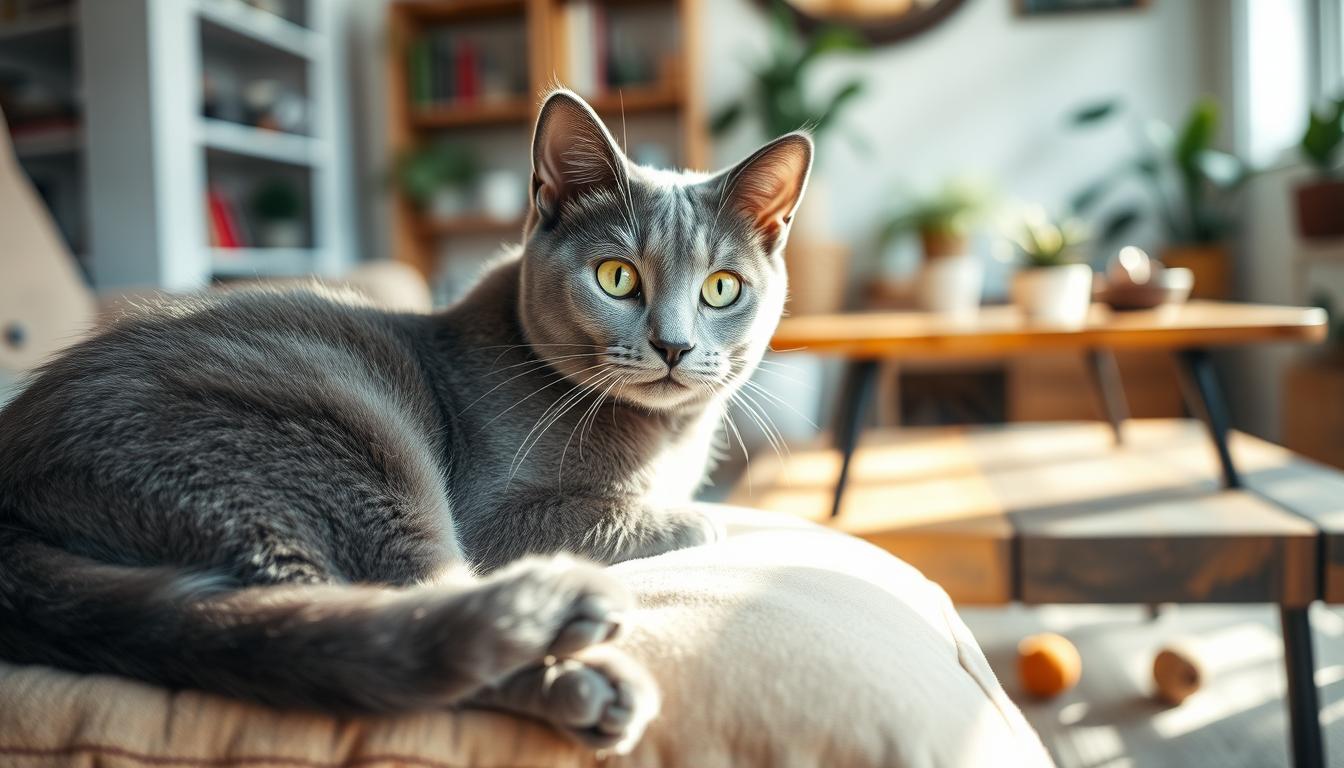
The Russian Blue’s coat is truly unique. It’s blue-gray in color and short, dense. This gives it a striking look.
The coat’s color is often called “blue.” It’s not just beautiful to look at. It’s also plush to the touch, making it a joy to pet.
Eye Color Variations
The Russian Blue’s eyes are bright green. This bright green contrasts beautifully with their blue-gray coat. Their vivid green eyes are a key feature of the breed.
Build and Size
Russian Blues have a muscular yet fine-boned build. They are medium-sized. Males weigh 10-12 pounds, and females weigh 7-9 pounds.
They have a slender yet muscular physique. This makes them agile and graceful. They are a pleasure to watch.
In conclusion, the Russian Blue’s looks are a big part of its charm. With its stunning coat, striking eyes, and elegant build, it’s easy to see why it’s so loved. Whether you’re a cat lover or just looking for a beautiful pet, the Russian Blue’s appearance will surely captivate you.
Temperament and Personality of Russian Blues
Russian Blues are loved for their loving yet independent nature. They are perfect for those who want a cat that’s both fun and sometimes quiet. This mix makes them a great choice for many cat lovers.
Affectionate Nature
Russian Blues love to be close to their people. They often follow their owners around the house. One owner said, “My Russian Blue is always by my side, it’s like having a shadow.” This loyalty makes them excellent friends.
But they don’t always want to be in your face. They show love on their own terms. This makes them perfect for those who value independence in their pets.
Playful Yet Independent
Russian Blues are both playful and independent. They love to play with toys and enjoy interactive games. But they also like to do their own thing.
Being intelligent and curious cats, they need things to do. Puzzle toys and playtime keep them happy and active. But they’re not needy, so they can handle being alone sometimes.
“The Russian Blue is a breed that embodies the perfect balance of playfulness and reserve, making it an ideal companion for a variety of households.”
Intelligent and Curious
Russian Blues are smart and love to figure things out. They enjoy exploring and playing when they find something interesting.
To keep them happy, give them lots of toys and activities. Interactive play and puzzle toys are great. Their intelligence and curiosity make them fun to watch as they discover new things.
Health Considerations for Russian Blue Cats
Russian Blues are generally healthy, but there are health concerns owners should know. They are known for their strong health. Yet, like all breeds, they can face certain health issues.
Common Health Issues
Russian Blue cats might face genetic health issues. Two big concerns are hypertrophic cardiomyopathy and patellar luxation. Hypertrophic cardiomyopathy is a heart problem that can be serious if not managed well. Patellar luxation is when the kneecap moves out of place, causing pain.
| Health Issue | Description | Prevention/Care |
|---|---|---|
| Hypertrophic Cardiomyopathy | A heart condition that thickens the heart muscle, potentially leading to heart failure. | Regular veterinary check-ups, echocardiograms. |
| Patellar Luxation | A condition where the kneecap dislocates, causing pain and discomfort. | Maintaining a healthy weight, regular vet visits. |
Importance of Regular Vet Visits
Regular vet visits are key for your Russian Blue’s health. These visits help catch health problems early. This ensures your cat gets the care they need quickly.
“Regular check-ups with your veterinarian are essential for identifying health issues early on, which can significantly improve your cat’s quality of life.”
We suggest annual or bi-annual vet visits, based on your cat’s age and health. During these, your vet can give vaccinations, do health screenings, and offer advice on diet and lifestyle.
By being proactive about your Russian Blue’s health, you can prevent or manage common issues. This ensures a long, happy life for your cat.
Nutrition and Diet for Russian Blue Cats
It’s key to give your Russian Blue cat the right food for their health. They need a diet rich in protein to stay healthy and full of energy.
High-Quality Cat Food Recommendations
Choosing high-quality cat food is crucial for your Russian Blue. Look for food high in protein and moderate in fat. For more info on their diet, check out this resource on Russian Blue cat diet and feeding charts.
When picking cat food, look for these ingredients:
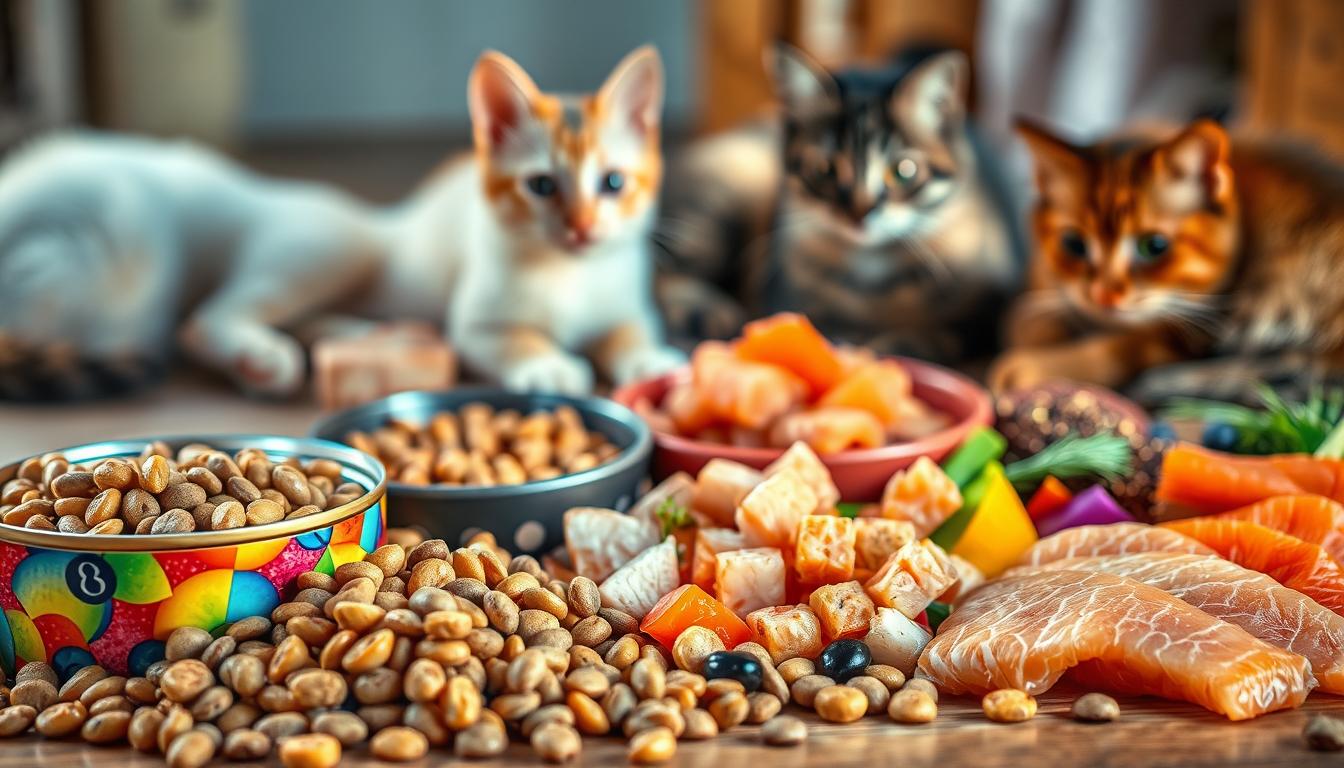
- Named protein sources like chicken or salmon
- Whole grains for fiber and nutrients
- Fruits and vegetables for antioxidants and vitamins
Feeding Frequency and Portion Control
How often and how much you feed your Russian Blue is important. It depends on their age, size, and how active they are.
| Age | Feeding Frequency | Portion Size |
|---|---|---|
| Kittens (0-12 months) | 3-4 times a day | 1/4 to 1/2 cup per meal |
| Adults | 2 times a day | 1/2 to 3/4 cup per meal |
Watching your cat’s weight is also key. Too much food can make them overweight, which is bad for their health.
By focusing on high-quality nutrition and proper feeding, your Russian Blue cat will live a long, happy life.
Grooming Needs of the Russian Blue
Having a Russian Blue is a joy because they need little grooming. Their short, dense coat is easy to manage. This makes them perfect for people who are always on the go.
Coat Maintenance
The Russian Blue’s coat is truly unique. To keep it looking great, regular brushing is key. Brushing gets rid of loose hair and spreads skin oils, making the coat shiny and healthy. Use a soft brush or comb made for cats with short hair.
For Russian Blues, a weekly brush is enough. Brushing is a chance to bond with your cat. They love the gentle touch and attention.

Bathing and Brushing Tips
Russian Blues are usually clean and don’t need baths often. But sometimes, a bath is needed. When you do bathe them, use a mild cat shampoo and warm water.
Don’t forget about nail trimming and ear cleaning. Trimming nails prevents discomfort or injury. Cleaning ears should be done carefully to avoid irritation.
- Use a gentle brush or comb for coat maintenance.
- Bathe your Russian Blue infrequently, using mild cat shampoo.
- Regular nail trimming and ear cleaning are crucial.
Choosing the Right Environment
Russian Blue cats do best in calm and predictable places. This makes choosing the right home very important. A peaceful setting helps them feel secure and relaxed, which is key for their happiness.
Ideal Home Settings for Russian Blues
Creating the perfect home for your Russian Blue involves several key factors. A quiet and peaceful living space is essential. Russian Blues don’t like loud noises or chaos, so a calm home is best for them. Keeping a regular daily routine also helps reduce stress and anxiety in your cat.
It’s also important to give your cat enough room to move. Russian Blues don’t need a lot of space, but they do need room to stretch, play, and exercise. Make sure your home has areas for these activities to keep your cat physically and mentally healthy.
Safe Spaces for Play and Relaxation
Creating safe spaces for play and relaxation is crucial for your Russian Blue. Designating specific areas for play keeps your cat active and engaged. This can include cat trees, scratching posts, and interactive toys that challenge and entertain your cat.
Quiet, cozy spots are also essential for your Russian Blue to relax. Providing cozy bedding or blankets in a quiet corner of your home can make your cat feel secure and comfortable. It’s wise to keep these areas stable and predictable, as Russian Blues like a steady environment.
“Cats are notoriously finicky creatures, and the Russian Blue is no exception. Their environment plays a significant role in their happiness and health.”
By focusing on a calm, predictable environment with dedicated play and relaxation spaces, you can greatly improve your Russian Blue’s life. This careful approach to their care ensures they stay happy, healthy, and well-adjusted.
Socialization and Interaction Tips
Creating a strong bond with your Russian Blue cat needs regular socialization and positive interactions. These cats love being around people and enjoy getting attention.
Bonding with Your Russian Blue
To really connect with your Russian Blue, spend quality time together. You can do this by:
- Gentle petting and stroking
- Playing with feather toys or laser pointers
- Just sitting together in a quiet room
These actions make your cat feel safe and loved, building a strong bond. For more tips on interacting with your pet, check out our cat care services.
Encouraging Positive Behavior
Russian Blue cats love positive reinforcement. To encourage good behavior, try:
- Reinforcing good actions with treats and praise
- Setting a regular routine for meals, play, and sleep
- Creating a cozy and safe space for your cat to relax and play
By doing these things, your Russian Blue will learn good habits and become well-adjusted. Remember, being consistent and patient is crucial for successful socialization and interaction.
For Russian Blue cats, a routine is very important. It makes them feel secure and builds trust. Keeping a regular schedule for meals, play, and rest improves your cat’s happiness and strengthens your relationship.
Training Your Russian Blue Cat
Russian Blue cats are very smart and love to learn. They are curious and playful, making them great at learning tricks. This strengthens the bond between you and your cat.
Basic Commands and Tricks
Teaching your Russian Blue cat simple commands and tricks is fun. Start with “sit,” “stay,” and “come.” Use treats and praise to help them learn.
- Use treats to lure your cat into the desired position.
- Be consistent with commands and hand signals.
- Practice regularly to reinforce what they’ve learned.

Litter Box Training
Teaching your cat to use the litter box is important. Russian Blues are clean and can learn quickly. Make sure the litter box is clean and easy to find.
| Tip | Description |
|---|---|
| Keep it Clean | Scoop the litter box daily to encourage use. |
| Easy Access | Ensure the litter box is in a quiet, accessible location. |
| Positive Reinforcement | Praise your cat when they use the litter box correctly. |
By following these tips, your Russian Blue cat will become a loving and well-behaved pet. Remember, patience and consistency are essential for successful training.
Traveling with Your Russian Blue
Planning to travel with your Russian Blue? It’s crucial to prepare your cat to avoid stress. Travel can be tough for cats, but with the right steps, it can be smoother.
Preparing for Travel
Start by getting your cat used to its carrier. Add favorite toys or blankets to make it cozy. Use treats to help your cat get in the carrier willingly.
Don’t forget to get a health certificate from a vet. This is needed for travel, across states or borders. Make sure your cat’s vaccinations and care are up-to-date.
Pack the essentials for your cat’s trip. Bring their favorite food, water, and any meds. A portable litter box and familiar bedding can also help reduce stress.
Tips for a Stress-Free Journey
Keep the travel area calm. Use a covered carrier and pheromone sprays to calm your cat. Stick to their usual routine as much as possible.
Minimizing Stress: Avoid loud noises and extreme temperatures. In cars, keep the carrier stable. For flights, check airline pet policies and choose direct flights.
As an expert says,
“The key to a stress-free journey with your cat is preparation and patience.”
By following these tips, you can make the trip safe and enjoyable for both you and your Russian Blue.
Adopting versus Buying a Russian Blue
Thinking about getting a Russian Blue? You can adopt or buy from a breeder. Each option has its own benefits and things to think about.
Adopting a Russian Blue is a rewarding experience. It gives a loving home to a cat in need. Many shelters and rescue groups have Russian Blues or mixes looking for a forever home.
Benefits of Adoption
Adopting a Russian Blue has many benefits. You’re giving a home to a cat that might have been abandoned. Also, adoption fees are often lower than buying from a breeder.
Another great thing about adoption is getting an adult cat. Their personality and temperament are already known. This is perfect for those who don’t want to deal with kittens.
Reputable Breeders
Buying a Russian Blue from a breeder means finding a reputable breeder. A good breeder cares about their cats’ health and provides the right documents.
Buying from a breeder costs more. The russian blue cat price can be between $600 and $1,200 or more. Prices vary based on the cat’s lineage, location, and the breeder’s reputation.
To find a reputable breeder, look for clear information about the cat’s ancestry, health, and personality. They should also let you visit and meet the cats.
Conclusion: The Joy of Owning a Russian Blue Domestic Cat
Owning a Russian Blue cat can bring a lot of joy and companionship into your life. They look elegant and are playful, making them a favorite among cat lovers.
Lasting Companionship
Russian Blues form strong bonds with their owners, offering love and comfort. They are loyal and gentle, perfect for those looking for a long-term pet. For more information on Russian Blues, check out this resource.
Final Thoughts
Choosing a Russian Blue as a pet means embracing a life filled with joy, companionship, and love. Their intelligence, playful nature, and affection make them a great fit for many families. Bringing a Russian Blue home means gaining a loyal friend who will add joy to your life.
FAQ
What is the average lifespan of a Russian Blue domestic cat?
Are Russian Blues generally healthy?
How often should I groom my Russian Blue?
Are Russian Blues good with children?
How much exercise do Russian Blues need?
Can Russian Blues be trained?
How much does a Russian Blue cat cost?
FAQ
What is the average lifespan of a Russian Blue domestic cat?
Russian Blues can live for 15-20 years. Some may even reach 25 years with the right care and diet.
Are Russian Blues generally healthy?
Yes, Russian Blues are generally healthy. But, like all breeds, they can face health problems. These include hypertrophic cardiomyopathy and patellar luxation.
How often should I groom my Russian Blue?
Russian Blues have a short, dense coat. They need only a weekly brushing. This removes loose hair and spreads skin oils.
Are Russian Blues good with children?
Russian Blues are calm and gentle. They’re great for families with kids. But, it’s key to socialize them well and teach kids how to handle them gently.
How much exercise do Russian Blues need?
Russian Blues don’t need a lot of exercise. They love to play, but short sessions each day are enough to keep them happy and healthy.
Can Russian Blues be trained?
Yes, Russian Blues are smart and can learn basic commands and tricks. They also learn to use the litter box easily.
How much does a Russian Blue cat cost?
The price of a Russian Blue cat varies. It depends on location, breeder reputation, and bloodline. Expect to pay between 0 to
FAQ
What is the average lifespan of a Russian Blue domestic cat?
Russian Blues can live for 15-20 years. Some may even reach 25 years with the right care and diet.
Are Russian Blues generally healthy?
Yes, Russian Blues are generally healthy. But, like all breeds, they can face health problems. These include hypertrophic cardiomyopathy and patellar luxation.
How often should I groom my Russian Blue?
Russian Blues have a short, dense coat. They need only a weekly brushing. This removes loose hair and spreads skin oils.
Are Russian Blues good with children?
Russian Blues are calm and gentle. They’re great for families with kids. But, it’s key to socialize them well and teach kids how to handle them gently.
How much exercise do Russian Blues need?
Russian Blues don’t need a lot of exercise. They love to play, but short sessions each day are enough to keep them happy and healthy.
Can Russian Blues be trained?
Yes, Russian Blues are smart and can learn basic commands and tricks. They also learn to use the litter box easily.
How much does a Russian Blue cat cost?
The price of a Russian Blue cat varies. It depends on location, breeder reputation, and bloodline. Expect to pay between $600 to $1,200 for a pet-quality Russian Blue.
Do Russian Blues shed a lot?
No, Russian Blues have a low-shedding coat. This makes them a good choice for those with allergies or who prefer less cat hair.
Are Russian Blues affectionate?
Yes, Russian Blues are very affectionate. They love human interaction and often seek attention and cuddles.
Can I travel with my Russian Blue?
Yes, you can travel with your Russian Blue. But, it’s important to prepare them well and take steps to reduce stress during the trip.
,200 for a pet-quality Russian Blue.
Do Russian Blues shed a lot?
No, Russian Blues have a low-shedding coat. This makes them a good choice for those with allergies or who prefer less cat hair.
Are Russian Blues affectionate?
Yes, Russian Blues are very affectionate. They love human interaction and often seek attention and cuddles.
Can I travel with my Russian Blue?
Yes, you can travel with your Russian Blue. But, it’s important to prepare them well and take steps to reduce stress during the trip.