


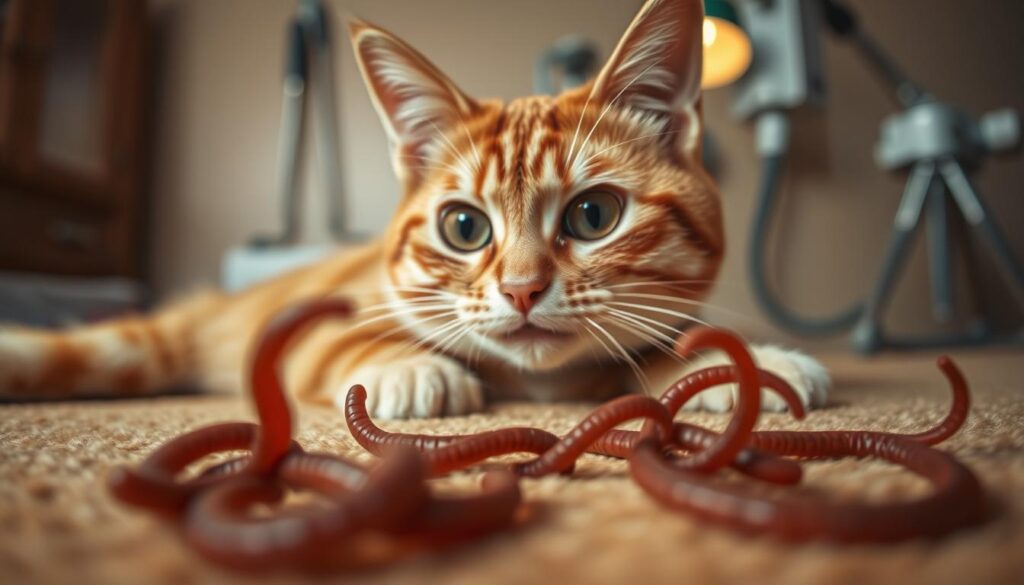
Did you know that roundworms are a common parasite found in cats? These unwanted guests can grow up to 3-6 inches long and resemble spaghetti noodles when seen in the stool. As cat owners, it’s essential to understand the risks associated with these parasites and how to protect our feline friends.
We will explore the symptoms, treatment options, and prevention methods to help you keep your cat healthy. Understanding cat roundworms is crucial for providing the best care for your pet.
Key Takeaways
- Roundworms are a prevalent parasite in cats.
- They can cause significant health issues if left untreated.
- Understanding the symptoms is key to early detection.
- Effective treatment options are available.
- Prevention is crucial for maintaining your cat’s health.
Understanding Roundworms in Cats
Roundworms, also known as nematodes or ascarids, are intestinal parasites. They can greatly affect a cat’s health and wellbeing. These parasites live in the intestine, eating partially digested food.
What are Roundworms?
Roundworms are parasites that can infect cats. This leads to a condition called feline roundworm infestation. Cats get roundworms by eating eggs from contaminated places or by eating an infected animal like a bird or rodent.
Life Cycle of Roundworms
The life cycle of roundworms starts with eggs shed in the cat’s feces. These eggs can become infective in a few weeks. When a cat eats them, they hatch into larvae inside the body.
The larvae move through different tissues before becoming adult worms in the intestine.
Common Species Affecting Cats
Several species of roundworms can affect cats, with Toxocara cati being the most common. This species can cause health issues in cats. These issues range from mild stomach problems to severe complications.
Symptoms of Roundworm Infection
It’s important to know the signs of roundworm infection in cats. Roundworms, or Toxocara cati, can lead to various health problems in cats. These issues can range from mild to severe.
Recognizing Signs in Kittens
Kittens are more likely to get roundworms because their immune systems are still growing. They might show signs like:
- Poor growth rate
- Diarrhea
- Crying and vocalizing
- Pot-bellied appearance
These symptoms can be upsetting for both kittens and their owners. It’s crucial to watch kittens for any signs of illness. If symptoms don’t go away, get vet help.
Symptoms in Adult Cats
In adult cats, roundworm symptoms might be less obvious but still important. They could have:
- Diarrhea
- Weight loss
- Dull hair coat
- Vomiting
- Coughing
- Pot-bellied appearance
Some adult cats might not show symptoms at all. Regular vet visits are key to catching roundworm infections early.
When to Seek Veterinary Care
If you think your cat has roundworms, get vet help right away. A vet can check for the infection through a physical exam and tests.
| Symptom | Kitten | Adult Cat |
|---|---|---|
| Poor Growth Rate | Common | Rare |
| Diarrhea | Common | Common |
| Vomiting | Rare | Common |
| Pot-Bellied Appearance | Common | Common |
| Coughing | Rare | Common |
Early diagnosis and treatment are key to managing roundworm infections effectively. If your cat shows any symptoms, talk to a vet. They can help figure out the best treatment.
Diagnosing Roundworms in Cats
Diagnosing roundworms in cats involves a detailed examination. This includes several diagnostic tests. It’s key for effective treatment and to prevent more problems.
Veterinary Examination Process
When a cat might have roundworms, a vet will start with a physical check. This first step helps spot any signs of infection or health issues.
During the examination, the vet looks for signs like weight loss, bad coat, or digestive problems. These can mean a cat has roundworms.
Diagnostic Tests for Roundworms
The best way to confirm roundworms is through fecal flotation. This test looks at a small stool sample under a microscope for roundworm eggs.
This method works well because roundworm eggs are easy to spot under a microscope.
Interpreting Test Results
After the tests, the vet will explain the results. If the test shows roundworm eggs, it means the cat has an infection.
Understanding the test results is important. It helps decide the right treatment, like deworming meds and follow-up care.
Treatment Options for Roundworm Infection
Roundworm infection in cats can be managed with the right treatment. This usually includes medication and monitoring.
Common Medications Prescribed
Vets often give cats oral or topical meds to kill roundworms. These meds are given in doses over time to get rid of all parasites.
Commonly prescribed medications include:
- Pyrantel pamoate
- Fenbendazole
- Ivermectin
Over-the-Counter Solutions
For mild cases or prevention, OTC deworming meds can work. But, always check with a vet before using them to make sure they’re right for your cat.
Follow-Up Care After Treatment
After treatment, it’s important to check if the infection is gone. This usually means one or more stool tests.
Here’s an example of a treatment and follow-up schedule:
| Treatment Stage | Action | Timeline |
|---|---|---|
| Initial Treatment | Administer prescribed medication | Day 1 |
| Follow-Up 1 | Stool test to check for parasites | 2 weeks after initial treatment |
| Follow-Up 2 | Stool test to confirm clearance | 4 weeks after initial treatment |
Success is shown by no roundworms in the follow-up tests. If they’re still there, more treatment might be needed.
Preventing Roundworm Infection in Cats
To keep your cat safe from roundworms, follow good hygiene and regular vet visits. Roundworms can harm both cats and people.
Best Practices for Cat Owners
For effective prevention, cat owners should follow a few steps. Monthly deworming helps lower the risk of roundworm eggs spreading. This also protects people from getting infected.
“Regular deworming of cats is a critical step in controlling roundworm infections and reducing the risk of zoonotic transmission.”
Also, keep your cat’s living space clean. Regularly throw away feces to lower the risk of roundworm infection.
Importance of Regular Veterinary Check-Ups
Regular vet visits are key for your cat’s health. Your vet can check for roundworms and suggest the best deworming options.
| Check-Up Frequency | Benefits |
|---|---|
| Monthly | Early detection of roundworms, timely deworming treatment |
| Quarterly | Monitoring of overall health, adjustment of prevention strategies as needed |
Environmental Hygiene Tips
Keeping your environment clean is crucial. Clean food and water bowls, litter boxes, and areas where your cat hangs out often.
By following these tips, regular vet visits, and keeping your environment clean, you can lower the risk of roundworm infection. Prevention is essential for your cat’s health and happiness.
Risks Associated with Roundworms
It’s important to know about the dangers of roundworms in cats. These parasites can cause health problems in cats and their owners. Knowing the risks helps us take steps to prevent them.
Potential Complications
Roundworms can make cats malnourished by taking their nutrients. This can lead to weight loss and poor health. In severe cases, a large number of worms can block the intestines, which is a serious issue.
Worms can also move to other parts of the body, like the lungs or brain. This can cause more problems. For example, worms in the lungs can lead to breathing issues. It’s key to spot roundworms early to avoid these complications.
Zoonotic Risks to Humans
Roundworms can also infect humans, mainly children. They usually spread through contaminated soil. In the U.S., thousands of people get infected with roundworms each year.
For more information on roundworms in cats, check out VCA Hospitals. They offer detailed insights into the condition.
| Risk Group | Common Sources of Infection | Preventative Measures |
|---|---|---|
| Children | Contaminated soil, poor hygiene | Regular handwashing, avoiding contaminated areas |
| Adults | Contact with contaminated feces, poor hygiene | Using gloves when handling soil, regular handwashing |
Preventative Measures for Families
To avoid roundworm risks, it’s vital to take preventative steps. Regular vet visits can catch and treat infestations early. Good hygiene, like washing hands after handling soil or cat feces, also helps.
Keeping your cat’s area clean is also important. Dispose of feces properly and clean food and water areas regularly. These actions help protect your cat and family from roundworm dangers.
Roundworm Myths and Facts
Knowing the truth about roundworms is key for cat owners. Many think roundworms only affect kittens, but cats of any age can get them. Recognizing the symptoms of roundworms in cats is the first step to help them.
Debunking Common Misconceptions
One myth is that roundworms are harmless. But they can lead to serious health problems like weight loss and digestive issues. Diagnosing roundworms in cats is important for treatment.
Another myth is that indoor cats are safe. But they can still get roundworms from contaminated food or water. Dr. Jane Smith says, “Even indoor cats can get roundworms from contaminated soil or infected feces.”
“The presence of roundworms in cats is a significant public health concern, not just because of the discomfort they cause the animal, but also due to the potential for zoonotic transmission.”
Facts About Roundworm Transmission
Roundworms spread through eating eggs or larvae in soil, feces, or infected prey. Kittens can also get them from their mother’s milk. Knowing how they spread helps prevent infections.
- Ingestion of contaminated soil or feces
- Consumption of infected prey
- Transmission from mother to kittens during pregnancy or nursing
Understanding the Importance of Treatment
Treating roundworm infections is vital for the cat’s health and to stop them from spreading to people, like kids. Treatment uses medicines that kill the worms and stop more problems.
The importance of treatment is huge. Without it, roundworm infections can cause serious issues like malnutrition and intestinal damage.
When to Revisit the Veterinarian
After treating your cat for roundworms, it’s important to keep an eye on their health. You should visit your vet regularly to make sure the worms are gone. This helps your cat get back to full health.
Monitoring Recovery Progress
Watching your cat’s health closely is key. Your vet will check if the worms are gone and if your cat is doing well. They might do fecal exams to confirm.
These visits are also a chance to talk about your cat’s health. You can ask any questions or share concerns with your vet.
Signs of Re-infection
Knowing the signs of roundworms coming back is important. Look out for weight loss, diarrhea, or worms in the stool. These are signs your cat might be infected again.
If you see these signs, call your vet right away. Taking steps to prevent roundworms can help keep your cat safe.
Long-Term Health Considerations
Roundworm infections can affect your cat’s health for a long time. Regular vet visits and a clean home are crucial to prevent future infections.
Your vet can give you advice on keeping your cat healthy long-term. They can also suggest the best ways to prevent roundworms for your cat.
Conclusion: Keeping Your Cat Healthy
Understanding cat roundworms is key to keeping our cats healthy. Regular vet visits and being a responsible pet owner are crucial. These steps help maintain our cat’s health.
Key Takeaways
We’ve talked about cat roundworm symptoms, treatment, and prevention. It’s important to know the signs of infection and get vet care when needed. Following the best deworming practices is also vital.
Responsible Pet Ownership
As cat owners, we must prevent roundworm spread. Keeping our environment clean and ensuring regular vet visits are essential. Being aware of roundworm risks helps protect our pets and families.
For more on cat health and wellness, visit our website at https://oboucing.com/services/. There, you can find services and resources to help your cat stay healthy.