
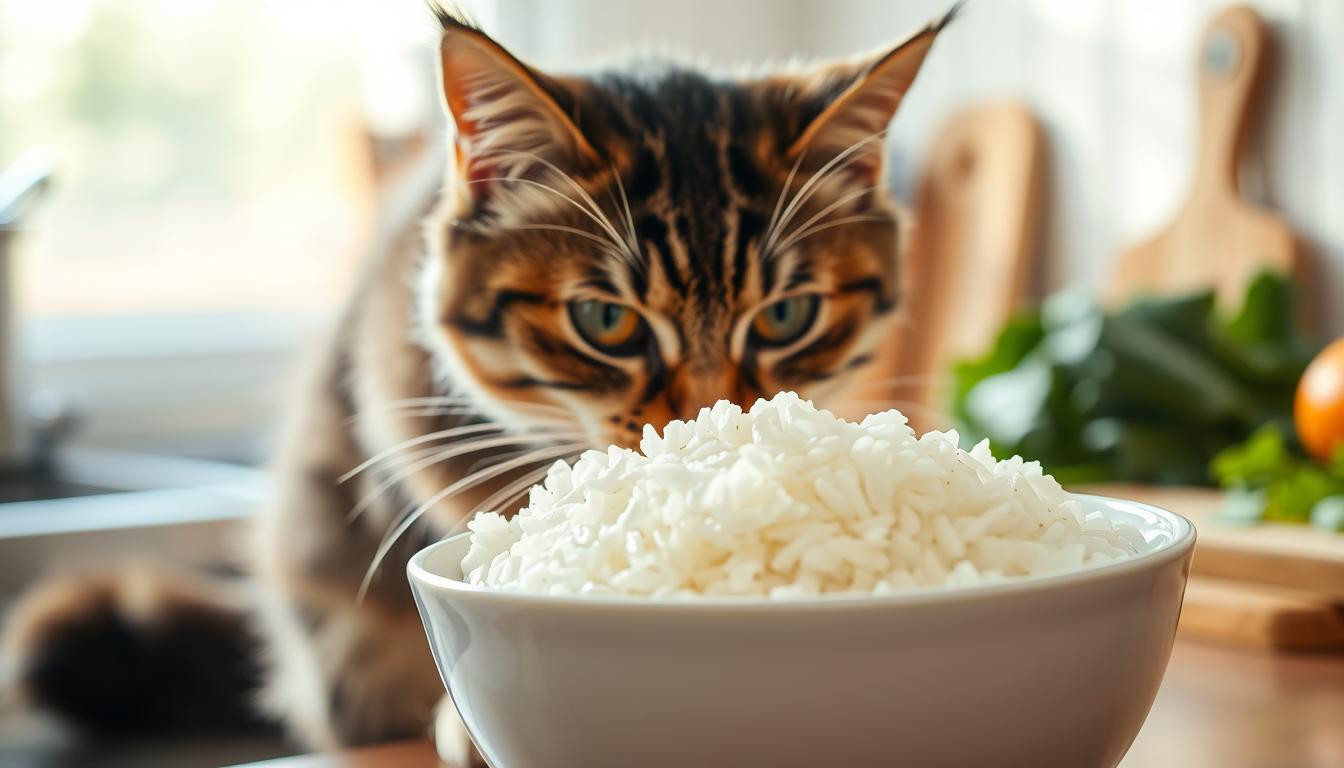
Many cat owners wonder if their pets can safely eat rice. It’s true that cats can eat rice, but it’s not a must-have in their diet.
Rice doesn’t offer much nutritional value to cats. Yet, it’s not completely without benefits. We’ll look into the effects of adding rice to your cat’s diet and how to do it safely.
Key Takeaways
- Cats can consume rice, but it’s not a nutritional necessity.
- Rice should not replace a cat’s regular, balanced diet.
- There are potential benefits to feeding cats rice in moderation.
- It’s crucial to understand the right way to include rice in your cat’s meals.
- Consulting with a veterinarian is recommended before making dietary changes.
Understanding a Cat’s Diet
Cats have special nutritional needs to stay healthy. They need a diet rich in protein from animal sources. They also have limited needs for carbohydrates.
Essential Nutrients for Cats
Cats need certain nutrients found in animal-based foods. These include taurine, vitamin A, and arachidonic acid. These are important for their heart, vision, and skin.
| Nutrient | Source | Function |
|---|---|---|
| Taurine | Meat, Fish | Heart Health |
| Vitamin A | Liver, Fish Oils | Vision, Immune System |
| Arachidonic Acid | Animal Fats | Skin, Coat Health |
The Role of Protein in Feline Health
Protein is key for a cat’s diet. It gives them the amino acids they need for muscles, organs, and health. Cats need more protein than many animals because of their hunting history. For more on cat nutrition, check out PetMD.
What Foods are Harmful to Cats?
Some foods are bad for cats. These include onions, garlic, chocolate, and grapes. They can cause health issues, from mild to serious.
Knowing what cats can and can’t eat is important. When we talk about cats eating rice, we must think about their diet and any benefits or risks.
Can Cats Eat Rice?
Rice is common in human diets, but its safety for cats is a topic of debate. As cat owners, we must know which human foods are safe for our pets.
Experts say cats can eat plain white or brown rice in small amounts. It’s crucial that the rice is cooked thoroughly for cats to digest it. Uncooked rice can be hard for them to digest.
Types of Rice Safe for Cats
Not all rice is safe for cats. Plain white and brown rice are generally safe. White rice is easy to digest, great for cats with sensitive stomachs. Brown rice has more fiber and nutrients, making it a nutritious choice.
Veterinary nutritionists say, “Cats can tolerate small amounts of cooked rice as an occasional treat.”
“Rice can be a useful addition to a cat’s diet in moderation, when they’re experiencing gastrointestinal upset.”
How to Prepare Rice for Your Cat
Preparing rice for your cat is easy. Cook the rice thoroughly until it’s soft and can be mashed with a fork. Don’t add any seasonings, oils, or salt, as they can harm cats.
To serve, mix a small amount of cooked rice with their regular food. Start with a tiny amount to ensure your cat can tolerate it without any adverse reactions.
By following these guidelines, you can safely include rice in your cat’s diet. Always monitor your cat’s health and adjust their diet as needed.
Benefits of Rice for Cats
Cats, being meat-eaters, can still get some benefits from rice. It’s good for their digestive health. Rice is a helpful supplement, not a main food.
Rice as a dietary supplement is great for cats with upset stomachs. Vets often suggest cooked rice. It’s bland and easy to digest, helping to firm up stool and soothe the stomach.
Digestive Health
Rice is full of carbs, which can help cats with digestive problems. Cooked rice is easy to digest. It’s perfect for cats with sensitive stomachs or those getting better from illness or surgery.
“A bland diet including cooked rice can be very helpful in managing feline gastrointestinal issues.”
Rice can also help with diarrhea by making stool more solid. This is good for cats with upset stomachs.
Energy Source for Cats
Rice is a source of energy for cats. Cats don’t need a lot of carbs, but rice’s energy is helpful. It’s good for active cats or those needing more energy.
The carbs in rice give cats a quick energy boost. This is useful for cats needing extra energy because of their lifestyle or health.
In summary, rice is not a main food for cats but can be helpful. It supports digestive health and gives energy, making it a valuable addition to their diet.
Potential Risks of Feeding Rice to Cats
Rice can be safe for cats, but there are risks. Cats have special dietary needs. Adding rice to their meals can sometimes cause problems.
Allergies and Intolerances
Cats can get allergies or intolerances to foods like rice, just like people. Symptoms can range from mild stomach issues to serious reactions. Watch your cat closely after adding rice to their diet.
Common signs of food allergy or intolerance in cats include:
- Digestive upset
- Skin irritation
- Itching or scratching
- Changes in appetite or stool quality
Portion Control and Feeding Guidelines
Even if your cat likes rice, don’t overfeed it. Too much rice can upset the balance of nutrients in their diet. Cats need protein and vitamins that rice doesn’t have.
| Food Type | Nutritional Value | Recommended Serving Size |
|---|---|---|
| Rice | Primarily carbohydrates | Small amounts, mixed with regular food |
| High-Protein Cat Food | Rich in protein, vitamins, and minerals | Main staple, according to manufacturer’s guidelines |
For a balanced diet, talk to a vet. They can help you figure out how much rice is right for your cat. This way, your cat stays healthy.
How Much Rice Can You Feed Your Cat?
Finding the right amount of rice for your cat can be tricky. It’s key for their health. Knowing how much rice is safe is crucial.
Recommended Serving Sizes
The right rice serving size for cats is important. Treats, like rice, should not be more than 10% of their daily calories. For example, if your cat needs 200 calories, rice should not be more than 20 calories.
A typical cat needs 250-300 calories a day. This depends on their size, age, and how active they are. So, the rice amount should be based on these factors.
| Cat’s Weight (lbs) | Daily Calorie Needs | Max Rice Calories | Approximate Rice Serving (cups) |
|---|---|---|---|
| 8 | 200-250 | 20-25 | 1/8 |
| 12 | 300-350 | 30-35 | 1/4 |
| 16 | 400-450 | 40-45 | 1/3 |
Frequency of Rice in a Cat’s Diet
How often to feed rice to your cat is important. It’s best to give rice as an occasional treat. This keeps their diet balanced and prevents them from relying too much on one food.
Key considerations:
- Rice should be plain and cooked.
- Mix rice with their regular food to avoid digestive upset.
- Monitor your cat’s reaction to rice and adjust as needed.
By following these guidelines, you can safely add rice to your cat’s diet. This way, they can enjoy the benefits without the risks.
Signs Your Cat Might Enjoy Rice
Understanding if your cat likes rice means watching their behavior and eating habits. It’s key to see how they react to rice in their diet.
Behavioural Cues
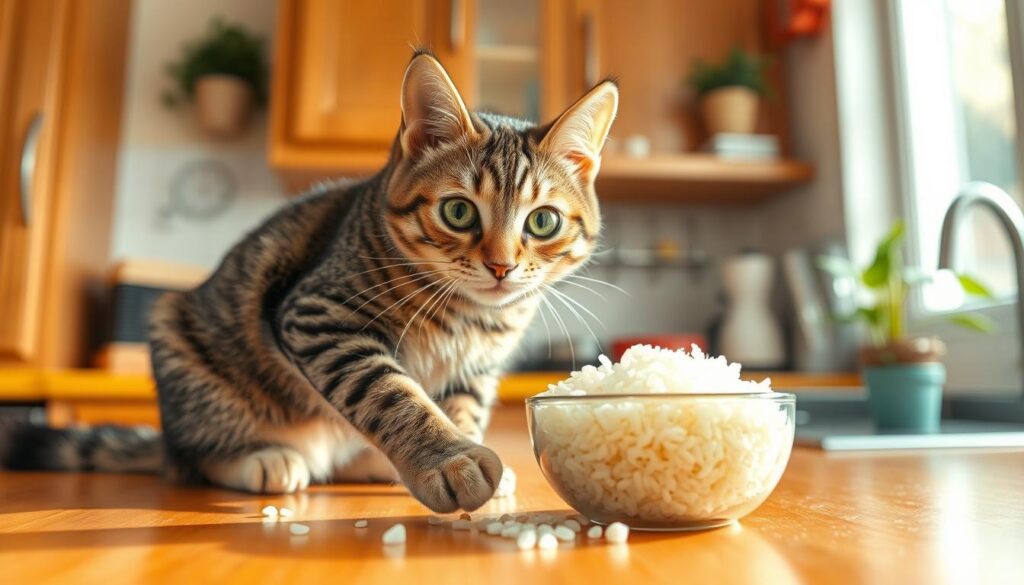
Cats show certain behaviors when they like a food. If your cat watches you make rice or tries to get near it, they might be interested. Noticing these signs can tell you if they like it. Some cats even get excited or curious when they smell rice.
Monitoring Changes in Appetite
It’s also important to watch how your cat eats when rice is added. If they eat rice easily and seem to like it, they probably do. But if they ignore rice or don’t want to eat it, they might not enjoy it. Watching these changes helps you make their diet better for them.
By noticing these signs and adjusting their diet, you can keep your cat happy and healthy. If you’re thinking of adding rice, start with a little and see how they react.
Alternatives to Rice for Cats
Cats need a varied diet that includes grains and veggies, not just rice. This helps keep them healthy and happy. While rice is okay for cats, trying other foods can make their diet more balanced.
Other Safe Grains
Looking for something different? There are many safe grains for cats. Here are a few:
- Oats: Oats are full of fiber, which is good for their digestion.
- Quinoa: This grain is packed with protein, making it a great choice for cats.
- Barley: Barley is high in fiber and nutrients, a healthy swap for rice.
For more info on safe foods for cats, check out East Dallas Vet Clinic. They offer great tips on what to feed your cat.
Vegetables and Fruits Safe for Cats
Some veggies and fruits are also good for cats. Here are a few:
- Green Beans: Green beans are low in calories and high in fiber, perfect for snacking.
- Carrots: Carrots are full of vitamins and minerals, boosting your cat’s health.
- Apples: Apples can be a tasty treat for cats, but only in small amounts. Make sure to remove seeds and cores.
When adding new foods to your cat’s diet, do it slowly. This helps avoid upset stomachs. Always talk to your vet before changing your cat’s food.
Tips for Introducing Rice into Your Cat’s Diet
Adding rice to your cat’s diet should be done slowly. This slow introduction helps avoid stomach upset. It makes sure your cat can enjoy rice without feeling bad.
Gradual Introduction
Start by adding a small amount of rice to their food. Begin with 1 part rice to 4 parts of their usual meal. Over 7-10 days, you can slowly increase the rice to 1 part rice to 2 parts of their regular food. Watch how your cat reacts and adjust as needed.
This slow start lets your cat’s stomach get used to rice. It lowers the chance of bad reactions.
Mixing with Regular Food
It’s important to mix rice with your cat’s regular food. This helps avoid stomach problems and makes the food more tasty for them. Make sure the rice is cooked and cooled before adding it to their meal. This keeps your cat safe from health risks.
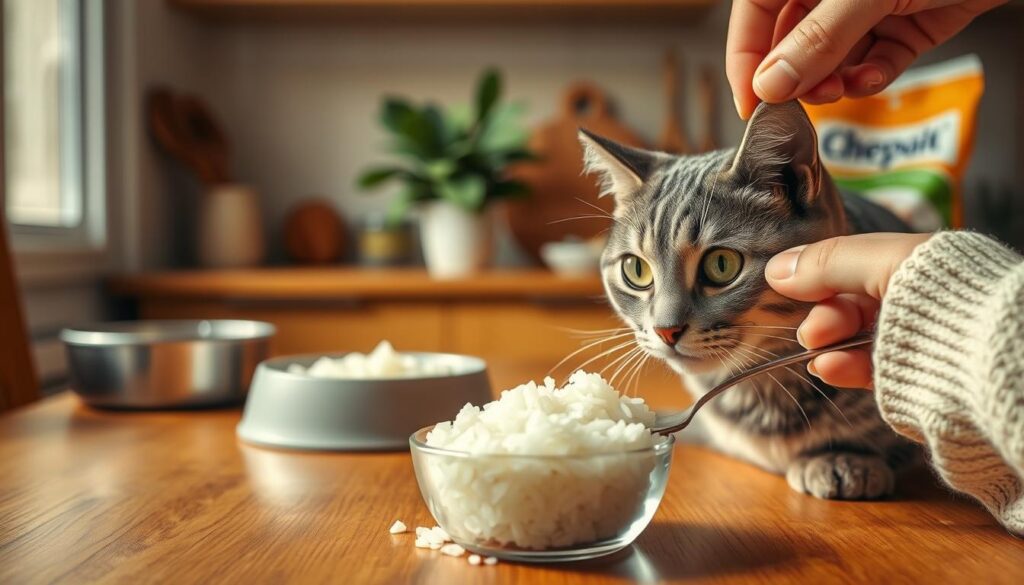
By following these steps, you can add rice to your cat’s diet safely. This gives them a healthy and balanced meal. Always watch how your cat reacts to new foods. If you’re worried, talk to a vet.
Common Misconceptions About Cats and Rice
Cats need a diet rich in meat, not grains like rice. Many people think rice is safe for cats. But, it’s not what cats need to stay healthy.
Myths vs. Facts
Some think cats can eat lots of rice and be fine. But, cats need protein, not grains. Rice doesn’t give cats the nutrients they need.
Let’s debunk some common myths about cats and rice:
- Myth: Cats can thrive on a diet that includes large amounts of rice.
- Fact: Cats are obligate carnivores and require a diet rich in protein.
- Myth: Rice is a good source of energy for cats.
- Fact: While rice can provide carbohydrates, cats derive energy mainly from protein.
Expert Opinions on Cats and Grains
Vets and nutritionists say cats don’t need much grain. They can eat a little rice, but it shouldn’t be their main food.
“Cats are designed to eat meat, and their digestive system is optimized for high protein, moderate fat, and low carbohydrate diets. Grains like rice can be included in small amounts but should not replace nutrient-rich foods.”
Here’s a table showing the difference between grain and protein diets for cats:
| Nutritional Component | Grain-Based Diet | Protein-Based Diet |
|---|---|---|
| Protein Content | 20% | 40% |
| Carbohydrate Content | 40% | 5% |
| Fat Content | 10% | 20% |
In short, while a little rice is okay, cats need a diet full of protein. Knowing the truth about cats and rice helps us feed them right.
When to Consult a Veterinarian
Adding rice to our cat’s diet is a big step. We must watch their health closely. If our cat gets sick or has digestive problems after eating rice, we need to see a vet right away.
Identifying Health Issues
Signs like vomiting, diarrhea, or feeling very tired mean we should go to the vet fast. These could be signs of a bad reaction to rice or another health problem.
Discussing Dietary Changes
Before we change our cat’s diet, like adding rice, we should talk to a vet. They can give advice that fits our cat’s health, age, and what they need to eat. This makes sure the rice diet is good for them.
Talking to a vet helps make sure our cat gets what they need. It also helps avoid any dangers from eating rice. This keeps our cat healthy and happy.