

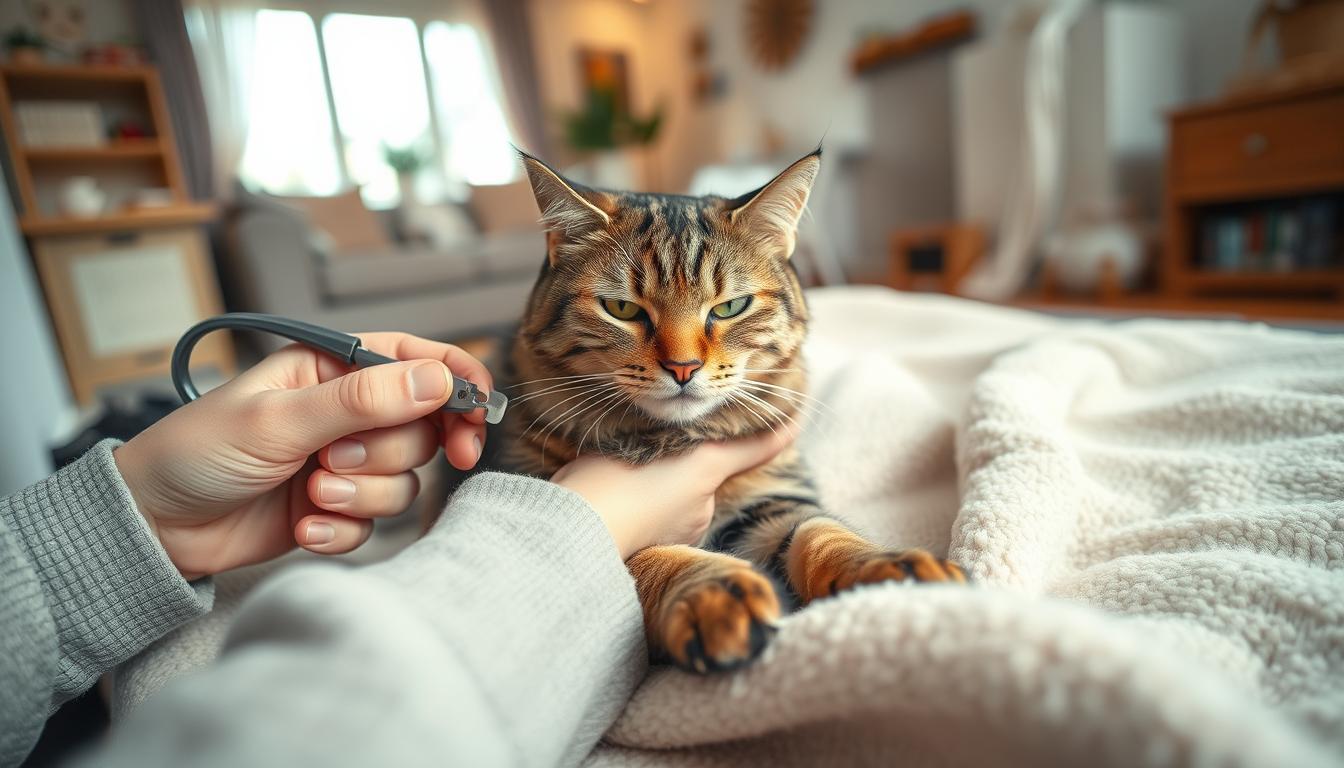
Did you know untrimmed cat claws can harm your cat’s health and damage your home? Regular claw trimming is essential for your cat’s well-being. It helps prevent painful health problems.
It’s best to trim your cat’s claws every two to four weeks. This stops overgrowth, which can hurt your cat and your things. Neglecting this grooming task can cause serious health risks.
We’ll show you how to trim your cat’s claws quickly and without pain. This way, both you and your pet will have a stress-free time.
Key Takeaways
- Regular trimming prevents health issues in cats.
- Trimming every 2-4 weeks is recommended.
- Neglecting claw care can lead to damage and injury.
- Proper trimming technique is crucial for a stress-free experience.
- Claw care is an essential part of cat grooming.
Understanding the Importance of Claw Trimming
Trimming your cat’s claws is key to their happiness. It keeps your home safe and your cat healthy. It’s a crucial part of their care.
Trimming claws stops injuries to people, pets, and your home. It makes your home safer for everyone. Your cat and family will thank you.
Benefits of Regular Claw Trimming
Trimming claws often has many benefits. It stops claws from growing too long, which can hurt your cat. It also stops claws from getting stuck in things, which can hurt them.
Trimmed claws also help your cat move better. Long claws can make them walk funny, leading to pain. Keeping claws short keeps your cat active and happy.
| Benefits | Description |
|---|---|
| Prevents Overgrowth | Regular trimming prevents claws from becoming too long, reducing discomfort and health risks. |
| Reduces Injury Risk | Trimmed claws are less likely to get caught in fabrics or cause accidental scratches. |
| Improves Mobility | Well-maintained claws support your cat’s natural gait, reducing the risk of joint pain. |
Preventing Damage to Furniture and Carpets
Trimming claws also protects your home. Cats with long claws can damage furniture and carpets. Trimming claws keeps your home looking good.
For more tips on trimming your cat’s claws, check out Cat Care Society. They have great advice and techniques.
When Is the Right Time to Trim Your Cat’s Claws?
Cat owners often wonder when to trim their cat’s claws. There are several signs to look out for. Trimming your cat’s claws is key for their grooming and health. It keeps your home safe and your cat safe too.
Signs That Claws Need Trimming
So, how do you know when to trim your cat’s claws? Here are some key signs:
- Claws that are visibly long or curling
- Claws that don’t retract fully
- Claws that are getting caught on fabrics or carpets
- Claws that are making a clicking sound on hard floors
If you see any of these signs, it’s time to trim your cat’s claws. Regular checks help you know when to trim.
Seasonal Considerations
While cats need their claws trimmed all year, some seasons affect how often. Cats that play outside more in warmer months might need more trimming. In colder months, when they’re less active, their claws grow slower.
| Season | Activity Level | Trimming Frequency |
|---|---|---|
| Spring/Summer | Higher | More frequent trimming |
| Fall/Winter | Lower | Less frequent trimming |
Knowing these seasonal changes helps you adjust your cat’s claw trimming. This ensures you’re using the best way to trim cat claws for your pet’s needs.
Tools You’ll Need for Claw Trimming
Trimming your cat’s claws needs the right tools for a safe and stress-free experience. The most important tool is a good pair of cat nail clippers.
Types of Cat Nail Clippers
There are many types of nail clippers for cats, each with its own benefits.
- Scissors-style clippers: These are great for cats with small to medium-sized nails. They’re often suggested for beginners.
- Guillotine-style clippers: These work best for cats with thicker nails. They’re efficient but may need more practice to use right.
- Pliers-style clippers: These give you a lot of control. They’re good for cats with very hard or thick nails.
Choosing the right clipper depends on your cat’s nail size, your comfort level, and how easy it is to use.
Additional Helpful Tools
Other tools can also make claw trimming easier and safer.
- Styptic powder: This stops bleeding if you cut the quick by accident.
- Treats: Giving your cat treats can make the experience less stressful.
- Nail grinder: For some cats, a nail grinder is better than clippers, if they’re sensitive to clipping.
With the right tools, you can make claw trimming easier and less scary for both you and your cat.
Preparing Your Cat for Claw Trimming
Getting your cat ready for claw trimming is key. You need to create a calm space and handle them carefully. Follow these steps for a safe and stress-free experience for both you and your cat.
Creating a Calm Environment
A calm environment is crucial for a successful claw trimming. You can achieve this by:
- Choosing a quiet room with minimal distractions
- Ensuring the room is at a comfortable temperature
- Reducing noise levels to avoid startling your cat
By making the atmosphere peaceful, you can lower your cat’s stress. This makes the trimming easier and less scary for them.
Handling Your Cat Safely
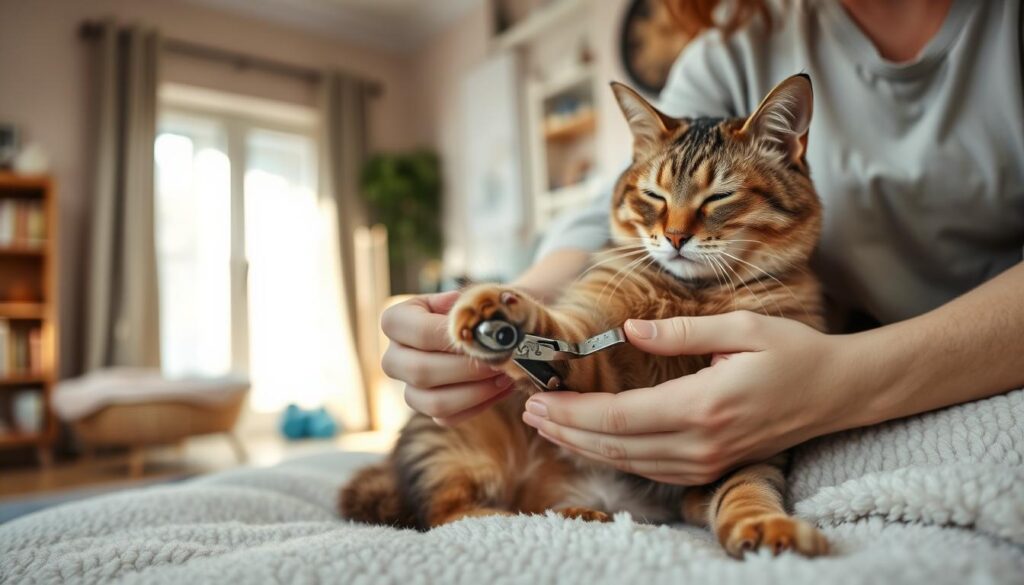
It’s important to handle your cat safely during trimming. Here are some tips:
- Gently but firmly hold your cat’s paw, making sure to support their joints.
- Be patient and move slowly to avoid sudden movements that might startle your cat.
- If your cat shows signs of distress, it’s best to stop the process and try again later when they are calmer.
Remember, the goal is to make the experience as stress-free as possible for your cat. Being gentle, patient, and attentive to your cat’s needs makes claw trimming easier.
Techniques for Trimming Cat Claws
Trimming your cat’s claws might seem hard, but it’s doable with a guide. It’s not just about saving your furniture. It’s also key for your cat’s health and happiness.
Step-by-Step Trimming Process
To trim your cat’s claws safely, follow these steps:
- Prepare Your Cat: Get your cat used to having their paws handled. Massage their paws to make them comfortable with touch.
- Gather Your Tools: Use the right cat nail clippers. There are scissor-style and guillotine-style clippers.
- Identify the Quick: The quick is the pinkish part of the nail with nerves and blood vessels. It’s important to avoid cutting it.
- Trim the Claws: Hold your cat’s paw firmly but gently. Trim just the tip of the claw, being careful not to cut too short.
- Reward Your Cat: After trimming, give your cat treats and praise. This makes the experience positive.
Identifying the Quick
Identifying the quick is key to avoid pain or bleeding. Here’s how to do it:
- Look for the Pinkish Color: The quick is visible as a pinkish tint in the claw.
- Trim a Little at a Time: Trim a small part of the claw at a time. Check often to avoid cutting the quick.
- Use the Right Lighting: Good lighting helps see the quick better. Natural light or a bright lamp works well.
To better understand the process, here’s a simple table summarizing the key steps and considerations:
| Step | Description | Consideration |
|---|---|---|
| 1 | Prepare Your Cat | Make sure your cat is comfortable with paw handling |
| 2 | Gather Tools | Choose the right nail clippers for your cat |
| 3 | Identify the Quick | Avoid cutting into the quick to prevent pain and bleeding |
| 4 | Trim the Claws | Trim just the tip, being cautious not to cut too short |
By following these steps and being careful with the quick, you can trim your cat’s claws safely. Regular trimming keeps your cat comfortable and your home safe.
Tips for a Pain-Free Experience
To make nail trimming stress-free for your cat, follow professional cat nail trimming methods. A pain-free experience is not just about the right tools. It’s also about the technique and the environment.
Avoiding the Quick
The quick is a sensitive part of your cat’s nail. It contains nerves and blood vessels. Cutting it can hurt your cat and cause bleeding.
To avoid the quick, understand your cat’s claw anatomy. Trimming just the tip of the nail is usually safe. But, it’s always better to be cautious.
Use of Treats and Rewards
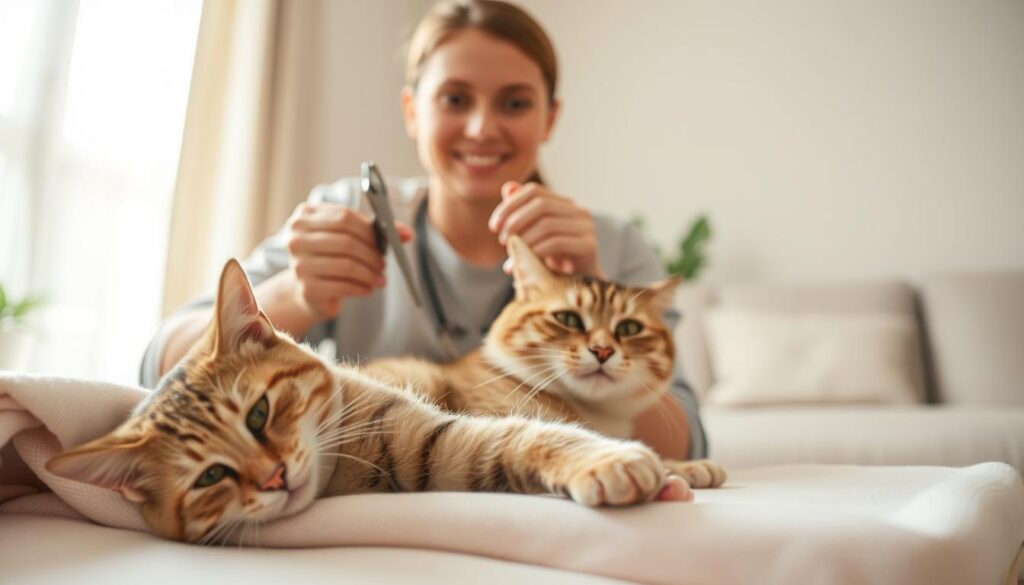
Using treats and rewards during and after trimming can make it positive for your cat. Positive reinforcement helps your cat see nail trimming as good behavior. Choose your cat’s favorite treats and use them sparingly to keep things relaxed and rewarding.
Having a second person to assist is helpful. One can trim, and the other can provide treats and comfort. This teamwork reduces stress for both you and your cat.
How Often Should You Trim Your Cat’s Claws?
Knowing when to trim your cat’s claws is key for their health. The trimming schedule depends on your cat’s breed, age, and how active they are.
Factors That Influence Claw Growth
Several things can affect how fast your cat’s claws grow. For example, younger cats grow their claws faster than older ones. Cats that are very active, like those that go outside a lot, might need their claws trimmed less often. Indoor cats or those that are less active might need their claws trimmed more often.
General Guidelines for Different Breeds
Different cat breeds grow their claws at different rates. Some long-haired breeds might need their nails trimmed more often because they need more grooming. According to PetMD, most cats should have their nails trimmed every few weeks. For most domestic cats, trimming every 4-6 weeks is a good start. But, some cats might need it more or less often.
To find the best trimming schedule for your cat, watch how fast their claws grow. Things like their diet, health, and lifestyle affect how fast their claws grow. By keeping an eye on this, you can find the perfect trimming schedule for your cat’s comfort and health.
What to Do If You Cut the Quick
If you’ve cut the quick during nail trimming, staying calm is key. The quick is a sensitive part of your cat’s nail. It contains nerves and blood vessels, and cutting it can cause pain and bleeding.
We understand that accidents can happen even with the best preparation. It’s essential to know how to provide immediate care to your cat if you cut the quick.
Immediate First Aid Steps
The first step is to stop the bleeding. You can do this by applying a small amount of styptic powder or a pet nail clotting gel to the nail. These products contain substances that help to clot the blood and stop the bleeding quickly.
Here’s a simple step-by-step guide to applying first aid:
- Gently restrain your cat to prevent further injury.
- Apply styptic powder or clotting gel directly to the bleeding nail.
- Hold a cotton ball or swab firmly on the nail for a few seconds to ensure the product is in contact with the bleeding area.
- Reward your cat with treats and praise to help keep them calm.
| First Aid Product | Description | Availability |
|---|---|---|
| Styptic Powder | A powder that contains a clotting agent to stop bleeding | Pet stores, veterinary clinics |
| Nail Clotting Gel | A gel that helps to clot blood and stop bleeding | Pet stores, online retailers |
| Cotton Balls/Swabs | Used to apply pressure to the nail | Pharmacies, pet stores |
When to Seek Veterinary Help
If the bleeding doesn’t stop after applying styptic powder or clotting gel, or if your cat seems to be in significant pain or distress, seek veterinary help. Also, if you notice signs of infection, such as redness, swelling, or discharge around the nail, a vet visit is necessary.
It’s always better to err on the side of caution when it comes to your cat’s health. If you’re unsure about the severity of the cut or your cat’s reaction, consulting with a veterinarian can provide peace of mind and ensure your cat receives the necessary care.
Alternatives to Traditional Claw Trimming
Cat owners have many options to manage their cat’s claws. If traditional claw trimming is hard, there are other ways. These methods can make keeping your cat’s nails healthy easier and less stressful.
Nail Caps and Their Benefits
Nail caps are a great alternative to trimming. They are small covers glued onto your cat’s claws. This prevents damage to furniture and carpets. The benefits of nail caps include:
- They are a non-invasive and pain-free solution.
- Nail caps can last for several weeks before they need to be replaced.
- They come in various sizes and colors, making them suitable for cats of different ages and breeds.
Professional Grooming Options
If you don’t want to trim your cat’s claws yourself, professional grooming services are a good choice. Professional groomers are trained to handle cats safely and humanely. They have the right tools to trim your cat’s claws correctly. The advantages of professional grooming include:
- Expert handling that minimizes stress for your cat.
- Accurate trimming that prevents over-cutting or under-cutting.
- Additional services such as nail grinding or polishing may be available.
By exploring these alternatives, cat owners can find the best method for their cat’s needs. This ensures their cat’s nail health is well taken care of.
Conclusion: Making Claw Trimming a Routine
Adding feline nail care to your pet care routine can make claw trimming positive for you and your cat. It’s important to set a schedule. This helps your cat get used to the process.
Establishing a Regular Trimming Schedule
Set a trimming schedule that fits your cat’s needs. Consider their age, lifestyle, and how fast their claws grow. This way, you’ll learn how to trim their claws well.
Making the Most of Your Claw Trimming Sessions
Claw trimming is more than just nail care. It’s a chance to bond with your pet. Follow the tips in this article and be patient. This will make claw trimming a positive experience for both of you, strengthening your bond and keeping your cat healthy.