
As a cat owner, knowing about your cat’s reproductive cycle is key. Did you know that most cats start going into heat between 5 to 9 months of age? This is when they are fertile and ready to have kittens.
Kittens can start their first heat cycle as young as 3–4 months. Others might wait until they’re 18 months old. We’ll look into what affects this timing and how it impacts your cat’s care.
Key Takeaways
- Cats typically start going into heat between 5-9 months old.
- The age of the first heat cycle can vary depending on several factors.
- Understanding your cat’s heat cycle is crucial for their overall health and well-being.
- Some cats may start cycling earlier or later than the average age range.
- Factors such as breed and health can influence the timing of a cat’s heat cycle.
Understanding the Feline Heat Cycle
Knowing about the heat cycle in cats is key for cat owners. It helps them manage their pet’s reproductive health well. The feline heat cycle, or estrous cycle, is when a cat can get pregnant.
What Is the Heat Cycle?
The heat cycle in cats is complex, with many changes in their body and behavior. Cats are induced ovulators. This means they only release eggs when they mate with a male cat. This is different from humans, who can release eggs without mating.
Hormones like estrogen and progesterone control the heat cycle. These hormones help get the cat’s body ready for pregnancy.
The Phases of the Heat Cycle
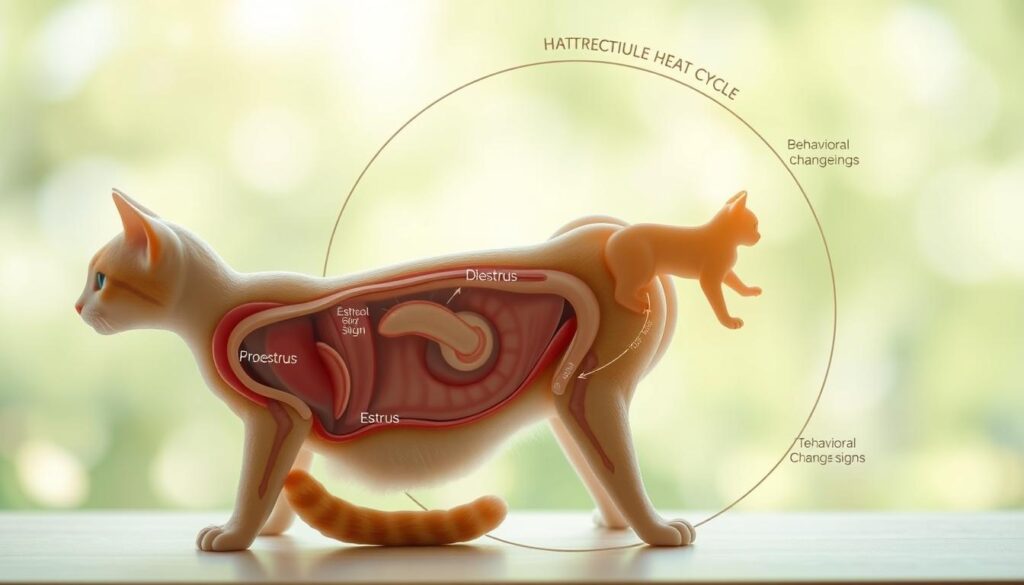
The heat cycle in cats has four main stages: proestrus, estrus, interestus or metestrus, and anestrus. Each stage is important for the cat’s reproductive process.
- Proestrus: This first stage gets the cat ready for heat, but it’s not ready to mate yet.
- Estrus: In this stage, the cat is ready to mate. It will show signs like meowing a lot and being restless.
- Interestrus or Metestrus: If the cat doesn’t get pregnant, it goes into a transitional phase. If it does get pregnant, this stage prepares the body for the pregnancy.
- Anestrus: This is the resting phase. The cat is not ready to mate. It happens between heat cycles or when the cat is not active.
Knowing these phases helps cat owners know when their cat is in heat. It helps them manage their pet’s reproductive health well.
How Often Do Cats Go Into Heat?
Knowing how often cats go into heat is key for cat owners. It helps manage their pet’s behavior and health. Cats are seasonal breeders, and their heat cycles change with daylight.
Frequency of Heat Cycles in Cats
Cats usually go into heat several times a year. This happens from spring to early fall. The exact frequency can vary, but most cats heat up every few weeks until they’re bred or spayed.
A cat’s heat cycle can last from a few days to a couple of weeks. The time between cycles can be weeks to a month or more. This depends on breed, age, and health.
Factors Affecting Heat Cycle Frequency
Several things can change how often a cat goes into heat. These include:
- Seasonality: Cats breed more often in longer daylight, starting in February and peaking in April.
- Daylight Hours: Longer daylight hours mean more frequent heat cycles.
- Breed and Genetics: Different breeds have different breeding seasons and heat cycle frequencies.
- Age and Health: A cat’s age and health can also affect heat cycle frequency. For more info, visit PetMD’s article on cats in heat.
| Factor | Effect on Heat Cycle Frequency |
|---|---|
| Seasonality | Increased frequency during spring and early fall |
| Daylight Hours | More frequent cycles with longer daylight |
| Breed and Genetics | Variation in breeding season and cycle frequency |
| Age and Health | Impact on cycle frequency and overall reproductive health |
Signs That a Cat Is in Heat
It’s important to know the signs of a cat in heat. Cats in heat show different behaviors and physical changes. Cat owners need to recognize these signs.
Behavioral Changes to Watch For
A cat in heat may act differently. They might be more affectionate and vocal. Some cats get restless, pace, and want to go outside.
- Increased vocalization, often sounding like loud meowing or yowling.
- Restlessness and pacing.
- A strong desire to escape or go outside.
- More affectionate than usual, rubbing against people or objects.
Physical Signs of Heat
Cats in heat also show physical signs. They might roll on the floor and elevate their backside in the air. This is called “lordosis.” Some cats have a flushed or swollen genital area.
- Discharge or spotting, though this is rare.
- A more pronounced or swollen vulva.
- Assuming the mating position, with the cat crouching low to the ground and elevating its hindquarters.
Knowing these signs helps cat owners manage their cat’s heat cycle better. It helps make informed decisions about their cat’s health.
The Duration of a Heat Cycle
Understanding a cat’s heat cycle is key to their reproductive health. Knowing how long a cat stays in heat helps owners manage their behavior and reproductive cycle.
How Long Does a Cat Stay in Heat?
The “in heat” phase, or behavioral estrus, can last from three to 14 days. On average, it’s about a week. During this time, female cats often exhibit distinct behavioral changes, such as increased vocalization and restlessness, as they signal their readiness to mate.
The variability in the length of the heat cycle can be influenced by several factors, including the cat’s overall health, nutrition, and breed. Generally, the heat cycle can be quite unpredictable, making it challenging for owners to prepare.
Differences Between Breeds
Different breeds of cats can have varying heat cycle durations. For instance, Shorthaired cats tend to have their first season at a younger age compared to Longhaired cats. This variation suggests that breed-specific characteristics can influence reproductive maturity and heat cycle length.
While the average duration of a heat cycle is around a week, some breeds may have longer or shorter cycles. Understanding these breed-specific differences can help owners anticipate and manage their cat’s heat cycle more effectively.
- Shorthaired cats: Typically have earlier onset and potentially shorter heat cycles.
- Longhaired cats: May have a later onset and sometimes longer heat cycles.
By recognizing these differences, cat owners can better prepare for their cat’s reproductive cycle and make informed decisions about spaying or other reproductive health measures.
The Impact of Seasonality on Heat Cycles
The heat cycle frequency in cats changes with daylight hours. Cats are “long-day breeders,” meaning they breed more often when it’s light out. This usually happens from February to April.
This natural pattern helps cats breed when it’s best for their kittens. Let’s look at how daylight hours affect their heat cycles.
Seasonal Breeding Patterns
Cats breed more in certain seasons. As daylight hours extend, they heat up more often. This helps kittens be born when it’s good for them.
The spring is when cats usually breed the most. Longer days make them want to breed more.
The Role of Daylight Hours
Daylight hours control when cats breed. Longer days make them ready to breed. This is key for kittens to survive.
Knowing how daylight affects cat heat cycles helps owners. It lets us prepare for our cat’s changes.
Age and the Heat Cycle
Knowing how age impacts a cat’s heat cycle is key for cat owners. As cats grow, their reproductive cycles change a lot.
When Do Cats First Go Into Heat?
Cats usually have their first heat cycle between 4 to 12 months old. This first cycle is when their reproductive life starts. Things like breed, diet, and health can affect when this happens.
Some breeds may start their first heat cycle sooner than others. It’s important for owners to know these changes to care for their cat’s reproductive health. VCA Hospitals says it’s crucial to understand the estrus cycle in cats for their health.
Changes in Heat Cycles with Age
As cats get older, their heat cycles can change. While many cats keep cycling into their senior years, they may do it less often. Older cats may also have more irregular cycles.
It’s also important to remember that older cats may face different health issues. These can affect their reproductive cycles. Owners should be ready for these changes to care for their aging cats well.
Managing Age-Related Changes: Owners can manage their cat’s reproductive health as they age. Regular vet visits can spot issues early. Knowing the signs of heat cycles and any changes can also help owners care better.
Spaying and Its Effects on Heat Cycles
Spaying a female cat changes her heat cycles. This surgery removes her reproductive organs. This means she won’t have heat cycles anymore.
Benefits of Spaying
Spaying has many benefits for female cats. It stops the stress and discomfort of heat cycles. It also reduces behaviors like meowing too much and spraying.
Some key benefits include:
- Prevention of health issues like uterine infections and testicular cancer
- Lessening of behaviors caused by hormones
- Lower risk of reproductive health problems
Vets say spaying improves a cat’s life. It lowers the risk of many health issues. A vet noted,
“Spaying is a vital procedure that not only prevents unwanted breeding but also protects the cat from several serious health conditions.”
What Happens After Spaying?
After spaying, a female cat won’t have heat cycles anymore. This change is immediate and lasts forever. It stops the behaviors linked to being in heat.
Spaying also improves a cat’s health and behavior. It removes the cause of hormonal changes. This reduces bad behaviors and health risks.
Spaying is very important for cat owners. It stops heat cycles and makes cats healthier and happier.
How to Manage a Cat in Heat
Managing a cat in heat can be tough, but with the right steps, it gets easier. Cats in heat often meow a lot, move around a lot, and want to get out. Knowing these signs helps you care for them better.
Tips for Owners
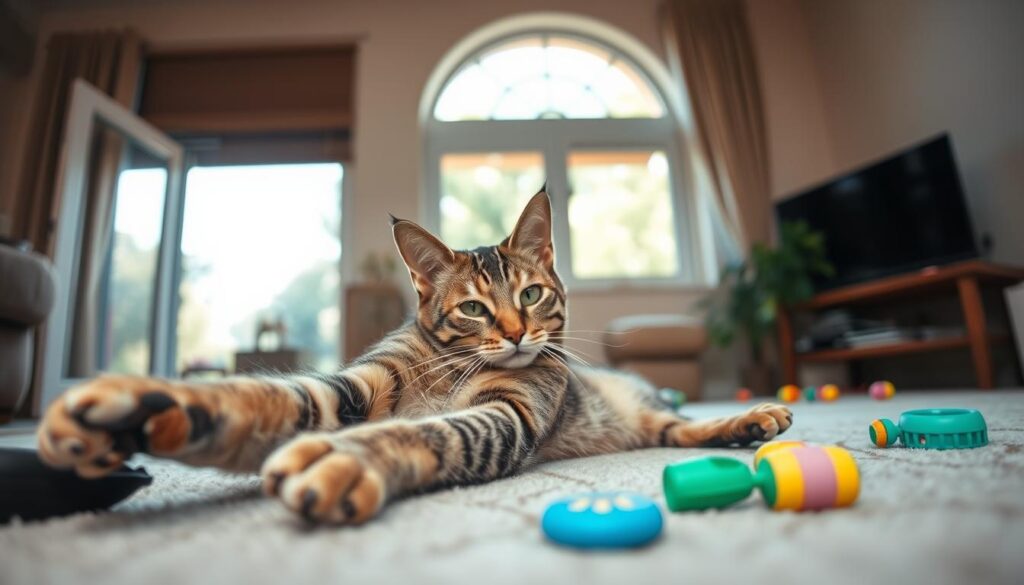
To handle a cat in heat well, owners can do a few things. Keeping the cat busy with toys and play is important. Also, making sure the cat’s area is safe stops them from trying to get out.
It’s also good to give the cat a quiet place to rest. Cats in heat might want more attention, so spending time with them helps. Keeping a regular routine is also good for them.
When to Seek Veterinary Advice
While you can manage a cat in heat at home, sometimes you need a vet. If the cat is very upset, meows a lot, or stays in heat too long, see a vet. They can help.
Also, if you’re thinking about spaying your cat to stop heat cycles, a vet can help. Spaying stops unwanted litters and keeps your cat healthy.
In short, taking care of a cat in heat needs patience and the right steps. By keeping the cat happy, safe, and knowing when to see a vet, you can get through this tough time.
Frequently Asked Questions About Cat Heat Cycles
Many cat owners find the cat estrus period confusing. They often have questions about their cat’s reproductive health. The heat cycle is a natural part of a cat’s life. Yet, there are many myths and misconceptions about cat heat cycles that worry owners.
Debunking Common Myths
One common question is whether cats bleed during their heat cycle. The answer is no; cats do not bleed like humans do during their menstrual cycle. Instead, they may show behavioral changes like vocalization, restlessness, and rubbing against surfaces.
Expert Insights
Another concern is whether cats can be spayed while in heat. While it’s generally recommended to spay a cat when they’re not in heat, it’s not always possible. Our veterinarians can guide you on the best approach for your cat. Also, letting a cat cycle can lead to health issues.
By understanding the facts about cat heat cycles, owners can better manage their cat’s reproductive health. This way, they can make informed decisions about their care.