

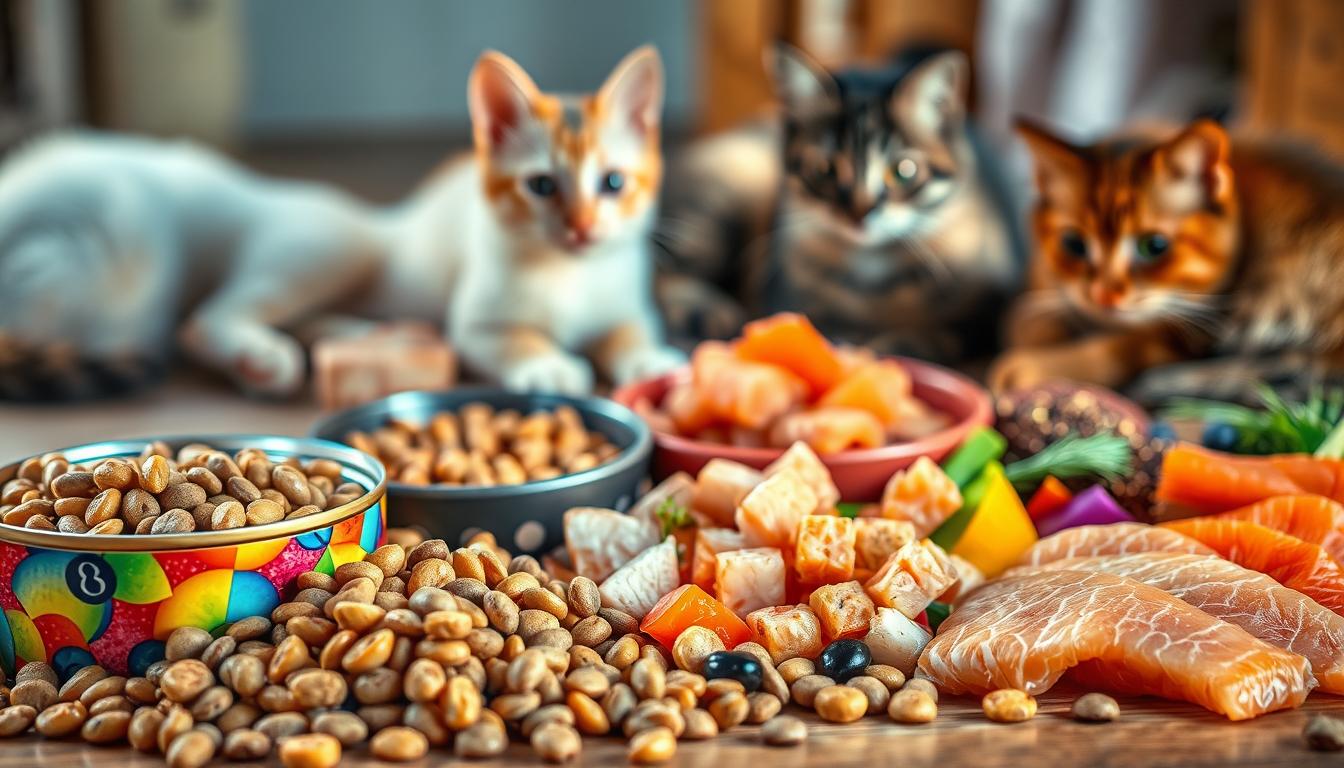
Did you know that 1 in 5 cats in the United States is obese? This is mainly because of bad diet. Choosing the right food is key to your cat’s health and happiness. With so many options, finding the best nutrition for your pet is important.
We’ll help you pick the perfect cat food for your pet. This ensures they live a healthy and joyful life.
Key Takeaways
- Understanding the importance of proper nutrition for your feline companion.
- Identifying key factors that influence the quality of cat food.
- Learning how to read and interpret cat food labels.
- Discovering the benefits of different types of cat food.
- Making an informed decision to ensure your cat’s overall health.
Understanding Cat Nutrition Needs
Cats are meat-eaters and need a diet rich in meat nutrients. Their diet must include animal-based ingredients. It’s important to choose the best cat food for their health.
Essential Nutrients for Cats
Cats need protein, taurine, vitamins, and minerals. Protein is key for their muscles, skin, and tissues. Taurine is important for their heart and eyes.
- Protein: Essential for muscle and tissue health.
- Taurine: Crucial for heart health and vision.
- Vitamins and Minerals: Support various bodily functions, including immune response and bone health.
The Role of Protein in a Cat’s Diet
Protein is vital for a cat’s diet. It must come from animals for easy digestion. The top-rated cat food brands offer enough protein for feline health.
Importance of Vitamins and Minerals
Vitamins and minerals are key for a cat’s health. They help with immune function and bone health. It’s crucial to feed your cat a diet rich in these nutrients.
- Vitamin A supports vision and immune function.
- Vitamin D is crucial for bone health.
- Minerals like calcium and phosphorus support bone health and other bodily functions.
Knowing your cat’s nutritional needs is the first step to the best cat food. Focus on protein, taurine, vitamins, and minerals for a healthy life.
Types of Cat Food Available
It’s important to know the different types of cat food to choose the right one for your cat. Cat food comes in many forms, each with its own nutritional benefits and tastes.
Dry Cat Food vs. Wet Cat Food
The debate between dry and wet cat food is common among cat owners. Dry cat food, or kibble, is loved for its ease and dental health benefits. It helps keep teeth clean. Wet cat food, with its high moisture, is good for cats with urinary problems or who drink less water.
Choosing between dry and wet food depends on your cat’s needs and lifestyle. Some cats do well with a mix of both.
Grain-Free and High-Protein Options
Grain-free and high-protein cat foods have become popular. Grain-free diets are good for cats with grain allergies. High-protein diets are closer to a cat’s natural diet, as cats are meat-eaters.
When picking grain-free or high-protein food, make sure it’s balanced and complete. Look for labels that say “complete and balanced” by trusted pet food standards.
Special Diets for Specific Health Needs
Cats with certain health issues need special diets. For example, cats with kidney disease need less protein and phosphorus. Cats with food allergies need hypoallergenic diets.
| Health Condition | Dietary Recommendation |
|---|---|
| Kidney Disease | Lower protein and phosphorus |
| Food Allergies | Hypoallergenic diet |
| Urinary Issues | High moisture content (wet food) |
Talking to a vet is key to finding the right diet for your cat’s health needs.
Reading Cat Food Labels
The information on cat food labels is key to your cat’s nutrition. When picking between wet cat food and dry cat food, reading the label is essential.
Decoding Ingredients Lists
The ingredients list can seem daunting, but it’s crucial. Here’s how to understand it:
- Look for high-quality protein sources like chicken or salmon as the first ingredient.
- Avoid fillers like corn, wheat, or soy, as they offer little nutrition.
- Notice the difference between named ingredients and generic terms. For example, “chicken” is more specific than “meat.”
Understanding Nutritional Information
Nutritional info on labels shows if the food is right for your cat. Make sure it meets the AAFCO standards for your cat’s life stage.
- Check the guaranteed analysis for protein, fat, fiber, and moisture content.
- Ensure the food is formulated for your cat’s specific life stage (kitten, adult, senior).
Recognizing Marketing Claims
Marketing claims can be misleading. Terms like “natural” or “holistic” are not always regulated. Here’s how to spot them:
- “Grain-free” doesn’t always mean it’s better; some cats may not need grain-free diets.
- Be wary of exaggerated health claims; look for scientific evidence.
- Look for third-party verification, such as AAFCO or NRC (National Research Council) compliance.
By carefully reading and understanding cat food labels, we can make informed choices. Whether you choose wet cat food or dry cat food, ensure it’s nutritious and meets your cat’s needs.
Choosing the Right Food for Different Ages
Choosing the right cat food means knowing what your cat needs at each age. Cats need different nutrients at different times in their lives. It’s key to pick the right food for their health and growth.
As cats grow from kittens to adults and then seniors, their food needs change a lot. It’s important to change their food to make sure they get the right nutrients.
Kitten Food Requirements
Kittens need a lot of protein and calories to grow fast. High-quality kitten food should have the right mix of nutrients, like vitamins and minerals.
- High protein content to support muscle growth
- Adequate calories for energy
- Essential vitamins and minerals for overall development
When picking kitten food, look for “complete and balanced” labels from the AAFCO or NRC.
Adult Cat Nutrition
Adult cats need a balanced diet to stay healthy. Natural cat food is often chosen by owners who want a diet that’s more like their natural diet.
Important things for adult cat nutrition include:
- Moderate protein levels
- Controlled calorie intake to prevent obesity
- A balanced mix of vitamins and minerals

Senior Cat Diet Considerations
Senior cats need a diet that helps with age-related health issues, like joint health and digestive sensitivity. Senior cat food is made to meet these needs.
Senior cat food often has:
- Joint support through added glucosamine and chondroitin
- Easily digestible ingredients
- Antioxidants to support overall health
Talking to a vet can help find the best diet for your senior cat, if they have special health needs.
Special Dietary Needs and Considerations
Many cats face special dietary challenges like allergies or obesity. As cat owners, it’s important to understand these needs. This ensures our pets stay healthy.
Food Allergies and Sensitivities
Some cats develop allergies or sensitivities to certain foods. This can cause skin problems, digestive issues, or other health concerns. Identifying and avoiding the allergenic ingredient is crucial. We might need to switch to a hypoallergenic or organic cat food that uses novel protein sources or is free from common allergens like beef or dairy.
Obesity Management
Obesity is a big problem for cats, leading to health issues like diabetes, arthritis, and heart disease. To manage a cat’s weight, we need to feed a balanced, nutrient-rich food. It should match their life stage and activity level. Look for cat foods that are high in protein and fiber but low in calories. This helps our cats feel full without overeating.
Dental Health and Nutrition
Dental health is key to a cat’s overall wellbeing. Some cat foods help reduce tartar and plaque, promoting healthier teeth and gums. Foods with larger kibble sizes or specific dental health formulas can help manage dental issues. Some cats also benefit from a diet that includes ingredients that support oral health.
By understanding and addressing these special dietary needs, we can improve our cats’ quality of life. Whether it’s through managing allergies, obesity, or dental health, the right diet is crucial for their overall health.
Top Cat Food Brands to Consider
Choosing the right cat food is key for our pets’ health. Look for brands with good nutrition, quality ingredients, and fair prices.
Grain-Free Brands We Trust
Grain-free cat foods are popular for their low carb and high protein content. Merrick and Taste of the Wild are top picks. They use real meat and are rich in protein.
Merrick Grain-Free Cat Food starts with deboned chicken and avoids artificial preservatives. It’s a great choice for cats. Check out more options and read reviews on cat food reviews.
High-Protein Formulas We Recommend
Cats need a lot of protein because they’re meat-eaters. Blue Buffalo and Wellness make high-protein foods for them. These formulas give cats the amino acids they need for health.
Blue Buffalo’s High-Protein Cat Food has real chicken as the main ingredient. It also has antioxidants and omega-3 fatty acids for health.
Budget-Friendly Options
Premium cat foods are great, but they can be pricey. Luckily, there are affordable options that are still nutritious. Purina and Iams offer good food at lower prices.
Purina Pro Plan is a budget-friendly choice. It has many formulas for different life stages and lifestyles. It’s easy to find the right food for your cat.
Homemade Cat Food: Is It Safe?
The trend of homemade cat food is growing. But, we must think about its good and bad sides. As cat owners, we want the best for our pets, and choosing the right food is key.
Pros and Cons of Homemade Diets
Homemade cat food lets us control what goes into it. This is great for cats with allergies or sensitivities. Yet, it takes a lot of time and research to make sure it’s balanced.
Some benefits of homemade cat food include:
- It avoids preservatives and additives in commercial foods
- It can improve your cat’s health if they have special needs
- You can tailor it to your cat’s tastes and allergies
But, there are downsides too:
- It’s hard to make sure it’s nutritionally balanced
- There’s a risk of nutritional deficiencies if not planned right
- It takes a lot of time and money to prepare
Nutritional Balance in Homemade Recipes
Getting the right balance is key when making homemade cat food. Cats need a lot of protein from animals, plus certain vitamins and minerals. It’s smart to talk to a vet or animal nutritionist to make sure your cat gets what they need.
Some important nutrients to include are:
- High-quality protein sources like chicken, salmon, or beef
- Taurine, an essential amino acid found in animal-based ingredients
- Vitamin A and Vitamin D, crucial for overall health
Safety Precautions to Consider
When making homemade cat food, it’s important to follow safety rules. This keeps your cat healthy and safe. It means handling raw ingredients carefully, storing food right, and avoiding toxic ingredients.
Key safety tips:
- Handle raw meat, eggs, and fish safely to avoid bacterial contamination
- Store homemade cat food in airtight containers in the refrigerator or freezer
- Avoid giving your cat ingredients known to be toxic, such as onions, garlic, and chocolate
By weighing the pros and cons, making sure it’s balanced, and following safety rules, we can make good choices for our cats.
Transitioning to a New Cat Food
Switching your cat to a new food, like top-rated cat food or holistic cat food, needs careful planning. You must understand their nutritional needs and adjust their diet slowly. This prevents digestive problems.
Signs Your Cat Needs New Food
First, check if your cat needs a new food. Look for signs like digestive issues, skin problems, or a drop in health. If your cat shows these signs, it might be time for a better diet.
Some signs your cat might need a diet change include:
- Frequent vomiting or diarrhea
- Dull coat or skin irritations
- Lack of energy or enthusiasm
How to Gradually Switch Foods
To switch your cat’s food, start by mixing a little of the new food with their old food. Slowly increase the new food over 7-10 days.
| Day | Old Food Percentage | New Food Percentage |
|---|---|---|
| 1-2 | 75% | 25% |
| 3-4 | 50% | 50% |
| 5-6 | 25% | 75% |
| 7+ | 0% | 100% |
Monitoring Your Cat’s Reaction
Keep a close eye on your cat while they adjust to the new food. Watch for signs like vomiting, diarrhea, or tiredness. If you see these, slow down the change or talk to your vet.

By slowly introducing new food and watching your cat’s health, you can make the change smoothly. This is true whether it’s a top-rated cat food or a holistic cat food option.
Common Cat Food Myths Debunked
The world of cat food is full of misconceptions. These can confuse pet owners. It’s important to know the truth to give our cats the best nutrition.
Myths About Grain in Cat Food
Many think grains are bad for cats. But, the truth is more complex. Cats mainly eat meat, but some grains can be good for them. The problem is when grains are just fillers or if cats are sensitive.
Grain-free diets are popular, but not for every cat. Some grain-free foods can harm a cat’s heart because they lack important nutrients. It’s important to find a cat food that has the right balance of grains and other nutrients.
| Grain Type | Nutritional Value | Cat’s Digestive Compatibility |
|---|---|---|
| Rice | Rich in carbohydrates | Generally easily digestible |
| Oats | High in fiber | Can be beneficial for digestive health |
| Wheat | Good source of fiber and nutrients | May cause sensitivity in some cats |
The Truth About Raw Diets
Raw diets for cats are seen as natural. They can improve a cat’s coat and reduce allergies. But, raw meat can have harmful bacteria like Salmonella. This is a risk for cats and their owners.
It’s important to think about the pros and cons of raw diets. Always talk to a vet before starting a raw diet. Making sure the diet is safe and balanced is crucial.
Myths Surrounding Feeding Frequency
How often to feed cats is a common debate. Some say cats should always have food available, while others believe in a strict schedule. The right answer depends on the cat’s age, health, and lifestyle.
Younger cats need to eat more often because they are more active. Older cats might need to eat less to avoid getting too fat. Knowing your cat’s needs helps you find the best feeding schedule.
By clearing up these myths, we can make better choices for our cats. This ensures they live healthier, happier lives.
Frequently Asked Questions About Cat Food
Cat owners often wonder about the best food for their pets. This includes dry cat food, natural cat food, and organic cat food. We’ll answer some common questions to help you choose wisely.
How Much Should We Feed Our Cats?
The right amount of food for your cat depends on their age, size, and how active they are. Cats need a certain number of calories based on their body weight. When picking between different foods, look at the calorie content and follow the feeding guidelines.
Can Cats Be Vegetarians?
Cats must eat a diet high in protein from animal sources. Some owners try natural or organic cat food, but a vegetarian diet is not good for them. Cats have specific nutritional needs that a vegetarian diet can’t meet.
What if My Cat Refuses New Food?
If your cat is slow to accept new food, start by mixing it with their current food. This makes it easier for them to get used to the new taste and texture. Remember, switching to a new dry cat food or another type takes time and patience.