

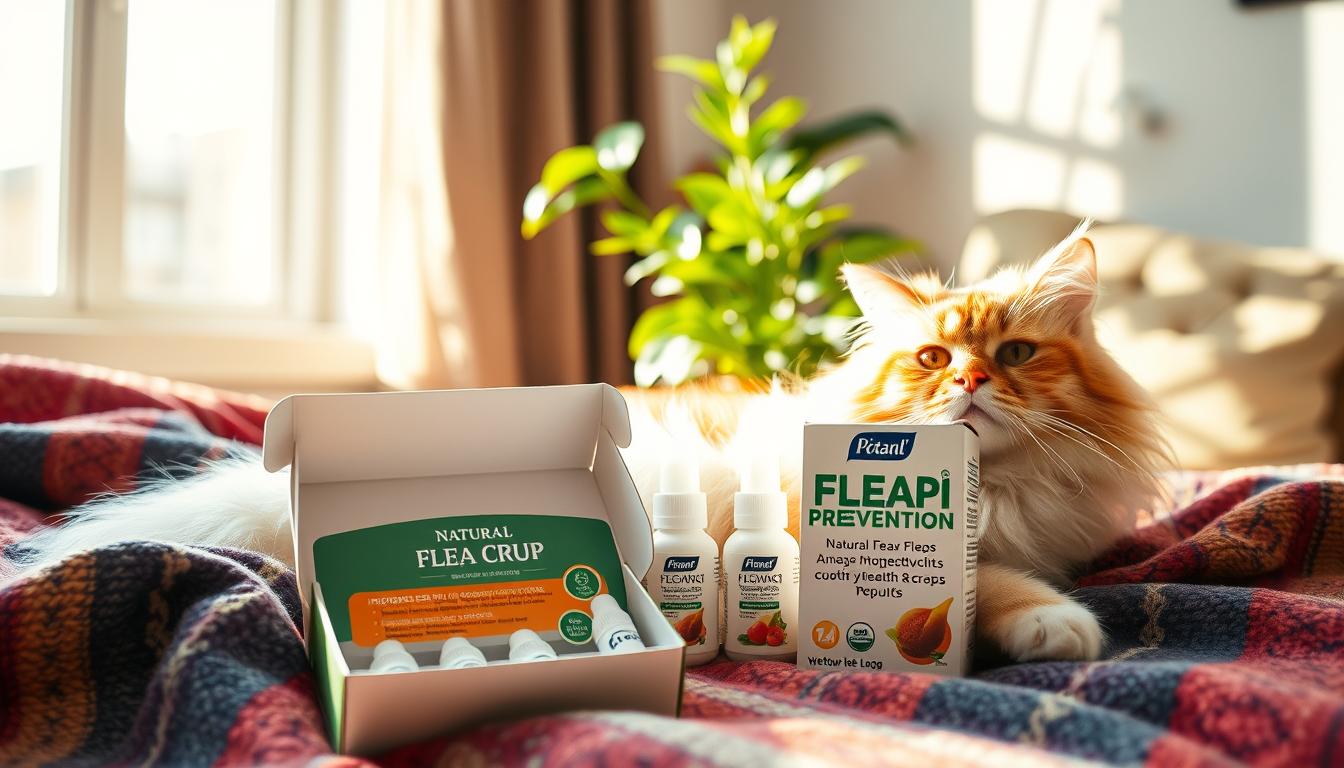
Fleas and ticks can make cats very sick. They can cause diseases all year, no matter the weather or where you live in the U.S. One flea can drink up to 15 times its own weight in blood every day. This can make cats very uncomfortable, cause allergic reactions, and even be life-threatening.
We will talk about why flea prevention for cats is so important. We will also share tips and tricks to keep your cat safe from fleas. Knowing the dangers of fleas helps us protect our cats better.
Key Takeaways
- Year-round flea prevention is crucial for cat health.
- Fleas and ticks can cause diseases in cats.
- Effective flea care reduces the risk of allergic reactions.
- Prevention methods vary depending on the season and location.
- Regular checks and maintenance are essential for flea control.
Understanding Fleas and Their Impact on Cats
Knowing about fleas is key for cat owners to keep their pets safe. Fleas are tiny insects that love warm, damp places. They can harm both pets and people.
What Are Fleas?
Fleas are tiny bugs that feed on blood from mammals and birds. They can jump a lot and live in homes. They’re not just annoying; they can spread diseases and cause allergies.
How Do Fleas Affect Your Cat’s Health?
Fleas can make your cat very uncomfortable. They can cause allergic reactions and spread diseases. Flea allergy dermatitis is a big problem, leading to itching and skin issues. They can also give your cat tapeworms and bacterial diseases like cat scratch fever.
Common Signs of Flea Infestation
Spotting a flea problem early is important. Look for signs like a cat scratching a lot, flea dirt on their coat, and fleas or eggs in their fur. Regular grooming helps find these signs fast.
| Signs of Flea Infestation | Description |
|---|---|
| Excessive Scratching | Cats scratch more than usual due to discomfort caused by flea bites. |
| Flea Dirt | Visible flea feces on the cat’s coat, often appearing as dark specks. |
| Visible Fleas or Eggs | Fleas or their eggs can be seen in the cat’s fur, specially after grooming. |
Understanding fleas is the first step to managing them. Knowing what to look for and how they affect your cat’s health helps. This way, you can treat and prevent infestations, keeping your pet healthy and happy.
Preventive Measures for Flea Control
To keep fleas away, you need to groom, inspect, and care for your home. These steps help lower the chance of fleas and keep your pet safe and healthy.
Regular Grooming and Bathing
Grooming is key to flea prevention for cats. Regular combing removes fleas and eggs. Use a flea comb, focusing on the neck and tail, to catch fleas.
Bathing with flea shampoo can also help. Use a gentle shampoo to avoid skin irritation. Grooming lets you check for flea signs like dirt or excessive scratching.
Importance of Screening and Inspection
Screening and inspection are crucial for flea control for cats. Regular checks help spot infestations early. Look for flea dirt and live fleas, mainly in thick fur.
Also, inspect your cat’s space. Check bedding and favorite spots for fleas or eggs. Early detection is key to managing fleas.
Effective Home Environments
A clean home is essential to prevent fleas. Keep areas where your cat hangs out clean. Vacuum often, using a flea attachment or HEPA filter.
Wash your cat’s bedding and toys in hot water. A clean home reduces flea risks and keeps your cat happy and healthy.
Choosing the Right Flea Treatment
It’s important to know the different flea treatments for cats. You have options like topical treatments, oral medications, and flea collars. Each has its own benefits and drawbacks.
Topical Treatments: Pros and Cons
Topical treatments are applied to your cat’s skin, usually on the back. They can be effective but have some downsides.
- Pros: Easy to apply, works fast, and can be bought over-the-counter or by prescription.
- Cons: May irritate the skin, can be washed off, and some cats don’t like the application.
Always follow the instructions and talk to a vet if you have concerns about topical treatments.
Oral Medications: How They Work
Oral flea medications are given to cats to eat, as pills or liquids. They kill fleas or stop their eggs from hatching.
- Benefits: Can be very effective, great for bad infestations, and some also fight other parasites.
- Considerations: Needs a vet’s prescription, might have side effects, and can be hard to give to cats.
Oral medications are good for cats with skin issues or when topical treatments don’t work.
Flea Collars: Are They Effective?
Flea collars release chemicals to repel or kill fleas. Their success depends on the ingredients and the cat.
- Advantages: Offers long protection, easy to use, and some also keep ticks away.
- Disadvantages: May irritate the skin, less effective for severe cases, and some cats don’t like them.
Choosing a flea collar that your cat can tolerate is key. Make sure it fits their age, size, and health.
By thinking about these points and talking to a vet, you can pick the best flea treatment for your cat. This ensures they stay comfortable and healthy.
Natural Remedies for Flea Prevention
Natural flea remedies are a good choice for cat owners who don’t want to use harsh chemicals. It’s important to remember that these remedies should be used with a vet’s advice. This ensures they are safe and work well.
Essential Oils: Safe Options for Cats
Certain essential oils can keep fleas away from cats. Lavender, chamomile, and cedarwood oils are good choices. But, you must use them carefully.
Always mix essential oils with a carrier oil first. Also, talk to a vet before putting them on your cat’s skin. Some essential oils can be harmful to cats.
- Lavender oil: Known for its calming effects and flea-repelling properties.
- Chamomile oil: Soothes skin irritations and can help deter fleas.
- Cedarwood oil: Natural flea repellent, but use with caution and in dilution.
Herbal Flea Sprays: DIY Solutions
Herbal flea sprays are a natural way to stop fleas. You can make your own using apple cider vinegar, lemon juice, and herbs. These sprays can be used on your cat and in their space.
To make a simple herbal flea spray, mix apple cider vinegar with water. Add a few drops of safe essential oils. Spray it on your cat’s fur, but avoid their eyes and ears.
Vacuuming and Cleaning: A Natural Approach
Vacuuming and cleaning can help control fleas at home. Regular vacuuming of carpets, furniture, and pet areas can reduce flea numbers.
When vacuuming, throw away the bag or empty the canister after each use. This stops fleas from getting out. Also, wash your cat’s bedding in hot water and dry it on high heat to kill fleas and their eggs.
| Natural Remedy | Application | Safety Precaution |
|---|---|---|
| Lavender Oil | Dilute with carrier oil, apply to cat’s coat | Consult vet, avoid sensitive areas |
| Herbal Flea Spray | Spray on cat’s coat and environment | Avoid eyes and ears |
| Vacuuming | Regularly vacuum carpets and pet areas | Dispose of vacuum bag after use |
In conclusion, natural flea remedies can be a great part of your flea prevention plan. By using these methods and getting regular vet care, you can keep your cat healthy and flea-free.
Addressing a Flea Infestation
Dealing with fleas needs a plan that treats your cat and home. Fleas can make your cat uncomfortable and sick. They can even spread diseases. So, it’s important to act fast and right.
Immediate Steps to Take
First, check if you have fleas. Look for signs like your cat scratching a lot, flea dirt, or fleas on their fur.
Inspecting Your Cat: Use a fine-tooth comb on your cat’s neck, tail, and belly. These are flea hotspots.
“Regular grooming not only helps in early detection of fleas but also aids in reducing their population.”
Treating Your Cat Effectively
After finding fleas, treat your cat. You can use topical treatments, oral meds, or flea collars.
- Topical treatments go on your cat’s skin, between the shoulder blades.
- Oral meds kill fleas or stop their eggs from hatching.
- Flea collars offer long protection but might not work for big infestations.
Cleaning Your Home Thoroughly
Cleaning your home is key to fighting fleas. Your cat’s treatment is just one part of the battle.
Vacuuming: Vacuum often, where your cat hangs out. Throw away the vacuum bag or empty the canister to stop fleas from spreading.
Washing: Wash your cat’s bedding and any blankets or clothes they’ve touched in hot water.
Flea Life Cycle and How It Affects Treatment
To fight flea infestations, knowing the flea life cycle is key. Fleas go through four stages: egg, larva, pupa, and adult. This knowledge helps pick the best flea treatments for cats.

Understanding Flea Development
Flea life starts with eggs on the host cat. These eggs can fall off and spread in your home. The eggs hatch into larvae, which eat flea dirt and organic debris.
Next, larvae turn into pupae in cocoons. Adult fleas come out of these cocoons, starting the cycle again. Flea development takes weeks to months, depending on temperature and humidity.
Why Timing Matters in Treatment
Timing is everything in flea treatment. Fleas reproduce fast, so treatments must target all life stages. Adult fleas on your cat can be killed by topical treatments. But eggs and larvae need separate treatments.
- Use flea prevention for cats products that interrupt the flea life cycle.
- Apply treatments at the right time to cover all flea stages.
- Consider Insect Growth Regulators (IGRs) to stop flea eggs from hatching.
Disrupting the Flea Life Cycle
Stopping the flea life cycle is crucial for control. Treat your cat and the environment. Vacuum, wash your cat’s bedding, and use IGRs to cut down flea numbers.
Understanding the flea life cycle and using treatments for each stage helps manage infestations. This way, you can pick the best flea treatments for cats.
Long-Term Flea Management Strategies
To keep your cat flea-free, you need a long-term plan. This plan should include regular grooming, making changes to your environment, and getting advice from your vet.
Seasonal Flea Control Tips
Fleas can be a problem all year, but some seasons are worse. Warmer months often have more fleas. It’s important to check your cat and their space often during these times. Using cat flea shampoo can also help.
“Flea control is not just about treating the cat; it’s about treating the environment as well,” says “Dr. Smith, a veterinarian.
“Fleas can lay eggs in carpets, bedding, and other areas where your cat spends time, so it’s essential to clean and vacuum regularly.”
Regular Vet Visits for Prevention
Going to the vet regularly is key to keeping your cat healthy and flea-free. Vets can tell you the best ways to control fleas and suggest treatments based on your cat’s health and life.
- Schedule annual check-ups to monitor your cat’s health.
- Discuss flea control options with your veterinarian.
- Follow professional advice on diet and health to boost your cat’s resistance to fleas.
Diet and Health for Flea Resistance
A healthy diet can make your cat more resistant to fleas. Nutritional supplements and a balanced diet help build a strong immune system. This makes your cat less likely to get sick from fleas.
By using these strategies, you can manage flea populations and keep your cat healthy and happy. Remember, flea control for cats is an ongoing process that needs dedication and the right approach.
The Importance of Consulting a Veterinarian
Veterinarians are key in helping cat owners deal with fleas. Flea problems affect not just cats but also homes. They offer advice that fits your cat and home’s needs.
When to Seek Professional Help
If you think your cat has fleas, see a vet. Look for signs like a lot of scratching, flea dirt, or actual fleas. Cats with allergies or skin issues need vet advice too.
Seeing a vet early can stop the problem from getting worse. It helps avoid serious issues like anemia or disease spread.
How a Vet Can Help Diagnose the Flea Problem
A vet will check your cat to find the flea problem. They look at the coat, check for dirt, and check for skin issues. They also ask about your cat’s life and past treatments.
After finding the problem, the vet will suggest the best natural flea remedies for cats or other treatments.
Recommended Treatments from Your Vet
Vets suggest different treatments like topical, oral, or flea collars for cats. The choice depends on the infestation, your cat’s health, and past treatments.
It’s important to follow the vet’s advice for the treatment to work and keep your cat safe. You might need to go back for check-ups to adjust the treatment if needed.
By talking to a vet, you make sure you’re doing the best for your cat. This helps solve the flea problem and prevents it from coming back.
The Health Risks of Flea Bites
Flea bites are more than just a bother; they can harm cats’ health. The pain from flea bites can lead to serious problems. It’s crucial for cat owners to know these risks and act fast.
Allergies and Skin Irritations
Flea bites can make cats allergic, causing them to itch and scratch a lot. This can lead to skin problems like redness and swelling. It might even cause infections from too much scratching.
Allergic dermatitis is a common issue from flea bites. It makes a cat’s skin react to the flea’s saliva. This can really hurt a cat’s quality of life, making them uncomfortable and upset.
Risk of Anemia in Cats
Severe flea infestations can cause anemia in cats. This is because they lose a lot of blood from flea bites. Kittens, older cats, and cats with health problems are at higher risk because they might not recover well.
“Flea anemia, also known as flea-induced anemia, occurs when a cat loses a significant amount of blood due to flea feeding, potentially leading to life-threatening conditions.”
Transmission of Diseases from Fleas
Fleas can spread diseases to cats through their bites. One common disease is tapeworm infestation. Cats can get tapeworms by eating larvae while grooming.
Another disease fleas can spread is bartonellosis, or cat-scratch disease. While it’s more common through scratches, fleas increase the risk of cats having Bartonella bacteria.

Knowing these risks shows how important it is to take care of fleas on cats. By quickly treating flea infestations and keeping the environment flea-free, owners can lower the risk of these health problems.
Frequently Asked Questions About Cat Flea Care
Cat owners often have many questions about flea care. Flea infestations can make cats uncomfortable and unhealthy. Knowing the answers to these questions can help you care for your cat better.
How do I know if my cat has fleas?
Spotting a flea infestation early is key. Look for signs like too much scratching, black specks on your cat’s fur, and fleas. You might also see eggs or larvae in your cat’s bedding.
Check your cat, focusing on the neck, tail, and belly. Use a flea comb to find fleas and eggs. If you’re not sure, ask a vet for help.
Are flea treatments safe for kittens?
Flea treatments can be safe for kittens if used right. Always pick products labeled safe for kittens. Their skin and health are more delicate than adult cats.
Always read the product instructions carefully. Talk to your vet before using any treatment, even if your kitten is young or has health problems. Some treatments aren’t good for kittens, so getting advice is crucial.
Can fleas survive without a host?
Fleas can live without a host for weeks or months. Adult fleas wait in dark, humid spots for a host. To control fleas, treat your cat and your home.
Regular vacuuming and washing your cat’s bedding helps. Using flea control products in your home also prevents fleas.
Understanding these common questions helps you manage flea care for your cat. Remember, keeping your cat and home clean is key to controlling fleas.
Myths and Misunderstandings About Fleas
The world of flea control is full of wrong ideas. As cat owners, we must know the truth to care for our pets well.
Common Flea Myths Explained
Many myths exist about fleas. Some think fleas only bother dirty homes. But, fleas can infest any home, no matter how clean, brought in by pets or furniture.
Another myth is that fleas don’t harm cats. But, flea bites can really bother cats, cause allergic reactions, and even spread diseases. Knowing the truth about fleas is key to controlling them.
| Myth | Fact |
|---|---|
| Fleas only infest dirty homes. | Fleas can infest any home, regardless of cleanliness. |
| Fleas are harmless to cats. | Flea bites can cause discomfort, allergic reactions, and transmit diseases. |
| Flea treatments are 100% effective. | No single flea treatment is 100% effective; a combination of treatments is often necessary. |
Misconceptions About Flea Treatments
Flea treatments are often misunderstood. Some think a cat flea shampoo is enough. But, shampoos alone are not enough. A mix of treatments, including topical and oral meds, and cleaning the environment is best.
For more info on flea myths, visit https://hartsrunvet.com/9-flea-myths.
Separating Fact from Fiction
To manage fleas well, we must know the facts. Flea control for cats needs a plan that treats the cat, home, and other pets. Regular grooming, using preventative products, and keeping a clean home are essential.
By understanding flea myths and treatments, we can protect our cats and homes better. Effective flea control is not just about treating the cat. It’s about making a flea-free space.
Building a Cuddle-Ready Flea-Free Home
Creating a flea-free home is key for cat flea care. It’s important for our pets’ health and our comfort. A flea-free environment is essential.
Flea-Free Zones
We start by making flea-free zones in our homes. Cleaning and decluttering these areas helps a lot. It makes a safe space for our cats to rest and play.
Preventative Products
Using products that prevent fleas is also important. These products can be used on carpets, furniture, and more. They help keep fleas away.
Maintaining a Clean Environment
Keeping our homes clean is vital. Vacuuming, washing our cats’ bedding, and tidying up helps prevent fleas. These steps, along with good cat flea care, make our homes healthy and happy for our pets.