
Did you know that cats exhibit a wide range of behaviors that can sometimes leave their owners puzzled? From vocalizations and body language to scratching and hunting, understanding these behaviors is crucial for any cat owner.
By decoding these behaviors, we can deepen our bond with our feline companions and provide them with the care they need. In this comprehensive guide, we will explore the various aspects of feline behavior. We will provide insights and tips for owners to improve their relationship with their cats.
Key Takeaways
- Understand the importance of recognizing and interpreting your cat’s behaviors.
- Learn how to respond to your cat’s needs effectively.
- Discover tips to strengthen your bond with your feline companion.
- Identify common behavioral issues and how to address them.
- Improve your relationship with your cat by understanding their behavior.
Understanding Feline Behavior
Cats are fascinating creatures, and knowing how they behave is key for their owners. They mainly talk through body language and sounds. This helps us understand how they feel.
The Importance of Body Language
Body language is very important for cats. Their posture, tail, ears, and whiskers tell us a lot about their mood. For example, a tall, vertical tail means they’re confident and friendly. But, if their ears are flat, they might be fearful or anxious.
Common Vocalizations and Their Meanings
Cats make different sounds to tell us what they need or how they feel. Meowing, purring, hissing, and growling are some ways they communicate. Knowing these sounds helps us meet their needs better. For instance, if a cat meows a lot, it might want attention or food.
Signs of Stress in Cats
It’s important to know when cats are stressed. Signs include too much grooming, hiding, or changes in eating habits. Spotting these signs early helps us make our cats happier. We can do this by creating a more stable home or getting vet advice.
By watching these signs, we can understand our cats better. This makes our bond stronger. Learning about cat behavior takes time, patience, and sometimes help from experts.
Key Instincts That Shape Behavior
Innate instincts are key in shaping domestic cats’ behavior. They reflect the traits of their wild ancestors. Understanding these natural behaviors is vital for cat owners. It helps us see how cats interact with their surroundings and people.
Hunting and Play Behavior
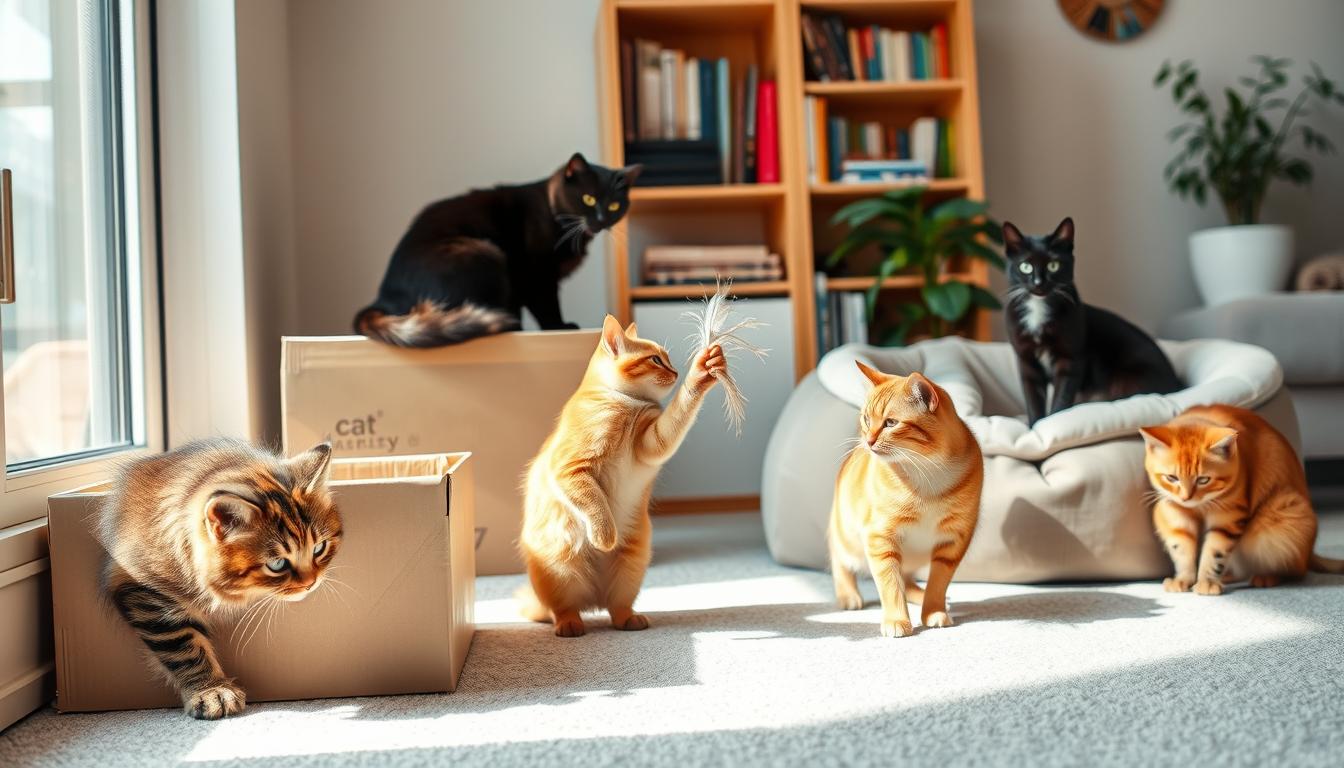
Cats are natural predators with a strong hunting instinct. Even though they are domesticated, they still show this instinct through play. They use toys or objects to hunt, which is good for their mind and body.
Playing like they hunt is great exercise and fun. It lets them stalk and pounce, which is good for their health and happiness. By supporting this instinct, we can lower stress and prevent bad behavior.
Territorial Instincts
Cats also have territorial instincts that make them mark their territory. They do this by scratching, spraying urine, or rubbing their faces on things. This leaves their scent on objects, warning other cats to stay away.
Understanding these territorial behaviors helps us manage our cat’s actions better. For example, giving them scratching posts keeps them from scratching furniture. This way, we protect our home and let our cats fulfill their natural needs.
Social Interactions Among Cats
Cats have complex social lives, more than many think. They can form deep bonds, even though they seem solitary. This is true when they are socialized early on.
Knowing how cats interact with each other helps us understand their behavior. They talk to each other in many ways, like through sounds, body language, and scents.
How Cats Communicate with Each Other
Cats communicate in many ways, including sounds, postures, and scents. They use sounds like meows, hisses, and purrs to share feelings and needs.
Vocalizations and Their Meanings:
- Meowing: Used by kittens to talk to their mom, but also by adult cats.
- Hissing: Shows fear, anxiety, or when they feel they need to protect their space.
- Purring: Means they are happy, calming themselves, or asking for food or attention.
Body language is key in cat communication. A cat’s stance, face, and tail tell a lot. They show if they are aggressive or friendly.
For example, a cat with its tail up is usually confident and friendly. But a tucked tail means they are scared or feeling submissive.
The Role of Play in Socializing
Play is crucial for cats to socialize and keep bonds strong. It teaches them to hunt, defend themselves, and understand social rules.
“Play is essential for kittens to develop social skills and understand boundaries with their littermates and other cats.”
A table summarizing the key aspects of play in cat socialization:
| Aspect of Play | Role in Socialization | Benefits |
|---|---|---|
| Hunting Games | Develops hunting skills and coordination | Enhances physical fitness and mental stimulation |
| Interactive Play | Fosters social bonding and trust | Reduces stress and promotes a sense of security |
| Play Fighting | Teaches boundaries and social etiquette | Helps in developing conflict resolution skills |
By understanding and encouraging the right social interactions and play, cat owners can enrich their pets’ lives. This makes for a happier and more harmonious life for cats.
Household Behavior Dynamics
Household dynamics greatly affect our cats’ behavior and well-being. It’s key to understand these dynamics to create a stress-free home for our feline friends.
Why Cats Scratch and Claw
Cats scratch for many reasons, like maintaining their nails, stretching, and marking territory. Scratching is natural and helps cats stay healthy and feel secure.
It’s important to give cats the right scratching posts and pads. This helps them scratch where they should, not on furniture. The material and texture of these surfaces matter too; cats like to leave marks and scent.
https://www.youtube.com/watch?v=1-dOxdxvn4E
Litter Box Habits
Litter box habits are vital in household dynamics. Cats are clean and their habits show their health and happiness. Keeping the litter box clean is essential; it should be cleaned regularly and there should be enough for all cats.
It’s best to have one litter box per cat, plus one extra. This reduces stress and competition. The location and type of litter box also matter; cats prefer quiet, private spots.
- Choose a litter that your cat finds acceptable in terms of texture and odor.
- Place litter boxes in quiet, accessible locations.
- Avoid placing litter boxes near their food and water.
Understanding Aggression in Cats
Cats show aggression for many reasons, like fear, defending their territory, or health issues. This behavior can show up in different ways. It’s key for cat owners to know why their cat is aggressive to handle it well.
Types of Aggressive Behavior
There are several types of aggression in cats, each with its own traits. Fear-based aggression happens when a cat feels scared or threatened. It acts defensively. Territorial aggression is when a cat guards its area from others.
Other types include pain-induced aggression from health problems or pain. And redirected aggression when a cat gets angry at something else, often because it can’t face the real cause.
| Type of Aggression | Causes | Characteristics |
|---|---|---|
| Fear-based Aggression | Fear, feeling threatened | Defensive behavior, hissing, growling |
| Territorial Aggression | Protecting territory | Aggression towards perceived intruders, marking territory |
| Pain-induced Aggression | Medical issues, pain | Aggression when in pain, avoiding touch |
How to Manage Aggression
Managing cat aggression needs a few steps. First, find and fix the cause. Then, change the environment and use behavior plans. Identifying triggers is key to avoiding them.
For fear or territorial aggression, gradual desensitization and counterconditioning work well. Start by exposing the cat to the trigger in small steps. Make sure the cat sees the trigger as something good.
Also, make sure the cat’s space is fun and full. This can help lower stress and aggression. Give them things like litter boxes, scratching posts, and places to climb.
The Significance of Routine
Cats love knowing what’s going to happen next. A daily routine is key. It helps cut down on stress and makes their world more stable.
Establishing a Daily Schedule
Start by thinking about what your cat likes and needs. Make sure their meals, playtime, and sleep are at the same times every day. For example, eating at the same times helps their stomach stay regular.
- Set regular feeding times
- Schedule playtime and exercise
- Maintain a consistent sleep schedule
Keeping to a routine makes your cat feel safe. It also helps prevent bad behavior. Experts say a routine is great for cats. It makes them happier and healthier.

The Impact of Changes on Your Cat
Changes can upset your cat. This includes new pets, changes in your work, or even moving furniture. It’s important to make changes slowly.
For example, if you’re changing your cat’s meal times, do it little by little. This lets them get used to it. When introducing a new pet, do it slowly and in a controlled way. This helps avoid stressing your cat out.
For tips on handling changes and stress for your cat, check out oboucing.com. They offer advice on keeping your pet’s environment stable.
- Gradually introduce changes to your cat’s routine
- Monitor your cat’s behavior and adjust if needed
- Keep their environment stable and secure
Enrichment and Stimulation
Cats need a lively environment to avoid boredom and stress. This can cause bad behavior. As cat owners, we must give them a fun and active life.
Toys and Activities for Active Cats
We can keep our cats busy with different toys and games. Feather wands, laser pointers, and interactive puzzle toys are great for their health. A simple game of hide-and-seek with treats can also challenge their minds.
Cat experts say, “Cats are natural hunters. Giving them hunting games can lower stress and boredom.”
“A cat’s natural instinct is to hunt, and by providing them with toys and activities that mimic this behavior, we can help keep them active and engaged.”
Creating an Engaging Environment
It’s key to make our cat’s space fun and engaging. We can do this by adding cat shelves or trees. These let our cats climb, watch, and feel safe. Also, changing toys often keeps things exciting for them.
For more tips on making your cat’s space fun, check our about page. It has lots of advice on cat care.
By using these tips every day, we can make sure our cats are happy and healthy.
Training Your Cat
Understanding your cat’s behavior is the first step in effective training. It’s not just about stopping bad habits. It’s also about building a stronger bond and better communication. With the right methods, you can teach your cat simple commands and tricks.
Basic Commands and Tricks
Teaching your cat to sit, stay, and come takes patience and positive rewards. Tricks like ‘shake’ or ‘roll over’ are fun and keep their mind active. Start with easy commands and then move to more challenging tricks.
- Begin with short training sessions to keep your cat engaged.
- Use positive reinforcement techniques to encourage desired behaviors.
- Be patient, as learning speeds can vary among cats.
Using Positive Reinforcement
Positive reinforcement is a great training tool. It rewards good behavior with treats, praise, or play. This approach is kind, effective, and strengthens your bond. For example, give a treat when your cat sits.
Consistency is crucial with positive reinforcement. Make sure everyone uses the same commands and rewards. This avoids confusing your cat.

Common Behavioral Issues
Cats can face many behavioral problems that need our attention and understanding. As cat owners, we often find ourselves dealing with issues that are hard to solve. But, by knowing the reasons behind these problems, we can find ways to fix them.
Excessive Meowing
Excessive meowing is a big problem for many cat owners. Cats meow for different reasons, like hunger, wanting attention, or health issues. Figuring out why they meow is key to solving the problem.
If your cat meows a lot, first check if they have everything they need. This includes food, water, and a clean litter box. Cats may also meow because they’re bored or stressed. Giving them enough to do and a calm place to be can help a lot.
Destructive Behavior
Destructive behavior, like scratching furniture or knocking things over, can be really frustrating. This behavior usually means your cat has too much energy or is bored. Cats need to scratch and hunt like they would in the wild.
To stop destructive behavior, give your cat the right things to do. This includes scratching posts, toys, and playtime. Making sure your cat gets enough to do physically and mentally can really cut down on destructive behavior.
Understanding and fixing common problems like too much meowing and destructive behavior can make our cats happier and our bond with them stronger.
Resources for Further Understanding
For cat owners looking to understand their pets better, many resources are out there. We can use these to learn more about feline psychology and behavior.
Insights from Literature
Books on cat behavior offer deep insights into feline actions and reactions. They cover everything from basic behavior to complex psychological issues.
Connecting with Fellow Cat Owners
Online communities and forums are great for sharing experiences and getting advice. They help us connect with other cat lovers and learn from their experiences.
By using these resources, we can gain a deeper understanding of our cat’s behavior. This can also improve our bond with them.