
Cats usually start their heat cycle between 5 to 9 months old. This is when their reproductive life begins.
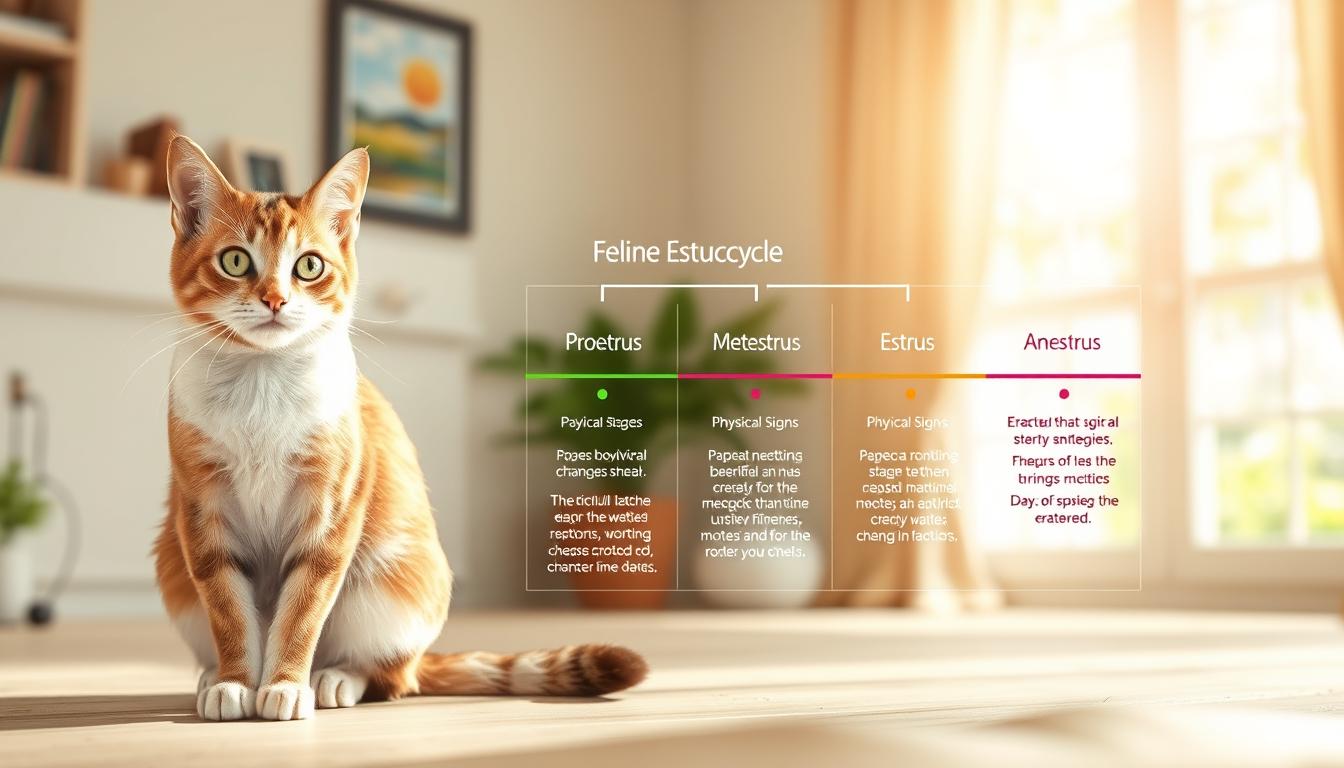
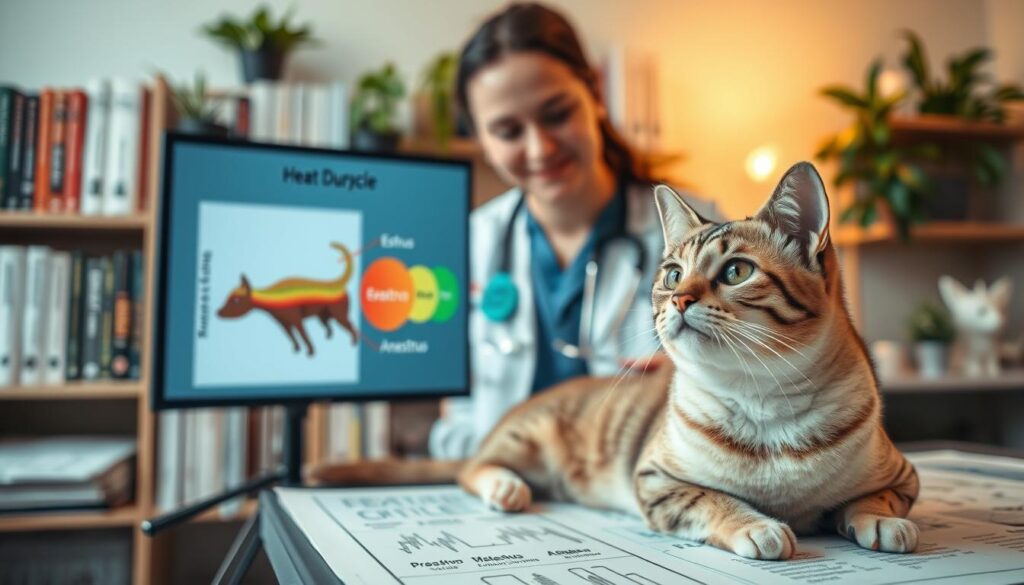
The feline estrus cycle has four main stages: proestrus, estrus, interestrus or metestrus, and anestrus. Knowing these stages helps cat owners manage their pet’s behavior and health.
Exploring the feline estrus cycle shows that knowing each stage’s length is key. It helps in giving the right care to cats.
Key Takeaways
- Cats typically start going into heat between 5 to 9 months of age.
- The feline estrus cycle consists of four stages.
- Understanding the cycle is crucial for managing a cat’s behavior and health.
- The duration of each stage varies.
- Knowledge of the estrus cycle helps in providing better care for cats.
What Is a Cat in Heat?
Knowing when a cat is in heat is key for cat owners. This stage is a natural part of a cat’s life cycle. Knowing its signs and how long it lasts helps manage your cat’s behavior and keeps them healthy.
Definition of Estrus in Cats
Estrus, or being “in heat,” means a female cat is fertile and ready to breed. Hormonal changes prepare her body for pregnancy. Estrus usually lasts about a week, but can be from three to 14 days. During this time, the cat’s behavior and body change a lot.
Signs Your Cat Is in Heat
When a cat is in heat, she may act differently. She might be very affectionate, talk a lot, and seem restless. Some cats may also show physical signs like discharge or changes in their genital area. It’s important to know these signs to meet your cat’s needs and manage their behavior.
Spotting the signs of estrus in your cat helps you keep them comfortable and safe. By understanding this phase, you can support your cat better through this natural part of their life.
The Cat Heat Cycle Duration
The cat heat cycle duration is key to understanding feline reproduction. It helps cat owners and breeders manage their cat’s reproductive health well.
Average Length of the Heat Cycle
The average cat heat cycle lasts about three weeks. But, it can vary a lot from one cat to another. It can last from one to six weeks. The cat’s health, age, and breed can affect how long the cycle lasts.
It’s important to know that the heat cycle duration is not fixed. It can change due to many factors, like the environment and the cat’s health.
Phases of the Heat Cycle
The cat heat cycle has four main stages: proestrus, estrus, interestrus or metestrus, and anestrus. Each stage is vital to the cat’s reproductive cycle.
- Proestrus: This first stage prepares the cat for the cycle. It can last from a few hours to a few days.
- Estrus: In this stage, the cat is fertile and ready to mate. It usually lasts a few days to a week.
- Interestrus or Metestrus: If the cat doesn’t get pregnant, it goes into this phase. Its length varies.
- Anestrus: This is the resting phase of the cycle. It lasts until the next cycle starts.
By understanding the heat cycle’s stages, cat owners can care for their pets better. They can make informed decisions about breeding or spaying.
How Often Do Cats Go into Heat?
Cats go into heat based on several conditions. They are seasonally polyestrous, meaning they have multiple heat cycles in their breeding season. This is key to knowing how often cats go into heat.
The breeding season for cats starts in spring and goes through fall. The peak is usually between March and September. During this time, cats can go into heat many times if they’re not spayed or pregnant.
Frequency of Heat Cycles
The heat cycle frequency in cats varies. A cat’s cycle can last from 4 to 7 days, but it can go up to 21 days. After it ends, cats have a period of anestrus, lasting from a few days to weeks, before they might go into heat again.
Factors like daylight hours, temperature, and other cats in heat can change how often they cycle. Cats usually go into heat every 2-3 weeks during the breeding season if they’re not pregnant.
Factors Affecting Heat Cycle Frequency
Several things can change how often a cat goes into heat. These include:
- Geographic location and climate: Cats in warmer, sunnier places cycle more often than those in cooler, cloudier areas.
- Daylight hours: Longer daylight hours make cats cycle more often.
- Presence of male cats: Male cats can make female cats cycle more often.
- Age and health: Younger, healthier cats cycle more regularly.
Knowing these factors helps cat owners manage their cat’s heat cycles. It helps them decide about spaying or breeding.
Signs Your Cat Is in Heat
Cats in heat show clear signs that owners should know. These signs help manage their behavior and keep them healthy during the estrus cycle.
Behavioral Changes
One key sign is a cat’s behavior change. They become more affectionate and demanding of attention. They might rub against people or objects.
They also make loud, persistent meows to show they’re ready to mate. Some cats get restless, pacing or showing agitation.
Cats in heat often want to escape or roam outdoors to find a mate. This is tough for indoor cats, who might try to get out. Owners need to watch closely and stop them from escaping.
Physical Signs
Cats in heat also show physical signs. One common sign is more frequent urination. They might also mark objects or surfaces with their scent.
A swollen vulva is another sign, though it might be hard to notice. Some cats may have a discharge, but it’s not always there. Watching these signs helps understand your cat’s reproductive status.
Knowing these signs helps cat owners meet their cat’s needs during the heat cycle. This knowledge ensures their behavior is managed and they stay healthy and safe.
Managing a Cat in Heat
Managing a cat in heat can be tough, but there are ways to help. Cats in heat act restless, meow more, and show other signs that upset them and you. Knowing how to handle these signs can make things easier for both of you.
Tips for Comforting Your Cat
To comfort your cat, give them extra attention and fun activities. Play with them more or use puzzle toys with treats. Also, make their space calm and cozy to help them relax.
- Provide extra attention and playtime
- Use puzzle toys to keep your cat occupied
- Create a calm and comfortable environment
For more tips on your cat’s heat cycle, check out PetMD’s article on cats in heat. It has lots of info on signs and how to manage them.
Keeping Your Cat Safe
It’s important to keep your cat safe during their heat cycle. One good way is to keep them indoors. This stops unwanted breeding and keeps them safe from dangers like cars and other animals. Make sure they have a microchip and wear a collar with their ID.
Key safety measures include:
- Keeping your cat indoors
- Ensuring your cat is microchipped
- Fitting your cat with a collar and identification tag
By following these tips, you can manage your cat’s heat cycle better. This ensures their comfort and safety.
Effects of Spaying on Heat Cycles
Knowing how spaying affects your cat’s heat cycle is key for good pet care. Spaying stops a cat from getting pregnant and lowers health risks. We’ll look at the benefits of spaying and when it’s best to do it.
When to Consider Spaying
The best time to spay a cat is before her first heat, usually around 5-6 months. Spaying early can lower risks of health problems like uterine infections and breast tumors.
Benefits of Spaying Your Cat
Spaying your cat brings health and behavior perks. Some main benefits are:
- Prevents unwanted breeding
- Reduces the risk of certain health problems, such as uterine infections and breast tumors
- Decreases undesirable behaviors associated with heat cycles, such as vocalization and restlessness
| Benefits | Description |
|---|---|
| Prevents Unwanted Breeding | Spaying stops unwanted litters, helping control pet numbers. |
| Reduces Health Risks | Spaying lowers risks of uterine infections and breast tumors, boosting health. |
| Decreases Undesirable Behaviors | Spaying can cut down or stop behaviors like meowing, restlessness, and spraying linked to heat cycles. |
Spaying your cat prevents unwanted breeding and boosts her health and happiness. It’s a choice that needs thought about your cat’s age, health, and fertility.
Myths About Cats in Heat
There are many myths about cats in heat that need to be debunked. Many cat owners don’t know the truth, leading to confusion and sometimes bad care for their pets.
Common Misconceptions
One myth is that letting a cat have kittens will make it friendlier. But, a cat’s friendliness is not linked to breeding. Things like genetics, socialization, and environment matter more.
Another myth is that cats in heat are in pain. While they may meow loudly or act restless, these behaviors are driven by instinct, not pain. Knowing this can help owners better manage their cat’s behavior.
Clarifying the Truth
Cats in heat are just following their natural cycle. The heat cycle can last several days to a couple of weeks, depending on breed, age, and health.
It’s also a myth that spaying or neutering changes a cat’s personality. While it stops the heat cycle, it doesn’t change the cat’s overall personality or friendliness. In fact, spaying can reduce bad behaviors linked to the heat cycle.
“Spaying or neutering your cat not only prevents unwanted litters but can also reduce the risk of certain health issues and undesirable behaviors.”
By knowing the facts about cats in heat, owners can give better care. They can make informed decisions about their pet’s health and well-being.
Impact of Age on Heat Cycle
A cat’s age affects how often and long it goes into heat. As cats grow older, their heat cycles change. Knowing these changes helps in caring for them properly.
Young Cats and First Heat
Most cats start their first heat cycle between 5-9 months old. This first cycle is a big step in a cat’s life, showing it’s ready to reproduce. Things like breed, diet, and health can affect when this happens.
Older Cats and Heat Cycles
Older cats may have heat cycles less often or for shorter times. But, this can vary. Older cats might also face health issues related to reproduction. Regular vet visits are key.
Spaying or neutering can also change a cat’s heat cycles, no matter its age. It’s a big decision for cat owners to consider.
Knowing how age affects a cat’s heat cycle is key to managing their health. By understanding these changes, owners can take better care of their pets and make smart health choices.
Health Risks Associated with Heat Cycles
Female cats, mainly those not spayed, face serious health risks during heat cycles. These cycles can lead to various health issues. It’s crucial for cat owners to know these risks.
Potential Health Concerns
Cats not spayed are at risk of pyometra and mammary cancer. Pyometra is a serious infection of the uterus that can be deadly if not treated quickly. The risk of pyometra grows with each heat cycle, making vigilance key.
Mammary cancer is more common in cats not spayed or spayed after multiple heat cycles. Spaying before the first heat cycle greatly reduces this risk. Knowing about the cat heat cycle duration and its health effects is vital for prevention.
Importance of Veterinary Check-Ups
Regular vet visits are essential for your cat’s health, even during heat cycles. Vets can offer advice on care and spot health issues early.
At these visits, vets can check your cat’s health and suggest spaying. Spaying can prevent risks like unwanted breeding and health problems. For cats not spayed, watching their heat duration in female cats and behavior is important.
By being informed and proactive, cat owners can lessen health risks from heat cycles. Regular vet visits and understanding your cat’s health needs are crucial for their well-being.
Cat Breeds and Heat Cycle Differences
It’s important to know how different cat breeds have different heat cycles. This knowledge helps in breeding and caring for cats. The length and frequency of a cat’s heat cycle can change based on its breed.
Breed Influence on Heat Cycle
Each cat breed has its own heat cycle traits. Some breeds may have longer or shorter estrus cycles. Genetic factors are key in shaping these traits.
For those breeding cats, knowing the heat cycle patterns of the breeds is crucial. This knowledge helps in creating better breeding programs. It also improves the health and fertility of the cats involved.
Long-Haired vs. Short-Haired Breeds
Many think coat length affects a cat’s heat cycle. But, hormonal factors mainly influence the heat cycle, not coat type. Yet, some research hints that long-haired breeds might have different heat cycles than short-haired ones. More studies are needed to confirm this.
| Breed | Average Heat Cycle Length | Frequency of Heat Cycles |
|---|---|---|
| Siamese | 4-7 days | Every 2-3 weeks |
| Persian | 5-10 days | Every 3-4 weeks |
| Maine Coon | 4-8 days | Every 2-3 weeks |
The table shows different breeds have varied heat cycle lengths and frequencies. Knowing these differences is crucial for cat care and breeding decisions.
In conclusion, many factors, including breed, affect a cat’s heat cycle. Understanding these differences helps cat owners and breeders manage reproductive health. It also aids in making informed breeding decisions.
Owner Responsibilities During Heat
As a cat owner, knowing your role during your cat’s heat cycle is key. It ensures their comfort and safety. The heat cycle can be tough for cats, so owners must be ready to care for them.
Monitoring Behavior
Watching your cat’s behavior during heat is very important. Cats in heat show distinct behavioral changes. They might meow more, be restless, and want to go outside. By watching closely, you can spot any problems early.
Also, give your cat extra attention and fun things to do. Playing with them or using puzzle toys can help. It distracts them from their discomfort and lowers stress.
Keeping an Indoor Cat Safe
Keeping your cat indoors during heat is crucial. It stops unwanted breeding and keeps them safe from harm. Make sure your home is secure and can’t be escaped.
Experts at VCA Hospitals say knowing about cat estrus cycles is important. Securing your home and creating a safe space helps your cat get through the heat cycle better.
Some steps include blocking windows and doors, removing escape routes, and giving a cozy place to rest.
When to Seek Veterinary Advice
Knowing when to get vet advice during a cat’s heat cycle is key for pet owners. Most cats have heat cycles without problems. But, sometimes, a vet visit is needed to keep your cat healthy.
Signs of Complications
Watch your cat’s behavior and health during her heat cycle. Some signs mean you should see a vet. These include:
- Excessive bleeding or discharge: Heavy bleeding or odd discharge might mean a problem.
- Prolonged heat cycle: If your cat’s cycle lasts too long or happens too often, it could be a hormonal issue.
- Signs of pain or distress: Cats in heat might show signs of pain, like meowing a lot, being restless, or eating less.
- Lack of appetite or lethargy: If your cat eats less or seems really tired during her cycle, it could be a health problem.
Schedule a Check-Up If…
If you see any of these signs or worry about your cat’s cycle, get a vet check-up. Even if your cat seems fine, a vet can check her reproductive health and overall health.
Regular vet visits can spot health risks like uterine infections. Your vet can help manage your cat’s cycle and suggest the best care for her.
Conclusion: Understanding Your Cat’s Heat Cycle
Knowing how long a cat’s heat cycle lasts is key for cat owners. It helps them care for their pets better. The feline estrus cycle, or being “in heat,” is a natural part of a cat’s life.
Awareness and Cat Care
Knowing the signs and length of a cat’s heat cycle helps owners manage their cat’s behavior. It ensures their cat’s safety. Recognizing physical and behavioral changes during this time helps owners take the right steps.
Proper Management
Understanding the cat heat cycle helps owners meet their cat’s needs better. This reduces stress and health risks. Proper care during this time is vital for the cat’s well-being.
As we’ve seen, age, breed, and health affect a cat’s heat cycle. Knowing this helps owners make better care decisions. This includes deciding to spay or getting vet advice when needed.